
Challenges Increased market demands and need for real-time global collaboration Insufficient Product Data Management (PDM) system for the scale and complexity of operations Need to translate a single EBOM into accurate MBOMs across global locations Increasingly...
Automotive
Continuous Compliance for Automotive Software Updates
Key Takeaways Automotive compliance must be continuous. Regulations such as UNECE R155 and R156 require teams to manage cybersecurity risks and software updates throughout the vehicle lifecycle, not just at audit time. Disconnected tools make compliance difficult....
Change or Disappear: Competing in the Age of Software-Defined Vehicles
Vehicles are only becoming more software-defined. As innovations break into the industry, automotive engineers and Tier 1 suppliers must keep up. Explore how they do so in this eBook.What You Will Learn Discover how: Software has become the differentiator in...
10 AI Use Cases: Accelerating Automotive Embedded Development
Software-defined and electric vehicles are only increasing as automotive technology advances. As these features grow, automakers must adapt. Manufacturing a car is not the same as it was years ago. This eBook explores how AI can be used in the automotive development...
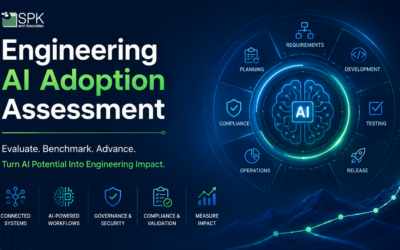
Engineering AI Adoption Assessment
Get your AI maturity score Take the assessment to learn how to accelerate your product and software development lifecycle with AI-powered development from a personalized AI maturity roadmap.[dsm_icon_list _builder_version="4.27.6" _module_preset="default"...
Why Tool Integration Is Critical for UNECE R155 and R156 Compliance in Automotive
Automotive manufacturers are arguably navigating the most significant transformation to the industry since the invention of the assembly line. Modern vehicles have evolved far beyond basic transport, as they are now sophisticated software-defined systems. These...
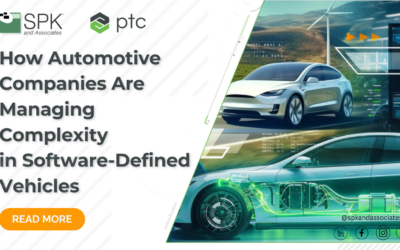
How Automotive Companies Are Managing Complexity in Software-Defined Vehicles
In all of automotive history, vehicles have been defined by mechanical performance, hardware reliability, or manufacturing efficiency. That has all started to change as software, connectivity, autonomy, electrification, and personalized digital experiences become a...
The Future of Automotive Engineering: AI and SaaS in the Connected Lifecycle
As an automotive engineer, it is hard to ignore the rise of software-defined vehicles and electrification. When combined with strict compliance expectations and growing pressure to innovate faster, traditional engineering systems just aren’t cutting it. On-premise...
Reducing Vehicle Lifecycle Costs through Data-Driven Collaboration
One of the largest causes of inefficiency across industries is disconnected systems. In the automotive industry, software teams need to communicate with product engineers more than ever. Forward-thinking organizations are addressing this challenge by embracing...
Why Automotive Tier 1 Suppliers Are Moving to a Unified ALM + PLM Digital Thread
As vehicle programs become more software-intensive, product variants multiply, compliance expectations rise, OEM timelines are not getting any easier. This puts automotive suppliers under immense pressure. Meanwhile, engineering teams are often still working across...
UNECE R155 vs R156 Explained: What Automotive Engineering Leaders Need to Know
Modern vehicles have become more than just basic mechanics. They are software-defined systems made from connected control units, sensors, and cloud services that continuously evolve through updates. These new features have introduced new cybersecurity risks and...
Managing Automotive Software and Hardware Integration at Scale
Advanced driver assistance systems, connected vehicle services, and electrification platforms. What do all of these features have in common? The answer: software. As these features increasingly make their way into mainstream automotive development, vehicles are...