Ginna Khang is an Applications Engineer focused on research and development (R&D). She started at SPK and Associates in 2022 as an intern while she attended UC Santa Cruz. After graduating in 2024, she was brought on full-time. Here is more about Ginna in her...

Software Development & Release Management
A Guide to Calculating the ROI of Your ALM Tool
Key Takeaways ALM ROI comes down to one formula: (gain from investment − cost of investment) ÷ cost of investment. The hard part is quantifying both sides honestly. The highest costs of a fragmented toolchain are soft costs, like rework, manual traceability,...
Building Secure CI/CD Pipelines with GitLab in Air-Gapped Networks
Key Takeaways Air-gapped networks protect sensitive code and data, but they break the default assumptions of most CI/CD tools, which expect internet access for images, packages, and scanner updates. GitLab Self-Managed runs fully offline, keeping source control,...
Managing Cybersecurity Risk Across the Software Lifecycle Under UNECE R155
Automotive manufacturers are increasingly prioritizing software-defined vehicles. As the software in these vehicles becomes more complex, so do the cybersecurity measures teams must follow. Automotive organizations must manage cyber risk across the entire product...
Strategies for Optimizing Software License Costs
Introduction Hello, everybody, and welcome back to another SPK & Associates Vlog. My name is Michael Roberts. I'm the Vice President of Sales and Marketing here at SPK. So today, we're going to talk about something that shows up on every engineering and IT budget...
Why Managed Services Deliver More Value Than Hiring Another Administrator
Key Takeaways Reduce single-person dependency: Managed services eliminate the risk of relying on one administrator for critical engineering systems and institutional knowledge. Access broader expertise: A team of specialists provides expertise across PLM, ALM, CAD,...
Why Traceability Is the Foundation of Modern Compliance
Key Takeaways End-to-end traceability is essential for regulatory compliance. Connecting requirements, risks, tests, changes, and approvals helps organizations maintain accurate compliance records throughout product development. Connected traceability improves audit...
How Product Teams Can Measure AI Coding ROI
Key Takeaways AI adoption alone does not prove ROI. Teams must measure how AI coding tools impact development speed, software quality, engineering capacity, and overall costs. Developer time saved must translate into business value. Tracking recovered hours,...
Avoiding Audit Failures with End-to-End Digital Traceability
Key Takeaways Audit failures often stem from incomplete records, disconnected systems, weak controls, and manual processes. Continuous traceability helps teams capture compliance evidence as part of everyday engineering work. Connecting ALM and PLM creates clearer...
Continuous Compliance for Automotive Software Updates
Key Takeaways Automotive compliance must be continuous. Regulations such as UNECE R155 and R156 require teams to manage cybersecurity risks and software updates throughout the vehicle lifecycle, not just at audit time. Disconnected tools make compliance difficult....
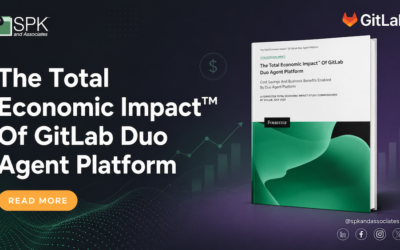
The Total Economic Impact™ Of GitLab Duo Agent Platform
The GitLab Duo Agent Platform is changing the game for software developers by providing a place for AI agents to help with planning, coding, security analysis, and analytics. While help from AI sounds great, ROI often falls short due to teams misusing it or failing to...
GitLab Orbit: Connecting the Software Lifecycle for Smarter AI Agents
Key Takeaways AI agents need lifecycle context, not just code access: Without visibility into dependencies, pipelines, security scans, and production signals, agents are more likely to generate incorrect or incomplete changes. GitLab Orbit creates a live context graph...