

Modern product companies are under pressure to offer more configurations, features, and customer-specific options without increasing costs or slowing development. This is especially true in industries such as medical devices, automotive, and industrial manufacturing due to the products increasingly combining hardware, software, and regulatory requirements. Without a structured variant management strategy, engineering teams can quickly become overwhelmed by duplicated requirements, inconsistent testing, unclear configurations, and growing compliance risk. Effective variant management helps organizations control this complexity by managing each configuration from a common product foundation.
Product Variant Complexity Across Industries
Product variants are different configurations of the same base product. They may include different features, materials, components, software functions, performance levels, or regional requirements. The challenge with variants is that every new option multiplies the number of possible configurations. One product could have hundreds of variants due to just five interchangeable parts.
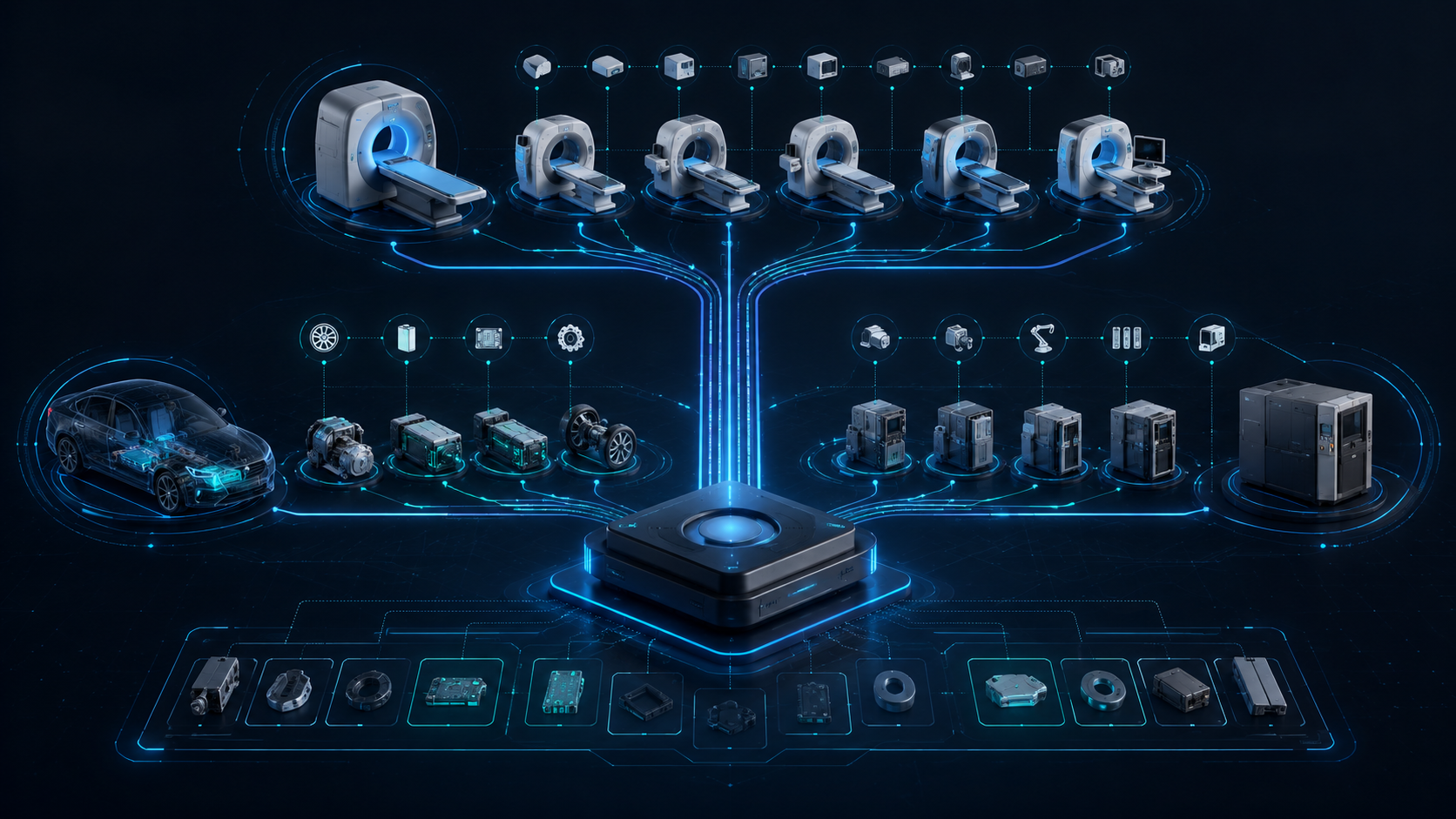
This complexity does not discriminate. It is seen across industries. For example, medical device companies may support different models, accessories, firmware versions, and regulatory markets. Automotive manufacturers manage powertrains, trim levels, safety features, and software packages. Industrial manufacturers often configure products around customer requirements, operating conditions, or optional control systems.
Poor Variant Management
When teams manage these variants through spreadsheets, copied documents, or disconnected tools, they may duplicate requirements, repeat validation work, and lose visibility into which information applies to each release. Over time, product versions drift apart, engineers inconsistently apply changes, and compliance becomes harder to demonstrate.
Software-defined products make the issue even more challenging. A physical product may remain in service for years while receiving frequent software updates, cybersecurity patches, and feature releases. Engineering teams must understand exactly which hardware, software, requirements, tests, and risks apply to every supported configuration.
How to Effectively Manage Product Variants
Effective variant management starts with treating products as part of a shared product line rather than as separate engineering projects. Organizations should establish a common product foundation containing the requirements, risks, architecture, tests, and functionality shared across the product family. They can then create individual variants by selecting or extending the relevant parts of that foundation. Teams should also clearly define what is common and what is unique for each configuration. Requirements, tests, risks, and change records should indicate which variants they apply to, reducing reliance on manual comparisons or tribal knowledge.
End-to-end traceability is equally important. When a shared requirement changes, teams should be able to identify the affected variants, tests, risks, and releases. Baselines can then capture a defined version of the product line, so teams know exactly which information was used for a specific release. Reuse is one of the greatest advantages of mature variant management. Teams can reuse trusted requirements, test cases, risk controls, and workflows across multiple products. This reduces duplicate work, shortens validation cycles, and allows engineers to focus on the areas that are truly different.
In addition, organizations should establish a process for managing parallel development. Variant-specific improvements should be reviewed to determine whether they belong only in that configuration or should be incorporated back into the common product line. An easy way to manage all of these things is by implementing an ALM platform.
Codebeamer’s Product Variant Management Capabilities
Codebeamer is an application lifecycle management platform that connects requirements, risks, testing, development work, defects, and releases within one environment. It gives organizations a structured foundation for managing product lines and software-intensive product variants. It supports reusable requirements, allowing teams to maintain common engineering information without creating uncontrolled copies for every product version. Teams can add variant-specific requirements while preserving their relationship to the shared product foundation.

Working Sets and Baselines
A great feature in Codebeamer is Working-Sets. Working-Sets provide a structured way to create and manage product variants. Users can create a new Working-Set from a baseline, an existing product line, or another Working-Set, giving teams a clearly defined starting point for a customer-specific configuration or a variant with a different feature set. The Working-Set includes only the trackers and items relevant to that variant. Teams can remove unnecessary items, expand parameters, and make configuration-specific adjustments while maintaining a connection to the broader product line. Any valuable changes made within the variant should also be merged back into the main product line to support consistency and reuse.
Baselines preserve the exact version of requirements, tests, risks, and related lifecycle information used at a specific point in development. This improves configuration control and helps teams reproduce earlier versions, compare changes, investigate defects, and provide reliable audit evidence.
While Working Sets help teams manage different configurations and variants within a single Codebeamer project, Streams extend that capability across multiple projects, making them ideal for organizations developing multiple product releases or product variants in parallel. A Stream defines a consistent configuration by selecting the appropriate versions of work items across branched trackers in multiple projects, while shared trackers remain common across all Streams. This enables engineering teams to isolate changes for specific releases or variants, manage parallel development without disrupting other teams, and selectively merge updates when they’re ready. Together, Working Sets and Streams provide a powerful configuration management strategy for complex products, with Working Sets focused on project-level variants and Streams delivering enterprise-scale, cross-project configuration management.
Traceability, Validation, and Configurability
Codebeamer also provides end-to-end traceability. Teams can connect requirements to risks, test cases, defects, development items, and releases, helping them understand the impact of a change across multiple product variants. Additionally, teams can reuse testing and validation assets. Quality teams can determine which test cases apply to shared functionality and which are specific to a particular variant. This reduces unnecessary validation work while maintaining confidence in product quality.
Configurable workflows, access controls, and audit trails help standardize review, approval, testing, and release processes. These capabilities are especially valuable in regulated industries where organizations must demonstrate that each product configuration was properly evaluated and approved. For highly complex product structures, Codebeamer can also be integrated with dedicated PLM or variant management tools to connect ALM information with configurable bills of material, CAD data, manufacturing information, and option logic.
Successful Product Variant Management for Engineers
Product variety can help organizations reach more customers and respond to specialized market needs, but it can also create significant engineering complexity. When each configuration becomes a separate project, duplication, rework, testing effort, and compliance risk grow quickly. A structured product line approach helps teams manage this complexity, and Codebeamer provides a connected environment for this. If you are ready for your organization to reduce engineering rework, improve release consistency, and support increasingly configurable and software-defined products, reach out to our team today.