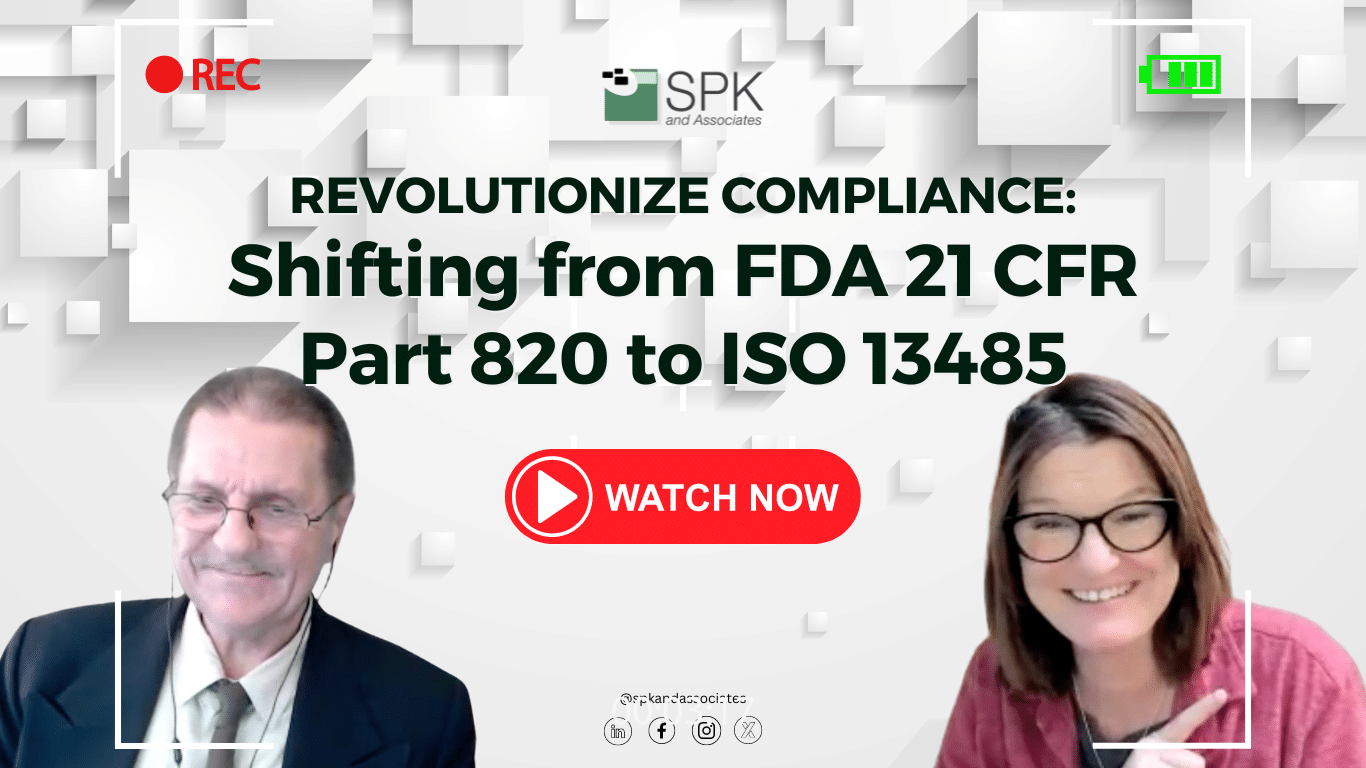

In this Vlog, Chris McHale, Co-founder, and CEO of SPK and Associates is joined by Carlos Almeida, Vice President of Engineering. Together, they’re discussing FDA compliance and the recent shifts impacting medical device companies. Topics for discussion include explore the key differences between FDA 21 CFR Part 820 and ISO 13485. They’re also covering the implications of the FDA’s Quality Management System Final Rule and challenges companies may face in adapting to these changes. You can watch the video above, or read the overview below.
Understanding the Key Differences between FDA 21 CFR Part 820 and ISO 13485
Let’s start by clarifying the distinctions between FDA 21 CFR Part 820 and ISO 13485:
- The former, also known as the Quality System Regulation, outlines requirements for medical device manufacturers in the United States.
- The latter is an international quality management system standard. Both emphasize product safety and effectiveness, but the crucial difference lies in ISO 13485’s prioritization of risk management throughout the product lifecycle.
The Impact of the Transition
With the recent Quality Management System Final Rule by the FDA, significant changes are on the horizon. For example, the FDA aims to:
- Simplify processes.
- Align with global standards.
- Reduce the burden on manufacturers.
This transition involves renaming CFR Part 820 to QMR (Quality Management System Regulation) and incorporating references to ISO 13485 throughout the document. However, while the intent is harmonization, adapting to these changes may present challenges for medical device companies. For example, adjustments in internal processes, tools, and terminology.
Challenges and Opportunities
As you navigate this transition, challenges arise in understanding and implementing the new standards effectively. In the video, Carlos highlights the need for a focus on risk management – especially for those with a basic QMS in place. Additionally, Carlos highlights the following essential steps are necessary for success:
- Strengthening risk management throughout the product development process.
- Integrating checks into DevOps environments.
- Aligning with ISO 13485.
Future Trends and Advice
Looking ahead, Carlos predicts a continued push for harmonization and introduces the Medical Device Single Audit Program (MDAP). Furthermore, the FDA’s changing approach, including accepting MDAP audits, signifies a paradigm shift in audit preparation for companies. Moreover, medical device innovations evolve, regulators will continue to play catch-up. Therefore, Carlos advises:
- Companies to stay informed.
- Prepare for upcoming changes.
- Reach out to experts like SPK for assistance.
How SPK Can Help
As a seasoned player in the field, SPK and Associates offer valuable assistance in navigating regulatory changes. So, whether you’re a Fortune 500 company or a budding startup, SPK provides expertise in:
- Regulatory standards.
- Product development efficiency.
- Validation processes.
With a focus on building compliant software and hardware factories, SPK ensures a smooth transition to changing regulations.
Conclusion
The changing landscape of FDA compliance requires a proactive approach and a keen understanding of evolving standards. SPK and Associates stand ready to guide you through these changes, providing a wealth of knowledge and expertise.
Contact us for assistance in ensuring your compliance journey is both efficient and successful.