



Bringing a successful product to market takes much more than a strong design. Companies must manage a plethora of information. This includes requirements, data, revisions, manufacturing processes, quality controls, supplier collaboration, service information, and eventual end-of-life decisions. When that information is scattered across disconnected systems, teams lose visibility, changes become harder to control, and costly errors can follow. Product Lifecycle Management (PLM) solves this by creating a centralized way to manage product information and processes from initial concept through disposal. PLM has become essential for organizations that want to improve product quality, reduce costs, accelerate time to market, and maintain control across increasingly complex product environments. When integrated with CAD tools and connected through a digital thread, PLM becomes the backbone for managing the entire product lifecycle.
PLM for Managing the Product Lifecycle
PLM plays a critical role in managing the product lifecycle because it supports far more than engineering file storage. A modern PLM system connects departments across the business, including engineering, manufacturing, marketing, service, and supply chain. This ensures every stakeholder is working from consistent product data. It helps organizations manage the entire lifecycle, which is important because products do not move through a business in isolated stages. Design decisions affect manufacturing. Manufacturing constraints affect engineering. Service feedback affects future product revisions. Compliance requirements influence documentation, approvals, and traceability.

PLM creates the structure needed to connect all of these lifecycle activities, helping organizations maintain continuity from concept to production and beyond. Additionally, PLM gives teams stronger control over bills of materials, lifecycle states, and product configurations. Instead of relying on spreadsheets, emails, or disconnected point solutions, companies can manage product structures, revisions, and state changes in a controlled environment. This improves inventory control, cost management, and product consistency while reducing the risk of errors caused by outdated information.
Integrating CAD and PLM
One of the most important steps in building an effective PLM strategy is ensuring CAD assemblies are integrated with PLM. This ensures that models, revisions, and bills of materials are managed centrally rather than being spread across local drives or disconnected systems. CAD integration creates a stronger foundation for downstream processes because the product definition stays aligned with the latest approved design data.

This integration is especially important when managing configurations and variants. As products become more customizable, CAD complexity can quickly grow. Without a connected CAD and PLM approach, each variant can turn into a separate one-off model. This increases risk and engineering effort. By integrating CAD with PLM, organizations can map configurations to product options, control revisions by variant, and connect those configurations to downstream manufacturing systems so the right BOMs and work instructions are used every time.
The Digital Thread
PLM also supports the product digital thread, which is the seamless flow of data across the product lifecycle. The digital thread enables data created at one stage of the lifecycle to be reused at another, while PLM provides the tools and structure to manage that data centrally. In that sense, PLM serves as the backbone of the digital thread. PLM makes it possible to connect design, compliance, manufacturing, service, and customer-facing information through a consistent data model.
When CAD is integrated into that digital thread, the value expands even further. BOM data can stay synchronized with CAD models and drawings, visualizing the product structure and helping ensure design changes are accurate. Model-based information can also support manufacturing engineering, process planning, quality control, and downstream collaboration, which allows the original engineering intent to carry through the entire lifecycle.
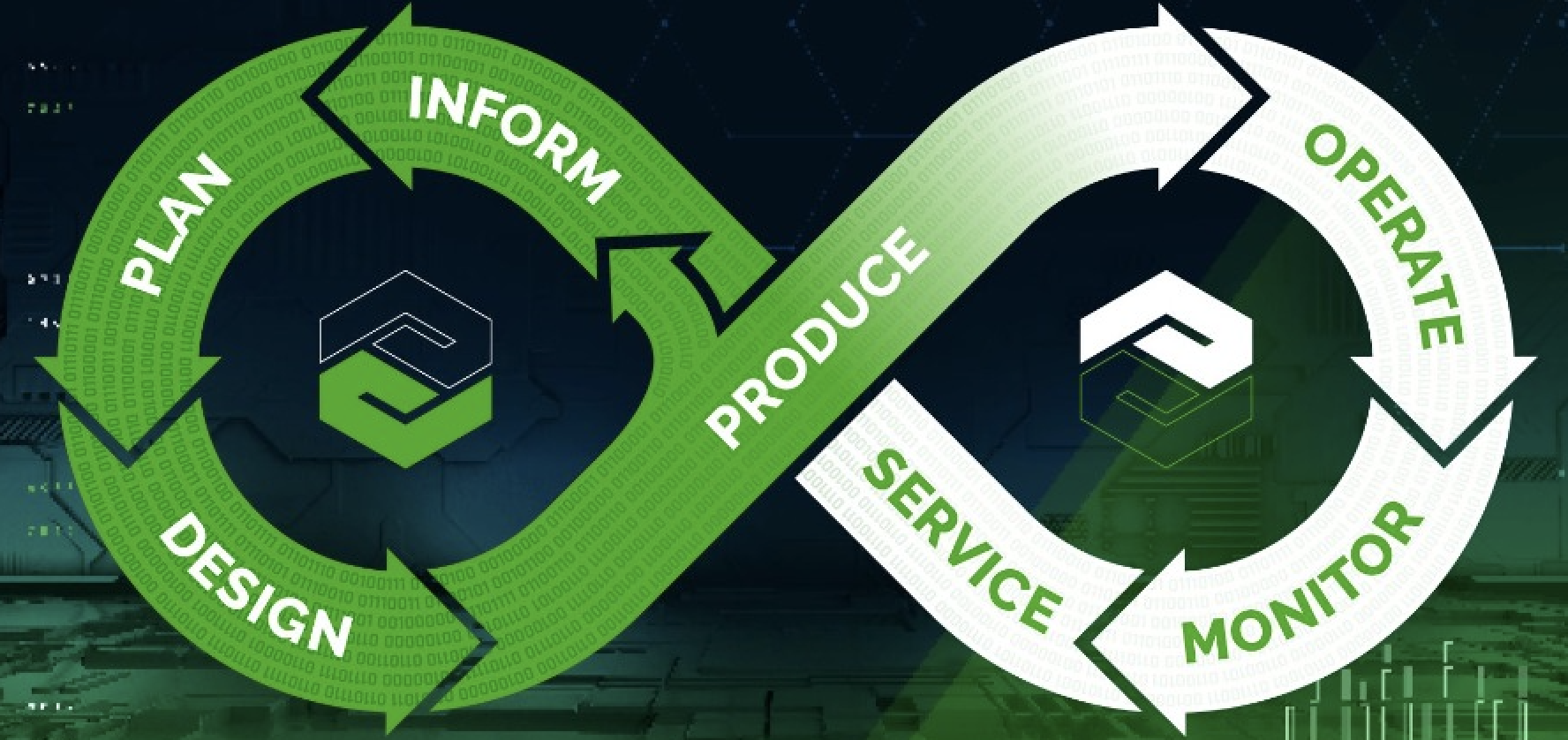
Benefits of PLM for the Entire Product Lifecycle
Change Management
PLM provides the governance and visibility needed to manage change throughout the lifecycle. Engineering change is inevitable, whether driven by field feedback, quality issues, cost reduction efforts, or market demand. A mature PLM-driven workflow helps companies control how those changes are requested, analyzed, implemented, reviewed, and released. Instead of mystery changes surfacing late in manufacturing, PLM enables impacted parts, assemblies, drawings, and downstream items to be identified early, reviewed thoroughly, and released in a controlled, auditable way.
Quality and Compliance
Beyond change management, PLM also supports:
- Regulatory management
- Quality by design
- Manufacturing execution
- Manufacturing engineering
- Supply chain visibility
- Enterprise visualization
- Product traceability.
It helps embed compliance criteria into the lifecycle, manage submissions and approvals, and connect product usage to operating-condition data. This allows teams to make better design decisions and ensures they have accurate instructions tied directly to product definitions.
Collaboration
PLM strengthens collaboration across internal teams and external partners as well. Supplier information, certifications, capabilities, and shared documentation can all be managed more effectively in a PLM environment. Visualization tools allow broader teams to review 3D models, make annotations, validate concepts virtually, and collaborate before production begins. This reduces misunderstandings, shortens review cycles, and improves decision-making across the lifecycle.
Traceability
Finally, PLM is critical because it enables digital product traceability. Companies need to track customer requirements, design decisions, BOM changes, manufacturing plans, and lifecycle records in a way that proves continuity and accountability. PLM provides traceability, helping ensure customer needs are met and making it easier to manage products through service, updates, and eventual retirement or disposal.
From Concept to Production with PLM
PLM is critical because it gives organizations a structured, connected way to manage the full lifecycle of a product, not just its design files. From concept and engineering through manufacturing, service, and disposal, PLM helps teams control data, automate workflows, manage change, and maintain traceability. Its value becomes even greater when integrated with CAD tools and connected through the digital thread. For companies looking to improve product quality, reduce risk, and bring products to market more efficiently, PLM is necessary. Get started with a PLM solution today by reaching out to our team.