


While the pressures of strict quality standards and expected innovation are not new for the aerospace and defense industry, they are becoming harder to manage with disconnected legacy tools, manual processes, and siloed product data. For these organizations, digital engineering is becoming a strategic priority. By connecting data across requirements, design, simulation, manufacturing, quality, and suppliers, digital engineering platforms help teams achieve a unified digital thread. This allows organizations to make better decisions earlier, reducing risk and improving operational readiness across the full product lifecycle.
At SPK and Associates, we help aerospace companies implement and optimize digital engineering platforms that support complex product development. One of the most powerful foundations for this transformation is PTC’s Intelligent Product Lifecycle, which connects product data, AI-enabled workflows, and open enterprise integrations to help organizations improve speed, quality, and collaboration.
Common Issues in the Aerospace Industry
Aerospace companies frequently encounter a combination of operational, technical, and workforce challenges that hinder modernization efforts. Across the industry, several common themes continuously emerge.
Slowed Operations
Many organizations deal with slow backlog conversion. Demand may be strong, but supply chain disruptions, outdated systems, and disconnected processes make it difficult to convert backlog into finished products efficiently. When engineering, manufacturing, quality, and supplier teams work from different systems, even small changes can create delays.
Compliance
Regulatory and compliance pressure is also increasing. Aerospace companies must manage strict documentation, traceability, safety, and certification requirements. As emerging technologies become more software-driven and connected, OEMs and suppliers face greater scrutiny. Without a connected lifecycle platform, compliance evidence can become scattered across documents, spreadsheets, and disconnected databases.
Quality Issues
Quality is another major concern. Defects, rework, and production delays can result in margin loss, missed delivery commitments, and safety concerns. Aerospace organizations require more effective methods to identify design issues earlier, validate performance virtually, and comprehend the impact of changes on downstream manufacturing and service processes.
Reskilling
Talent and reskilling challenges are also impacting the industry. As experienced workers retire, aerospace companies must preserve institutional knowledge while preparing teams for more digital, model-based, and AI-enabled ways of working. This requires systems that make information easier to find, reuse, and apply across the organization.
Cybersecurity Threats
Finally, cybersecurity threats continue to grow. Many aerospace organizations still rely on outdated legacy systems that were not designed for today’s level of connectivity or threat complexity. As products, suppliers, and systems become more interconnected, companies need platforms that support stronger security, better governance, and controlled collaboration across the extended enterprise.
Digital Engineering for Aerospace
Digital engineering helps aerospace companies address these challenges by replacing disconnected handoffs with connected product data and model-based workflows. Instead of relying on static documents and manual updates, teams can work from a shared digital foundation that connects information across the lifecycle. Aerospace products are complex, long-lived, and highly regulated, making shared data vital to success. A design decision made early in development can affect manufacturing, certification, maintenance, spare parts, and service operations for years. When data is disconnected, teams may not see the full impact of those decisions until late in the process, when changes are more expensive and disruptive.
Digital engineering gives organizations better visibility earlier. Through digital threads, simulation, model-based systems engineering, and connected requirements, teams can evaluate performance, quality, and compliance before physical prototypes or production ramp-up. This reduces rework and helps teams make more confident decisions. It also improves collaboration. Aerospace companies often work across global engineering teams, manufacturing sites, suppliers, and service organizations. A digital engineering platform helps ensure that everyone is working from current, controlled, and traceable product information.
PTC Intelligent Product Lifecycle in Aerospace
PTC’s Intelligent Product Lifecycle provides a strong foundation for aerospace digital engineering. It is designed to connect the full product lifecycle through a unified product data foundation, AI-enabled solutions, and intelligent agents that help automate and optimize work. At the center of this approach is connected product data.
Rather than treating CAD files, Requirements, BOMs, Simulations, Quality records and Service information as separate assets, the Intelligent Product Lifecycle helps organizations connect them into a single digital thread. This allows aerospace teams to trace decisions from initial requirements through design, manufacturing, production, and service.
Impact on Teams
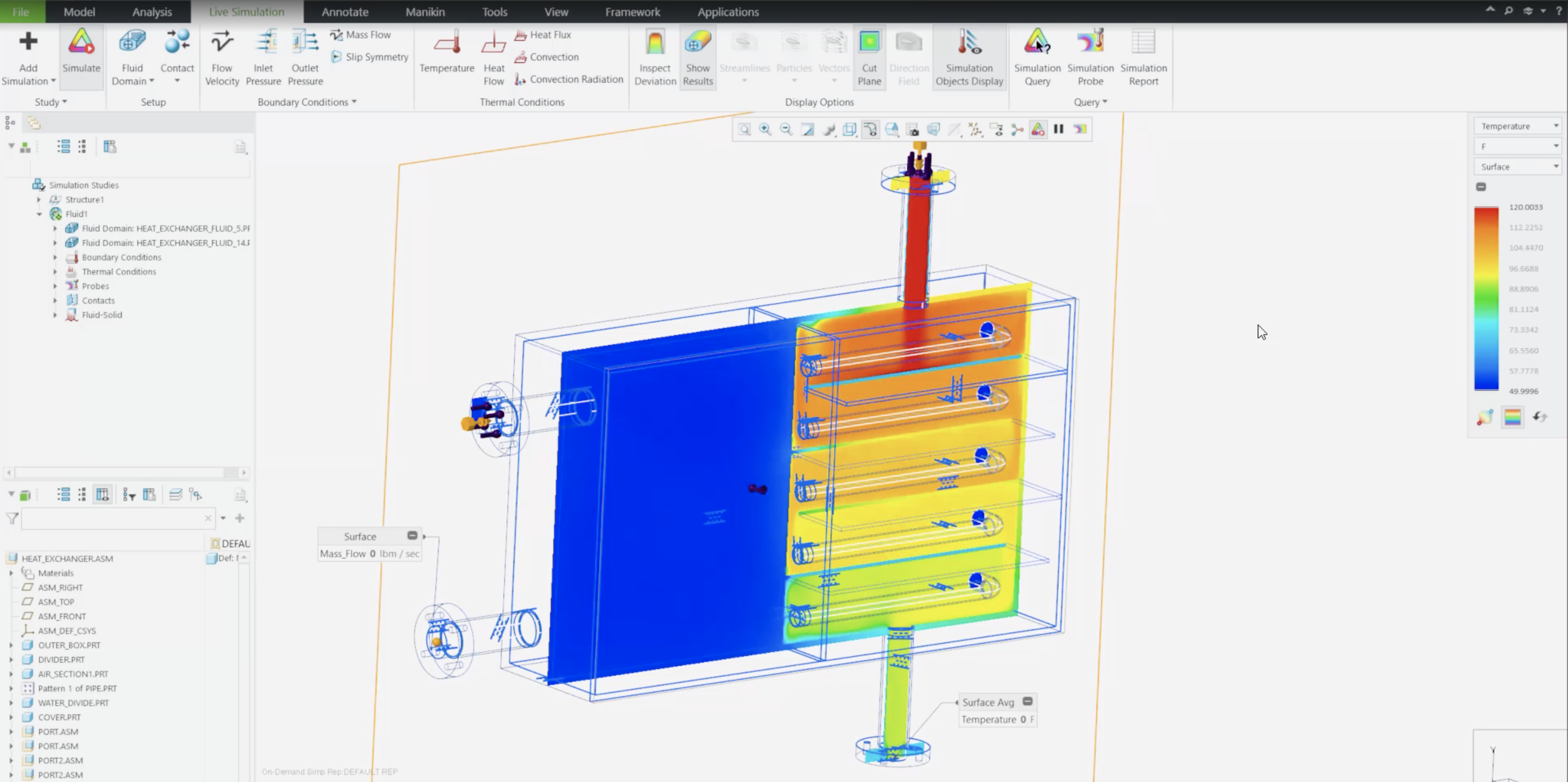
For design and engineering teams, this means better access to accurate product data, improved design reuse, and earlier validation through simulation. Engineers can evaluate performance and risk before issues reach production. In the compliance and quality space, connected requirements and traceability make it easier to manage evidence, understand change impact, and support audit readiness. This is especially important in aerospace, where documentation and verification must be rigorous. On the manufacturing and supply chain side of things, a connected lifecycle improves collaboration and helps reduce delays caused by disconnected systems. Teams can better understand how design changes affect materials, suppliers, production planning, and downstream operations. Finally, for service and maintenance teams, lifecycle visibility helps improve operational readiness. Service data can feed back into engineering, allowing companies to improve future designs and better support long-term product performance.
PTC’s approach is also built around openness and scalability. Its digital engineering ecosystem can connect with enterprise systems such as ERP, MES, QMS, CRM, CPQ, and MRO platforms. This is critical for aerospace companies that need to modernize without replacing every system at once.
Real-Life Aerospace Use Cases
Examples from Hill Helicopters, Lufthansa Technik, and NASA show why aerospace companies are investing in digital engineering platforms.
- Hill Helicopters used advanced simulation and connected product data to accelerate design work, achieving a 20% increase in surface modeling speed while enabling engineers to use simulation earlier in the design process.
- Lufthansa Technik demonstrates how PLM can serve as a foundation for broader digital transformation by connecting engineering, manufacturing, and service processes through a digital thread, helping the company scale 15 times more digital initiatives.
- NASA’s use of advanced simulation and requirements traceability shows the value of connected tools in high-complexity environments, improving root cause analysis and resolution from hours to minutes.
Together, these examples highlight how digital engineering helps aerospace organizations reduce risk, improve collaboration, validate designs earlier, and make faster, more confident decisions across the product lifecycle.

Investing in Digital Engineering for Aerospace
Aerospace companies are investing in digital engineering platforms because the old way of working is no longer enough to keep up with innovations and compliance requirements. Digital engineering helps aerospace organizations create a continuous flow of product data across requirements, design, simulation, manufacturing, quality, and service. With the right strategy and implementation partner, digital engineering can become a competitive advantage. SPK and Associates helps aerospace companies plan, implement, and optimize the digital engineering platforms needed to support the next generation of aerospace innovation. If your organization is ready to modernize its product lifecycle and improve engineering performance, reach out to our team.