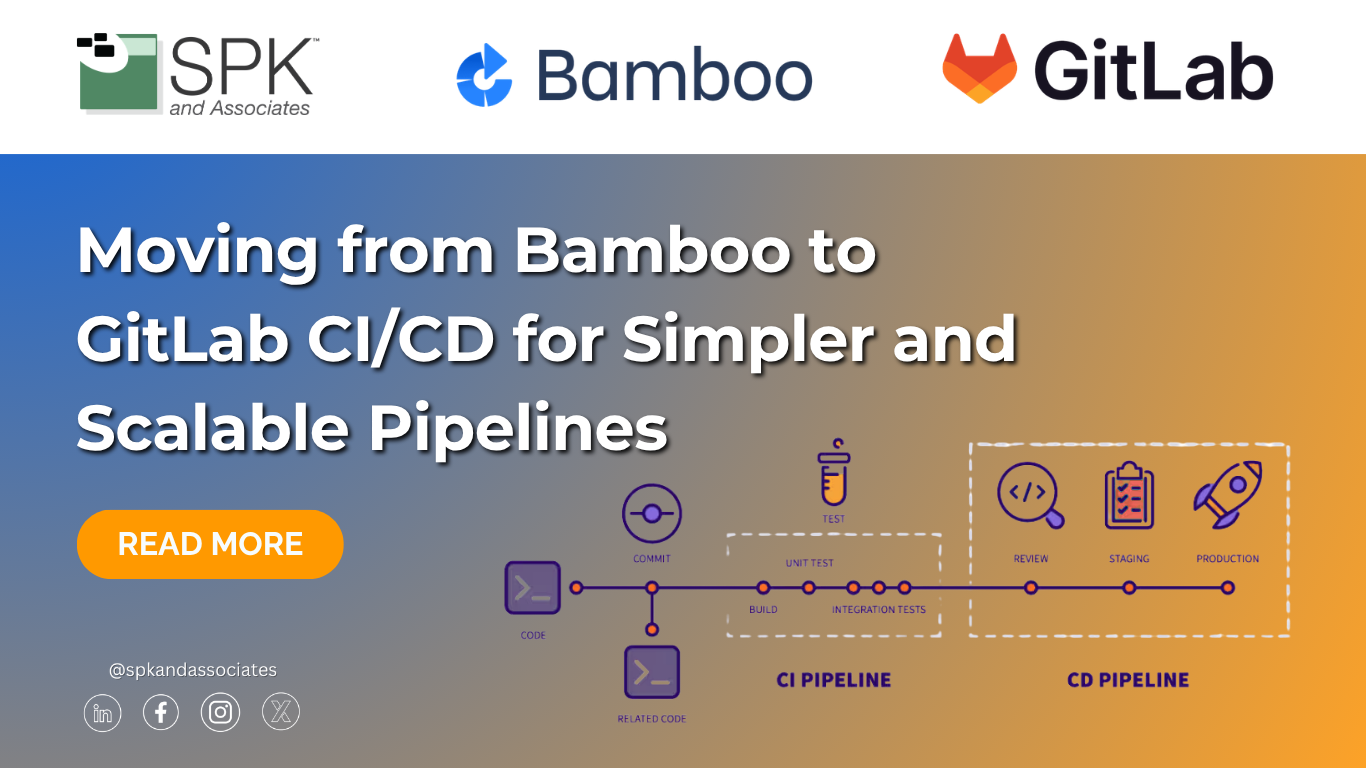

In the high-stakes world of mechatronics and regulated product development, the tools that drive your CI/CD pipeline are more than just infrastructure. They are the backbone of your delivery reality. For years, Atlassian Bamboo served as a reliable workhorse for many engineering organizations. However, as products become more complex, including blending intricate hardware with sophisticated software, the limitations of legacy CI/CD tools are becoming clear.
Engineering leaders today face a growing “integration tax.” Maintaining a disjointed stack of Jira, Bitbucket, and Bamboo requires significant manual effort to keep data synchronized and pipelines running. For organizations in regulated industries like medical devices, automotive, and aerospace, this complexity introduces more than just delays; it introduces risk. Moving from Bamboo to GitLab CI/CD is not just a tool swap. It is a strategic move toward a unified DevSecOps platform that simplifies architecture, scales effortlessly, and provides the rigorous traceability required for safety-critical systems.


The Integration Tax of Bamboo
The primary challenge with Bamboo in a modern engineering environment is its architectural isolation. While it integrates with the Atlassian suite, it remains a separate application with its own database, user management, and agent configuration. This separation creates a “tax” on your engineering productivity in several ways. Some of which were even discussed here in 2023.

First, there is the overhead of agent management. In Bamboo, scaling often means manually provisioning and managing remote agents. As build requirements grow, so does the administrative burden of maintaining these agents. This includes ensuring they have the right capabilities, OS versions, and security patches, which falls on your DevOps or IT team. This “IT-first” approach often distracts from the actual business of engineering.
Second, the lack of a unified data model between your SCM (Bitbucket) and your CI tool (Bamboo) leads to visibility gaps. When a build fails, an engineer often has to jump between three different tools to correlate the commit, the build logs, and the associated Jira issue. In a complex mechatronics project where a single build might involve software, firmware, and hardware simulation results, these seconds of context switching add up to hours of lost velocity across a large team.
From Disjointed Steps to Unified Flows
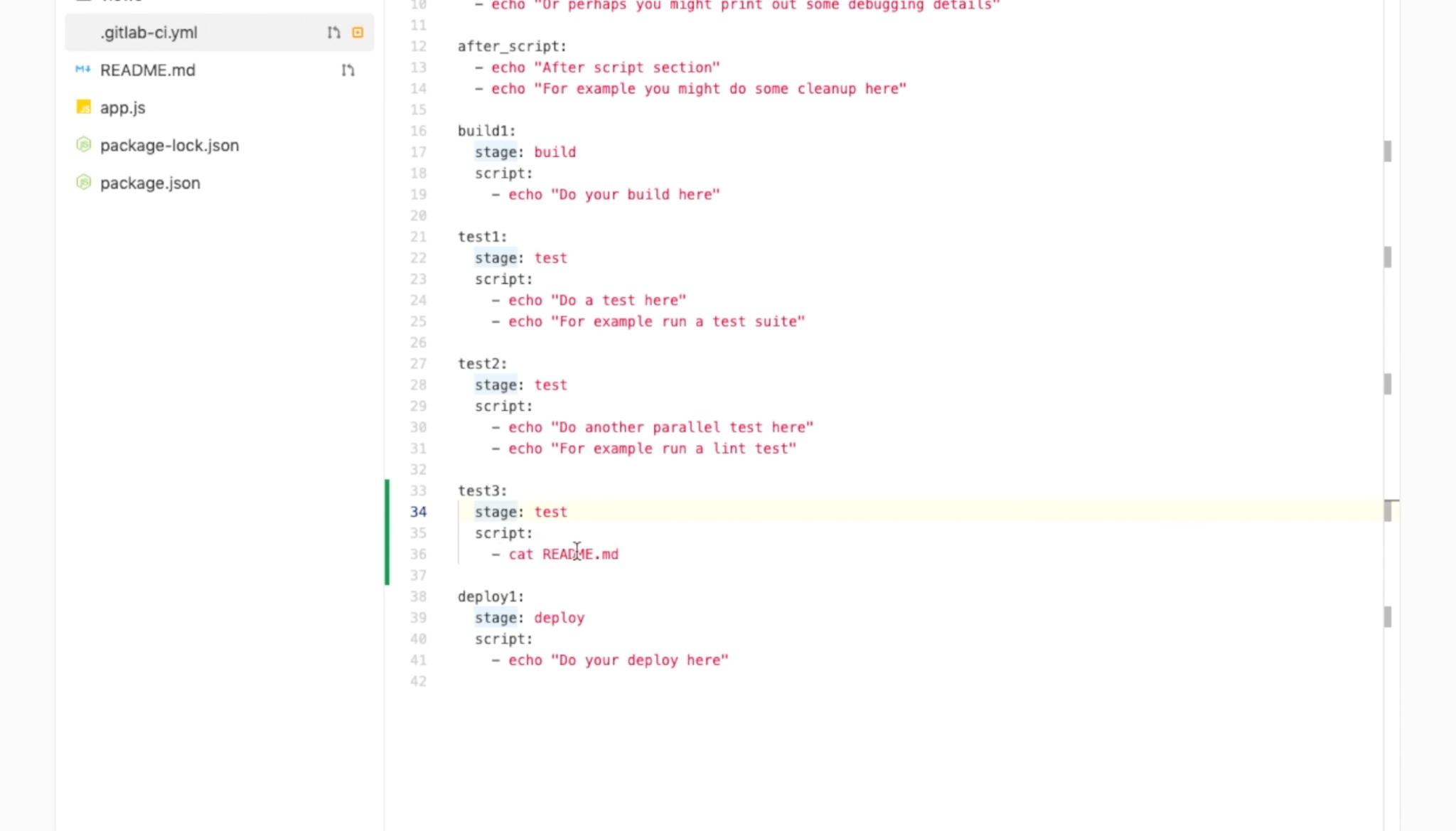
GitLab’s CI/CD feature offers a fundamental shift in how pipelines are constructed and managed. Unlike Bamboo, which relies heavily on a UI-based configuration of Plans, Stages, and Jobs, GitLab utilizes a “Pipeline as Code” philosophy via a single .gitlab-ci.yml file stored directly in the repository.
This approach provides several immediate benefits:
- Versioned Pipelines: Your build logic evolves alongside your code. If you need to roll back to a version of your product from six months ago for a regulatory audit, the exact pipeline configuration used for that release is preserved in the repository.
- Simplified Logic: GitLab’s YAML-based configuration is more intuitive for modern developers. It eliminates the “click-ops” fatigue of navigating deep Bamboo UI menus to change a single environment variable.
- Single Source of Truth: Because GitLab is a single application, the transition from a code commit to a running pipeline is instantaneous and natively tracked. There are no integration hooks to break and no external API calls to troubleshoot. While for some, “single source of truth” means you have to use one app, this approach means that the truth can be spread to many applications, but there is always one single source of truth, regardless of which application is used.
For the Director of Engineering, this means higher-quality products delivered faster. By removing the friction between code and build, you allow your engineers to focus on innovation rather than pipeline maintenance.
Solving the Scalability Wall in Regulated Environments
Regulated industries face unique scalability challenges. You aren’t just scaling the number of builds; you are scaling the complexity of the data those builds produce. A medical device manufacturer, for example, must ensure that every build is tied to a specific requirement and that the test results are immutable and auditable.
Bamboo often hits a “scalability wall” when it comes to complex, multi-project dependencies. Managing cross-project triggers and shared artifacts in Bamboo can become a web of fragile configurations.
GitLab solves this through its native support for Parent-Child pipelines and Multi-project pipelines. This allows mechatronics teams to break down a massive system build into manageable, concurrent components. A firmware team can trigger a downstream hardware simulation pipeline only when specific criteria are met, ensuring that expensive simulation resources are used efficiently. Furthermore, GitLab’s “Runners” are significantly easier to scale than Bamboo agents. They can be deployed as lightweight containers that spin up on demand and disappear after the build, reducing infrastructure costs and ensuring a clean environment for every build, a critical requirement for compliance.

Mapping the Migration: Translating Bamboo Concepts to GitLab
Transitioning your team requires a clear map of how their current workflows translate to the new platform. While the underlying philosophy is different, the core concepts have direct parallels:
The most significant change for your team will be moving from the Bamboo UI to the GitLab YAML file. While this requires a small initial learning curve, the long-term benefit of having a searchable, versionable, and template-driven pipeline configuration far outweighs the transition effort. SPK’s team often recommends a “pilot project” approach, where one high-impact team migrates first to establish best practices and internal templates before a wider rollout. Not only can we help train your teams, but we can also help them move things over one project or team at a time.
De-risking the Switch: A Phased Approach to CI/CD Modernization
At SPK, we understand that “rip and replace” is rarely a viable strategy in regulated environments. The risk to ongoing product development and compliance is too high. Instead, we advocate for a pragmatic, phased migration that maintains operational confidence.
- Audit and Cleanse: Before moving a single line of code, audit your existing Bamboo plans. Many organizations find that 30% of their build plans are obsolete or redundant. Migration is the perfect time to shed this technical debt.
- Hybrid Execution: GitLab allows you to run pipelines against code stored in external repositories. You can begin using GitLab CI/CD while your code still resides in Bitbucket, allowing your team to get comfortable with the new pipeline logic before moving the SCM.
- Template Standardization: Create “Golden Templates” in GitLab for common build patterns. This is especially useful for mechatronics teams who need consistent build environments for specific compilers or simulation tools.
- Validation and Traceability: Ensure your new GitLab pipelines are configured to capture the necessary evidence for your regulatory bodies. GitLab’s built-in security scanning (SAST, DAST, and License Compliance) can often replace manual steps or third-party tools you were previously triggering from Bamboo.
Achieving Operational Confidence with a Unified Stack
The move from Bamboo to GitLab CI/CD is a move toward simplicity and scalability. By eliminating the “integration tax” of a disjointed toolchain, you empower your engineering teams to work more effectively and efficiently. You gain a platform that not only builds and secures your software but also ensures it meets the rigorous standards of your industry.

SPK and Associates helps engineering organizations modernize their systems so they can deliver higher-quality products with less risk. With over 20 years of experience in mechatronics and regulated industries, we understand the delivery realities you face every day. We don’t just move your code; we optimize your entire engineering ecosystem. If you are ready to simplify your pipelines and scale your engineering operations, contact our team of experts today.