



Choosing the right platform to manage ideation, roadmapping, and alignment with engineering matters. While there are many, two heavy-hitters in this space are Jira Product Discovery (JPD) from Atlassian and Aha! from the company of the same name. This blog breaks down their capabilities, their positioning, and which one might deliver more value for your product management team.
Jira Product Discovery vs. Aha!
Jira Product Discovery
JPD is a relatively new Atlassian tool designed to help product teams capture, prioritize, and manage ideas, align them with goals, and then transition into delivery in Jira Software.


Aha!
Aha! is a mature product-management suite built from the ground up for strategy through execution: ideation, roadmapping, release planning, and metrics. It emphasizes product vision, portfolio management, and stakeholder alignment.
In short: JPD = New Atlassian product that is embedded in Jira; Aha! = best-of-breed product management tool with broad scope.
Market Positioning and Target Users
When you ask who each tool is built for and what stage of product work they serve, the differences become clearer.
JPD’s Sweet Spot
- Teams are already using Jira and Confluence, wanting a “native” discovery tool.
- Organizations where product and engineering converge, and hand-offs need to be smooth.
- Contexts where cost-control and simplicity matter (Atlassian emphasizes lower TCO).
- Agile/iterative development shops where ideas flow into engineering issues rapidly.
Aha!’s Sweet Spot
- Product managers leading strategy, vision, and cross-functional teams (marketing, sales, engineering).
- Organizations that need robust roadmapping, portfolio views, and stakeholder visuals.
- Teams that don’t mind investing in multiple modules/features for full product lifecycle support.
- Enterprises with complex product portfolios and a need for advanced planning toolsets.
JPD and Aha! Feature Comparison: Discovery to Delivery
Let’s compare core capabilities across several main areas.
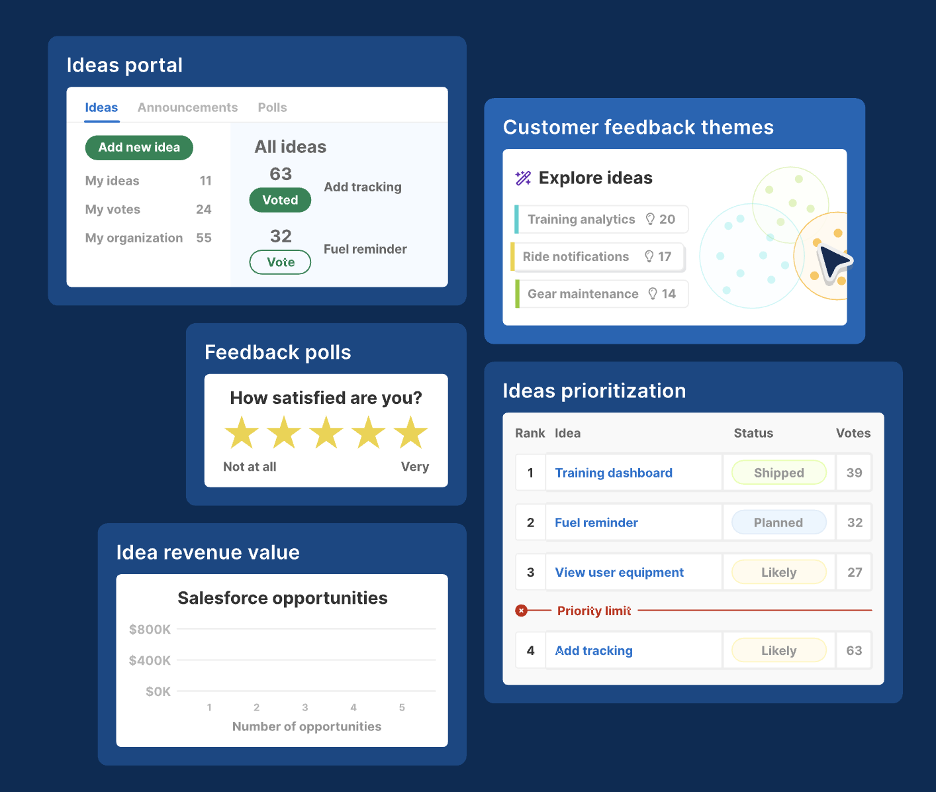
Idea Capture & Management
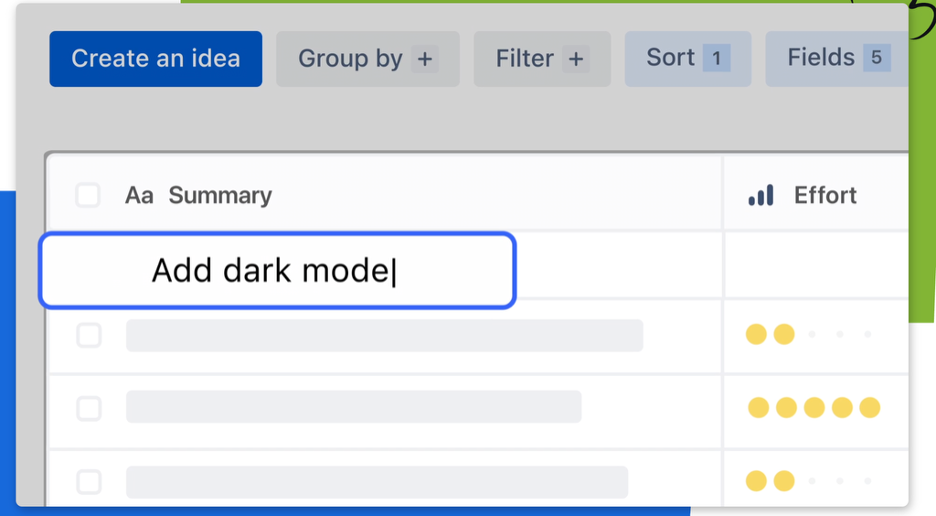
- JPD lets you capture ideas, visualize them as list/grid views, vote or prioritize (though voting capabilities may be evolving).
- Aha! offers “Ideas” modules, portals for customer feedback, dynamic forms, and deep integration into the roadmap.
Verdict: Aha! currently has the deeper tooling for idea-management; JPD has the simpler lean version and strong link to Jira.
Roadmapping & Strategic Alignment
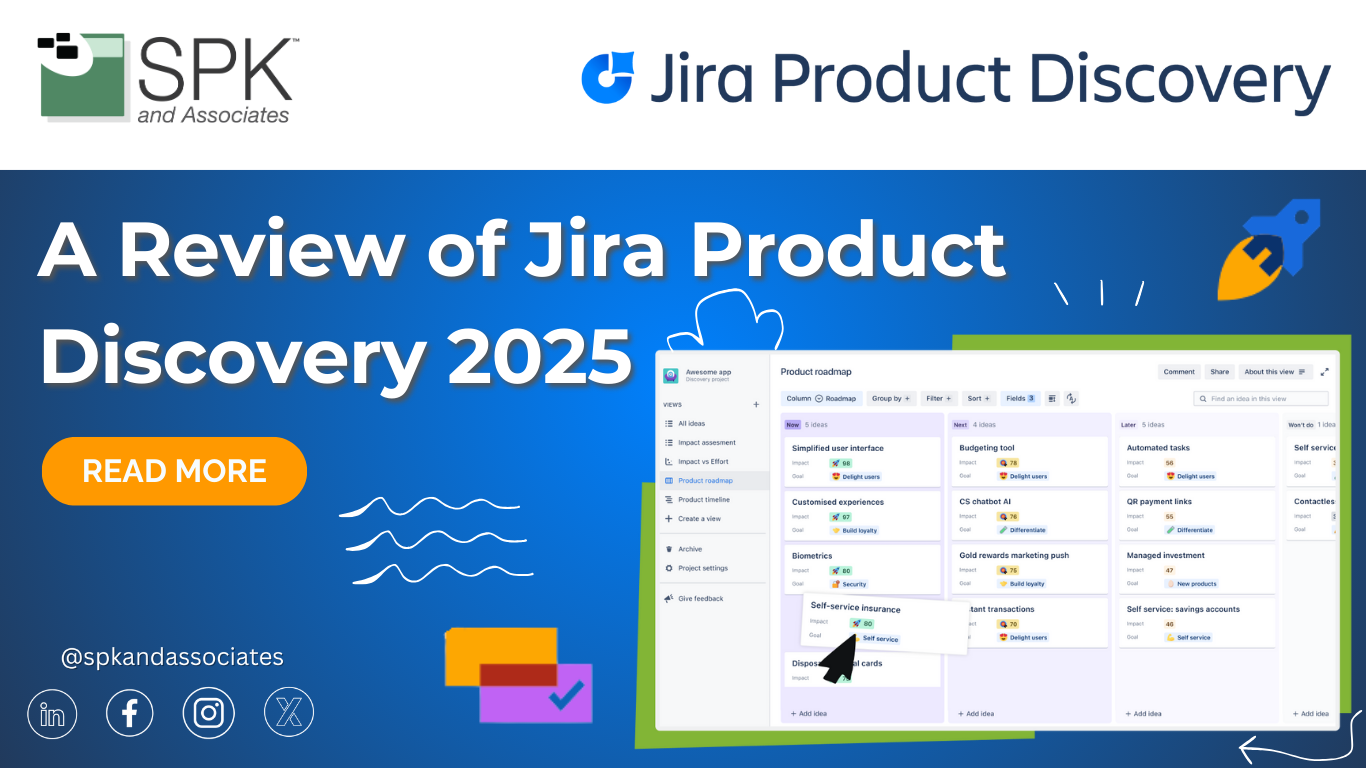
- JPD provides basic roadmaps, linking ideas to status, and integration with Jira issues. Atlassian claims “simplified UI and navigation for collaboration” in JPD.
- Aha! excels in multiple roadmap views (Gantt, timeline, Kanban), strategic goal linkage, portfolio views, and beautiful visuals.
Verdict: Aha! offers broader strategic roadmap capabilities; JPD is more straightforward and delivery-centric.
Integration with Engineering/Delivery
- JPD is built to integrate tightly with Jira, making transitions from idea → issue in the same platform smoother.
- Aha! supports integrations (including Jira) and recently improved its “Aha! Ideas and Jira integration” so ideas can map to Jira bugs/tasks.
Verdict: If your engineering backlog lives in Jira, JPD may provide tighter coupling; Aha! still offers strong integration but with more of a standalone product-management flavor.
Ease of Use, Learning Curve & Setup
- JPD is designed with Atlassian’s look and feel, so for existing Jira users, onboarding may be smoother. As this blog notes, “the Atlassian gods created JPD … recognize the dedicated features Product Managers need.”
- Aha! offers rich templates, guided training, and a full product management ecosystem, but with more complexity and potential cost.
Verdict: JPD wins on simplicity for Jira-centric teams; Aha! wins on depth but comes with more setup effort.
Cost & Licensing
- JPD is about one-sixth the price of Aha’s comparable Roadmap Premium plan at $59 per user/month.
- Aha!’s pricing is higher and modular (different products/modules cost extra).
Verdict: For budget-conscious teams, JPD may deliver strong value; Aha! demands a higher investment but delivers more features.
Scalability & e=Enterprise-readiness
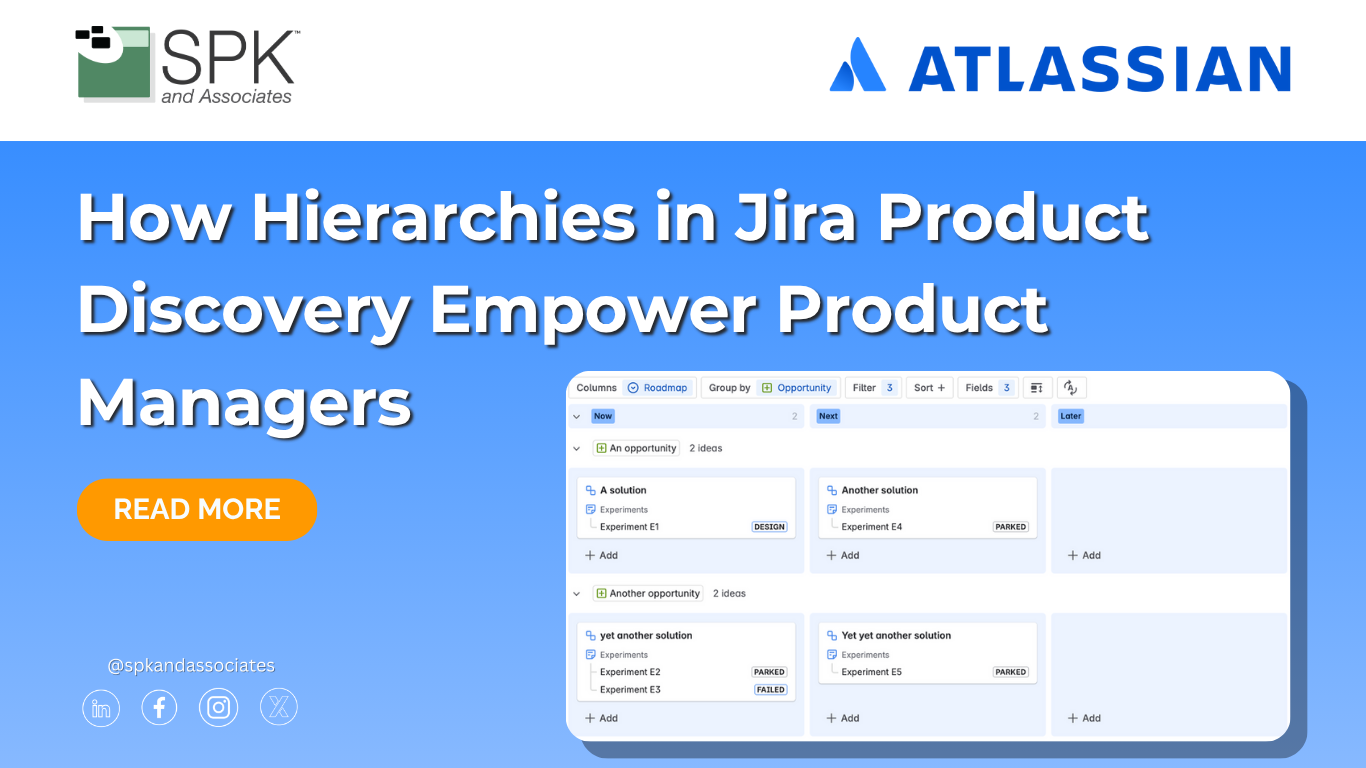
- In this Atlassian community post, teams that moved from Aha! to JPD noted advantages in cost and integration, but also mentioned that JPD lacks hierarchy support (as of that time) and may still be developing.
- Aha! has a mature enterprise customer base and features built for large organizations (portfolio management, advanced analytics).
Verdict: Aha! currently has the edge for very large enterprise scenarios; JPD is very competitive for many mid-to-large teams especially with Jira already in use.

JPD and Aha! Strengths for Modern Product Managers
Let’s look at some key value areas that matter for product managers today, and how each tool stacks up.
Prioritization & Decision-making
Modern product teams need a structured way to decide what to build next.
- JPD emphasizes “identify and prioritize the right ideas to work on” and gives the sentiment that 81% of customers said it helped them do that.
- Aha! supports scoring, impact/effort modelling, linking initiatives to goals, and full visibility for decision-makers.
Takeaway: If your decision-making process is mature, Aha! gives more tools. If you need built-in simplicity with good Jira alignment, JPD suffices.
Cross-team Collaboration (Product + Engineering + Stakeholders)
Product managers anchor strategy; they work across functions.
- JPD’s collaboration is boosted by native Atlassian ecosystem support: product ↔ engineering ↔ service teams.
- Aha! provides stakeholder-friendly roadmaps, public sharing, feedback portals, and cross-functional templates.
Takeaway: If marketing, sales, and customer support all need access and visibility, Aha! may deliver more stakeholder-friendly views. If your world is mostly product + engineering (especially within Jira), JPD delivers better collaboration.

Time-to-value and Admin Overhead
Product teams don’t want to spend months configuring a solution.
- JPD emphasizes “easy setup and onboarding for admins and users.”
- Aha! has more features and thus more configuration, template-driven onboarding, but more admin overhead.
Takeaway: For faster implementation, JPD has the edge; for richer capabilities (with time cost), Aha! is strong.
Flexibility and Customization
Product-management tools must flex with your unique workflows.
- JPD allows custom fields, workflows, and prioritization formulas.
- Aha! is highly customizable, offers many modules (Ideas, Roadmaps, Whiteboards, Knowledge, Develop), and supports different product types.
Takeaway: For maximal flexibility across product types (hardware, SaaS, B2B, B2C), Aha! may shine; if you stay within typical software product flows and Jira issues, JPD is very capable.
JPD Limitations
- Some users migrating from Aha! to JPD highlighted missing features, such as multi-level hierarchy of ideas/epics.
- While good for discovery, JPD may require other Jira modules for full delivery planning (i.e. Plans aka Advanced Roadmaps).
- If your product team is independent of engineering (e.g., non-Jira users), the Jira-centric model may be less intuitive for some stakeholders.
Aha! Limitations
- Higher cost and modular licensing mean you may pay more for the full feature set.
- More complexity: more to configure, more training needed.
- If you already have Jira with many integrations and are deeply invested in Atlassian, running Aha! as an additional stack may lead to duplication or integration pain.
Decision Framework: Which Should You Choose?
Here’s a practical decision tree to help product managers pick between the two.
Ask yourself:
- Do we already use Jira and other Atlassian tools heavily?
- Yes → lean toward JPD
- No → consider Aha!
- Is our product-management function tightly integrated with engineering, delivery, and issue tracking?
- Yes → JPD makes sense
- No → Aha! may better support strategy/PM separate from engineering
- Do we need deep product-portfolio and roadmap visuals for stakeholders (execs, marketing, sales)?
- Yes → Aha!
- No → JPD may cover your needs
- What is our budget and admin overhead tolerance?
- Limited budget/time → JPD
- Ample budget/time for full capability → Aha!
- Do we need flexibility and custom workflows across product types (software + hardware + services)?
- Yes → Aha!
- No (mostly software) → JPD likely sufficient
Tips for Successful Adoption
Whichever you choose, the tool alone won’t deliver value unless best practices accompany it.
- Define clear roles and workflow: e.g., who captures ideas, who prioritizes, who transitions to delivery.
- Link product work to strategic goals and OKRs: ensures roadmaps aren’t just feature lists.
- Use views and dashboards tailored to stakeholders: execs want strategic overviews; engineering wants sprint-ready tasks.
- Keep integration lean: avoid duplication of data across systems; pick a tool that aligns with your delivery systems.
- Train teams and manage change: even the best tool faces adoption gaps if users aren’t aligned with the process.
- Monitor metrics/maturity: track how many ideas convert to delivered features, how long ideation takes, and how aligned teams are.
- Use a Certified Atlassian Partner: get discounts from Atlassian Solution Partners like SPK for any Atlassian or Atlassian Marketplace product.
JPD or Aha!?
Selecting between Jira Product Discovery and Aha! really comes down to your organization’s ecosystem, product workflow, and strategic priorities. Jira Product Discovery shines when your product, engineering, and delivery teams are deeply entwined within the Atlassian stack. Aha! shines when your product function spans broader domains, requiring advanced roadmapping. Whatever you decide, make sure you map your current pain points, ideal workflow, and future growth trajectory before committing. The right platform will not only support your ideas and roadmaps, but it will also help you deliver better products, faster. SPK’s team is here to help you evaluate the right solution for you. Contact our experts today to learn more about how we can help.