


It seems that nearly every software engineering organization is looking for faster ways to improve quality, strengthen security, and deliver better customer experiences. However, the reality for many developers is disconnected tools, manual handoffs, unclear ownership, and platforms that no longer match the way the business operates, which are slowing them down. This is the gap between software engineering goals and toolchain reality. Bridging that gap requires aligning tools, workflows, processes, and support models with the outcomes the business is trying to achieve. For many organizations, GitLab provides the foundation for that alignment. When paired with SPK and Associates’ GitLab Managed Services, teams can turn GitLab from a software development platform into a continuously optimized DevSecOps environment that supports long-term engineering success.
Common Software Engineering Goals
Most engineering teams are working toward a similar set of business and technical goals. These goals are especially important when organizations need to stay competitive without increasing headcount. By improving developer productivity and team efficiency, businesses can get more value from the people, tools, and processes they already have.
Time-to-market is a large priority for most teams. Teams are under pressure to deliver new features faster and respond to customer needs sooner. However, speed cannot come at the expense of quality. Engineering leaders must also reduce bugs, lower technical debt, improve system stability, and prevent downtime through better automation and testing practices.
Security and compliance are also becoming core engineering goals, not afterthoughts. Modern teams need to integrate security earlier in the development lifecycle and support regulatory requirements without creating unnecessary bottlenecks. At the same time, organizations must stay focused on customer experience by using feedback to identify pain points and build features that solve real user problems.
On an individual level, software engineers may also be working toward performance goals such as improving code efficiency, reducing bugs, completing projects faster, or learning new programming languages. These goals are valuable, but they depend heavily on the toolchain around the team. Even the best engineers struggle when their tools make collaboration, testing, deployment, and monitoring harder than they need to be.
Where Toolchain Reality Gets in the Way
The challenge is that most toolchains evolve. Teams adopt new tools to solve specific problems, inherit legacy systems from previous initiatives, or add point solutions as the organization grows. Eventually, the toolchain can become fragmented.
Instead of one streamlined development environment, teams may end up with separate tools for source control, CI/CD, security scanning, testing, deployment, infrastructure management, monitoring, and collaboration. Each tool may work well on its own, but disconnected systems create manual work, inconsistent data, duplicated effort, and limited visibility.
This disconnect creates a gap between business goals and day-to-day execution. For example, leaders want faster delivery, but developers spend time troubleshooting broken pipelines. Teams want better quality, but testing is inconsistent across projects. Organizations want stronger governance, but permissions, repositories, and deployment processes are managed differently by each group. Businesses want innovation, but engineering and IT leads are stuck maintaining systems instead of improving products. Bridging this gap starts by understanding the components of a modern toolchain and how each one contributes to the broader software delivery lifecycle.

Key Components of a Modern Toolchain
A modern software toolchain includes several connected capabilities that support the path from idea to production.
- Version control manages code changes and collaboration, often using Git.
- Build and compilation tools convert source code into executable applications, with examples such as Apache Maven.
- CI/CD platforms automate testing and deployment, helping teams release software more consistently.
- Containerization and orchestration tools such as Docker and Kubernetes create consistent application environments across development, testing, and production.
- Infrastructure as Code tools such as Terraform and Ansible, allow teams to manage infrastructure through versioned configuration files.
- Testing frameworks automate quality checks.
- Monitoring and logging tools help teams track application performance and detect issues after deployment.
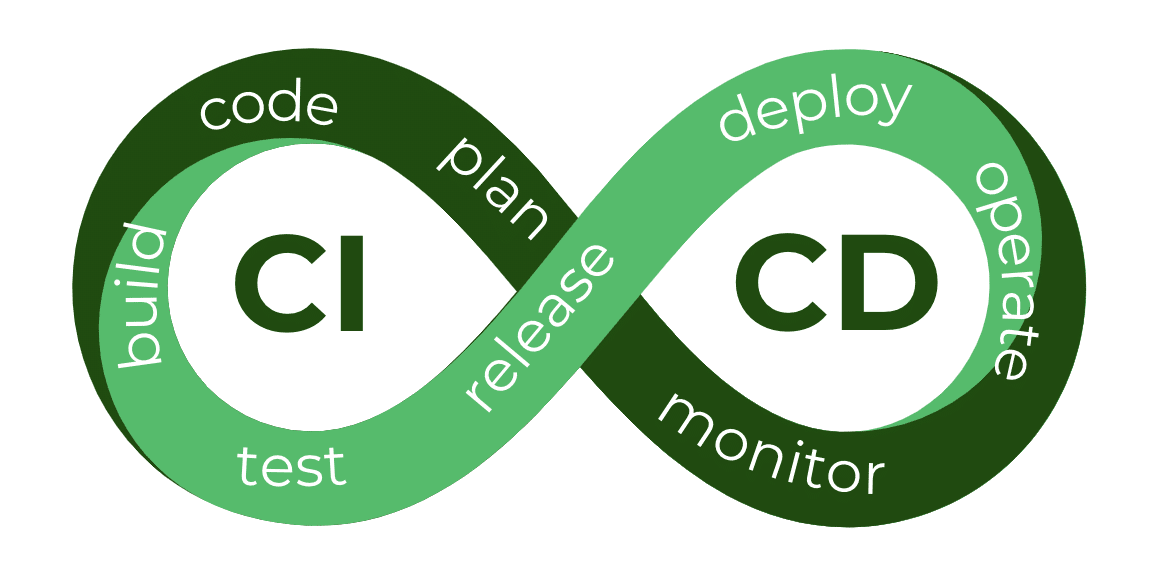
When these components are aligned, the toolchain becomes a source of speed and stability. Developers can commit code, trigger automated builds, run tests, scan for vulnerabilities, deploy consistently, and monitor application performance without relying on manual handoffs. However, when these components are poorly integrated or inconsistently managed, they create friction.
That friction can show up in many ways. Developers may not know which pipeline template to use, or teams may configure repositories differently. Permissions may become difficult to audit, or CI/CD runners may become unreliable or under-optimized. Security checks may happen too late in the process or legacy DevOps tools may not integrate cleanly with newer workflows. Over time, the toolchain becomes harder to maintain, harder to scale, and harder to align with business goals.
How GitLab Helps Close the Gap
GitLab helps bridge the gap between engineering goals and toolchain reality by bringing core DevSecOps capabilities into a single platform. Instead of forcing teams to manage disconnected tools for planning, source code management, CI/CD, security, compliance, and deployment, GitLab gives organizations a more unified foundation for software delivery.
With GitLab, teams can:
- Standardize version control
- Automate pipelines
- Manage code reviews
- Integrate security earlier in the lifecycle
- Create more consistent development workflows
This supports many of the goals engineering leaders care about most, including faster delivery, stronger governance, better collaboration, and improved product quality. GitLab is especially valuable because it helps reduce the operational burden created by fragmented toolchains. Teams can create reusable CI/CD templates, standardize repository structures, manage access controls, integrate with third-party systems, and support cloud-native development workflows. For organizations that need to improve DevOps maturity, GitLab can serve as the central platform for building more repeatable, scalable, and secure engineering practices.
However, the platform alone is not the full solution. To unlock the full value of GitLab, organizations need to configure it around their actual business processes, team structures, compliance needs, and delivery goals. That is where working with SPK as a GitLab Managed Services provider becomes valuable.

How SPK’s GitLab Managed Services Help
SPK and Associates helps organizations maximize the potential of their GitLab investment by aligning GitLab with real business and engineering objectives. As a certified GitLab partner, SPK provides application management services that help development teams streamline workflows, enhance collaboration, improve efficiency, strengthen security, and get products to market faster. Our managed services model gives organizations access to a dedicated pool of monthly support hours instead of relying only on traditional time-and-materials consulting. This gives teams a more flexible and cost-effective way to receive ongoing GitLab expertise. Rather than ending after a one-time implementation, SPK’s Application Management Services support continuous improvement as teams, workflows, and systems evolve.
This matters because software delivery environments are not static. Over time, organizations may need new workflows, architectural guidance or onboarding for new teams. Our team not only helps with these issues, but we also provide GitLab training, integration support, pipeline optimization, access control improvements, and system enhancements. We help reduce the pressure on internal engineering and IT leads by providing the expertise needed to evolve GitLab as business needs change.
SPK’s services can include:
- Business process alignment
- GitLab architecture planning
- CI/CD pipeline design and optimization
Workflow standardization - Migration support from legacy DevOps platforms
- Repository and permission configuration
- GitLab license tracking
- Third-party integrations
- Integration with cloud-native tools
- Custom CI/CD templates
- GitLab runner support
- User onboarding
- Training for developers, managers, and DevOps teams
- Backup and disaster recovery recommendations
- Infrastructure optimization
We can also support cloud migration and self-hosted GitLab environment maintenance. In practical terms, SPK helps organizations move from “we own GitLab” to “GitLab is actively supporting our engineering goals.” That distinction is important. Many companies have powerful tools but lack the time, internal capacity, or specialized expertise to configure, maintain, and continuously improve them. SPK fills that gap by helping teams turn GitLab into a managed, scalable, and business-aligned DevSecOps platform.

From Tool Management to Continuous Improvement
One of the biggest advantages of working with SPK is our focus on continuous improvement. Software teams often change quickly. New products are introduced, teams grow, compliance requirements evolve, and strategies shift. A GitLab implementation that worked well a year ago may need to be refined to support new delivery models or business priorities. SPK helps organizations keep GitLab aligned with those changes. This includes improving workflows, enhancing features and functionality, optimizing system architecture, and supporting users as they adopt better development practices.
This approach helps teams close the gap between what they want to accomplish and what their tools currently allow. Instead of accepting toolchain friction as a normal part of software development, organizations can actively remove it. Instead of letting pipelines, permissions, integrations, and processes drift over time, they can manage GitLab as a strategic platform that evolves with the business.
Bridging the Gap with GitLab and SPK
Software engineering goals are easy to define but can be difficult to achieve when a toolchain does not support them. Teams want faster delivery and better quality, yet fragmented tools and inconsistent workflows often stand in the way. GitLab provides a powerful foundation for closing that gap by unifying key DevSecOps capabilities across the software lifecycle. However, the greatest value comes when GitLab is properly aligned with business processes, team needs, security requirements, and long-term engineering goals.
SPK and Associates helps organizations make that alignment a reality. Through GitLab Managed Services, SPK provides the ongoing expertise, support, and training needed to turn GitLab into a true business enabler. By achieving their software engineering goals, organizations can focus on what they do best: building better software. If you are ready to improve collaboration and accelerate delivery, reach out to our team of experts.