

Engineering leaders in regulated industries cannot afford black box migrations. When your product development involves complex mechatronics and strict safety compliance, the transition from Bitbucket to GitLab must be surgical. A fragile web of integrations often characterizes the legacy Atlassian stack, where Bitbucket handles source code. However, external plugins manage CI/CD and security. Moving to GitLab’s unified DevSecOps platform is a strategic modernization due to its all-in-one approach. With that said, it requires a rigorous technical framework to ensure data integrity and process continuity. Let’s get into how to make this migration happen the right way.
The Hidden Cost of Toolchain Fragmentation in Regulated Engineering
In a mechatronics environment, the development stack often bridges the gap between hardware and software. In our experience, Bitbucket’s integration-first architecture often leads to a fragmented data model. When your CI/CD pipelines, artifact management, and security scanning live in disparate tools, you lose the thread of evidence required for regulatory audits. While this may be ok for software development practices in some industries, it is not for the highly regulated industries we work with.
This fragmentation creates a significant integration tax. Developers spend hours context-switching between disconnected UIs. For engineering leaders, this lack of visibility leads to requirements drift. A unified platform like GitLab eliminates this by providing a single data store for every commit, merge request (MR), and security scan. This consolidation is the foundation for achieving operational confidence.
Why Bitbucket’s Integration-First Approach Fails Complex Product Teams
Bitbucket lacks native, high-performance CI/CD and integrated security. To achieve a modern workflow, teams often rely on a mix of Jenkins, SonarQube, and various Atlassian Marketplace apps. This creates several technical risks:

- Orchestration Gaps: Bitbucket lacks the granular approval chains necessary for safety-critical code. You cannot easily enforce Code Owner sign-offs across specific file paths without complex third-party logic.
- Fragile Web of Webhooks: Every integration point is a potential failure. If a webhook fails to trigger a Jenkins build, the feedback loop is broken, delaying the entire release cycle.
- Limited AI Context: While Atlassian Rovo offers search assistance, it lacks the deep, agentic orchestration found in GitLab Duo. GitLab’s AI agents operate with full visibility into the knowledge graph—including issues, epics, and pipeline states—to provide contextually aware code suggestions.
Technical Execution: Mapping the Migration Path
A successful migration requires more than a git push. You must preserve the metadata that constitutes your audit trail.
1. Repository and Metadata Transfer
Use the GitLab Migration tool (or the API-based “Import from Bitbucket” feature) to move your repositories. This process must include:
- Commit History: Ensure all branches and tags are preserved.
- Pull Request (PR) Mapping: Map Bitbucket PRs to GitLab Merge Requests (MRs). This includes preserving comments and review history, which are vital for compliance documentation.
- User Mapping: Align Bitbucket identities with GitLab users via LDAP or SAML to maintain accurate “Created By” and “Approved By” records.
2. Translating CI/CD Pipelines
The most technical hurdle is moving from Jenkins or Bitbucket Pipelines to GitLab CI/CD (.gitlab-ci.yml). In order to do so, there are some foundational principles that you’ll need to understand, which you can start here. After that foundation, here are some areas to consider, given other tools you may be using.
- Convert Jenkinsfiles: Map Jenkins stages to GitLab “Stages” and “Jobs.”
- Leverage Runners: Deploy GitLab Runners on-premises or in the cloud to handle specialized hardware-in-the-loop (HIL) testing common in mechatronics.
- Use Templates: Create CI/CD Templates to standardize security scans and compliance checks across all engineering projects.
3. Implementing Granular Approval Rules
In regulated environments, you must replace Bitbucket’s basic merge checks with GitLab’s Merge Request Approvals.
- Code Owners: Define a CODEOWNERS file to automatically require approval from specific SMEs when changes touch sensitive directories (e.g., safety-critical firmware).
- Approval Rules: Set mandatory approval counts and prevent the author of a change from approving their own work to satisfy SOX or ISO requirements.
Beyond SCM: Leveraging GitLab for Mechatronics and Hardware-Software Parity
At SPK, we understand that software is only one part of the mechatronics puzzle. Your toolchain must support the full development stack. GitLab’s native support for GitOps and Infrastructure as Code (IaC) allows you to manage hardware configurations alongside your application code.
By consolidating your toolchain, you can reduce system maintenance time by up to 90%. This is achieved by eliminating the need to patch and update multiple point solutions. Instead, you have a single, hardened platform that supports everything from requirements management to binary storage in the GitLab Package Registry.
Ensuring Compliance Continuity During the Switch
Compliance is not a one-time event; it is a continuous state. GitLab’s “Security and Compliance” dashboard provides real-time visibility into your risk factors.
- Automated Policy Management: Use “Scan Execution Policies” to ensure that every pipeline runs a Static Analysis Security Test (SAST) and Secret Detection scan.
- Audit Events: GitLab logs every action. From permission changes to repository exports are logged. This provides a comprehensive audit trail that is easily exportable for regulatory reviews.
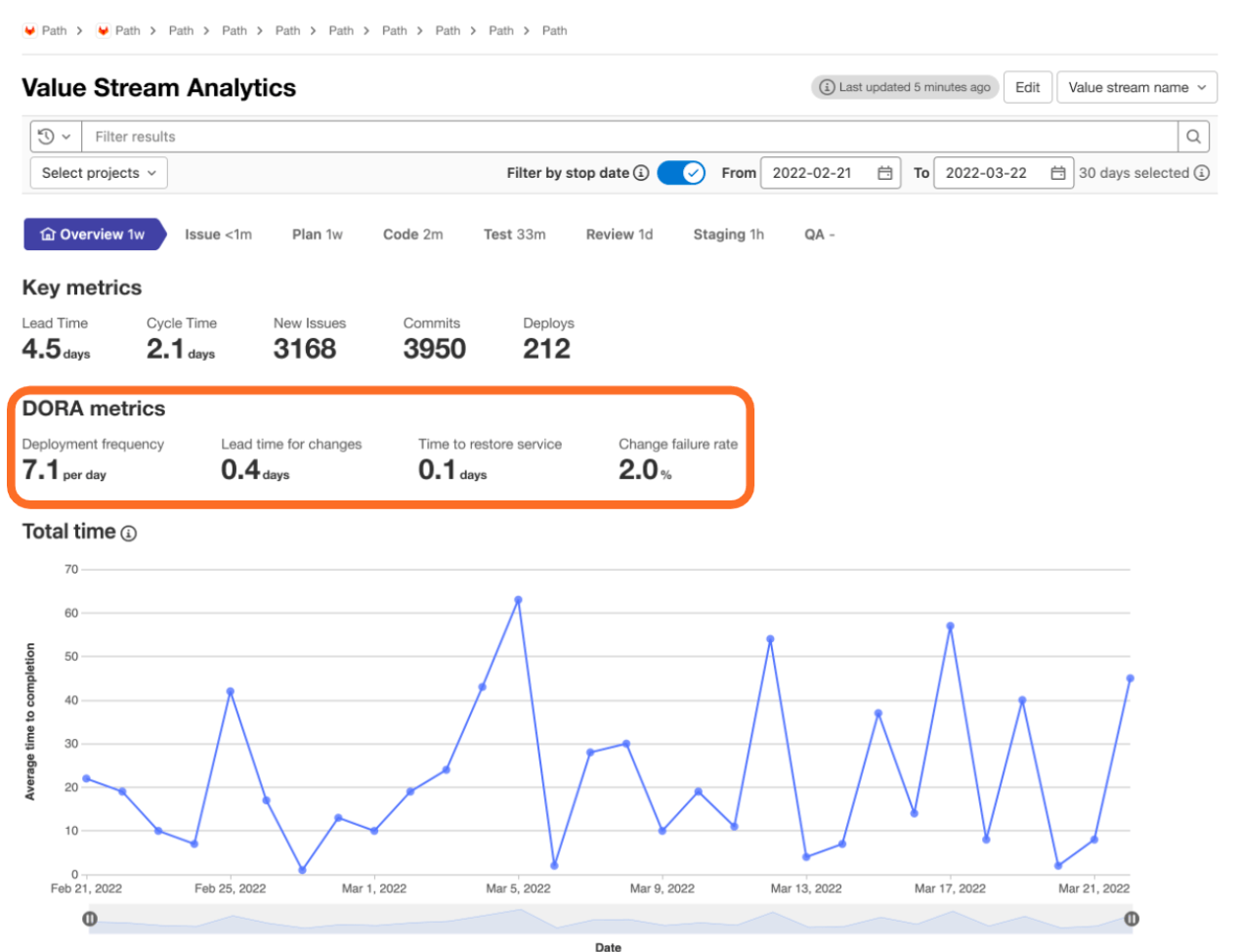
- DORA Metrics: Track “Change Failure Rate” and “Lead Time for Changes” to quantify the impact of the migration on your engineering velocity.
Achieving Operational Confidence with a Unified Platform
The transition to GitLab is a move toward a privacy-first AI and DevSecOps environment. Unlike other platforms, GitLab Duo does not use your proprietary code to train its models. This is a critical distinction for organizations protecting high-value intellectual property in the automotive or medical sectors.
When your AI agents have full visibility into your GitLab projects and pipelines, they can automate repetitive tasks like fixing bugs or generating unit tests with high accuracy. This orchestration allows your engineering talent to focus on high-level design and system architecture rather than manual toolchain management.
Modernizing the Systems That Drive Product Development
Migrating from Bitbucket to GitLab is a technical necessity for engineering organizations aiming for higher quality and faster delivery. It replaces a fragmented, high-maintenance stack with a unified, secure, and AI-powered platform. By following a structured migration framework, you can protect your data, preserve your history, and empower your teams to achieve real business results. While you can do this yourself, there are alternatives.

“We’ve done this hundreds of times. So we can normally do this much quicker with better outcomes than having IT teams do this internally when they have to learn everything.”
Carlos Almeida
Vice President, Software Engineering
SPK and Associates
SPK specializes in helping engineering organizations modernize their systems. We bring deep expertise in mechatronics and regulated environments to ensure your migration is seamless and secure. If you are looking to partner with someone to accelerate this migration, you can contact SPK’s experts to learn more about our approach and how we can support you.