


Faster release cycles, stricter compliance standards, AI-driven development, and growing DevOps maturity expectations are putting enterprise software teams under more pressure than ever. Due to these factors, test management inside Jira must be scalable, secure, and future-ready. Two popular Jira-native test management platforms for enterprise teams are Appsvio Test Management and Xray for Jira. With over 28,000 installs, Xray is an extremely popular test management platform. However, Appsvio Test Management has recently gained momentum. While both extend Jira to manage test cases, executions, and traceability, their architectural approaches, security posture, AI strategy, and pricing models differ significantly. In this guide, we analyze both platforms to help you determine which solution best aligns with enterprise priorities.

Enterprise Test Management in 2026: What Actually Matters?
Before comparing more detailed features, enterprise buyers should evaluate platforms based on:
- Cloud architecture and data residency
- Security certifications and compliance readiness
- Scalability and platform alignment with Atlassian’s roadmap
- Native Jira integration depth
- AI capabilities
- Pricing transparency and long-term cost predictability
Let’s break down how Appsvio and Xray compare across these criteria.
Platform Architecture and Data Residency
Appsvio: Built on Atlassian Forge
One of the most significant differentiators is architecture. Appsvio is built on the Atlassian Forge platform, meaning:
- Data is stored and processed within Atlassian infrastructure
- It uses Forge SQL, Forge KVS, and Forge Object Storage
- It qualifies as “Runs on Atlassian”
This is especially important for enterprises prioritizing:
- Data residency in supported Atlassian regions
- Tenant isolation
- Reduced data egress
Alignment with Atlassian Government Cloud and Isolated Cloud, which is coming later in 2026.

Xray: External Infrastructure
Xray stores and processes data outside of Atlassian infrastructure. While widely adopted, this architecture means:
- Data is stored on external servers
- It is not eligible for some Atlassian-native trust programs
- Users should consider the risks of data egress for regulated industries
For enterprises operating in FedRAMP-aligned or government environments, Forge-native architecture can be a meaningful differentiator.
Security, Compliance, and Marketplace Trust
Enterprise security scrutiny is increasing, especially in healthcare, fintech, defense, and regulated manufacturing. Here are some differences between the two solutions.
Appsvio Highlights
- SOC 2 Type 2 certification
- Eligible for Atlassian Cloud Fortified program
- Eligible for future Marketplace Trust Program
- Built with Atlassian’s evolving security standards in mind
Xray Considerations
- Not eligible for “Runs on Atlassian”
- Data egress prevents some trust program participation
For compliance-heavy environments, architecture matters as much as features.
User Experience and Native Jira Alignment
Test management tools should feel like Jira, not like a bolt-on system.
Appsvio
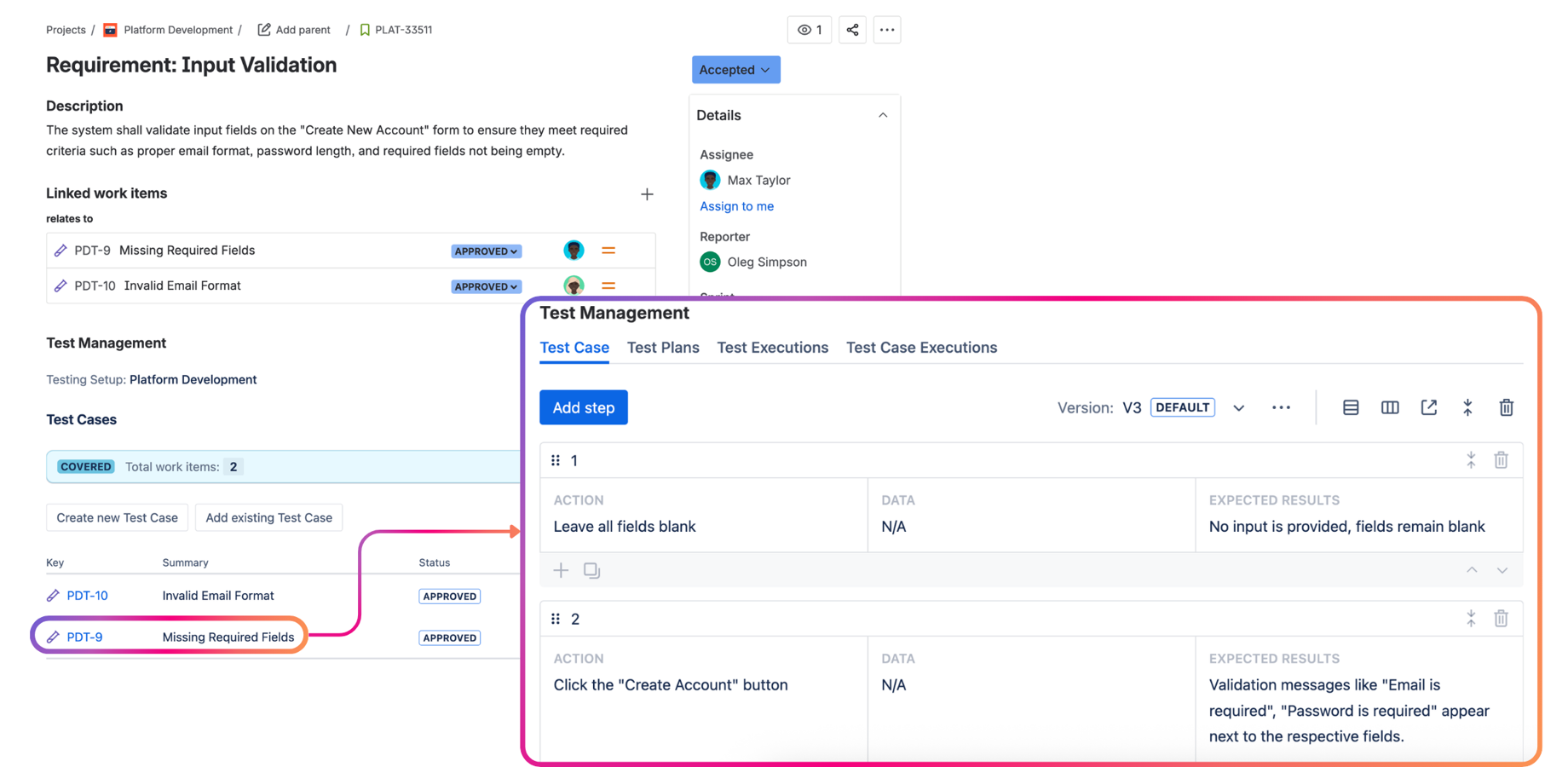
- Follows Atlassian Design System principles
- Testing objects are Jira issues
- Key data stored in Jira custom fields
- Integrated into native Jira views, workflows, and exports
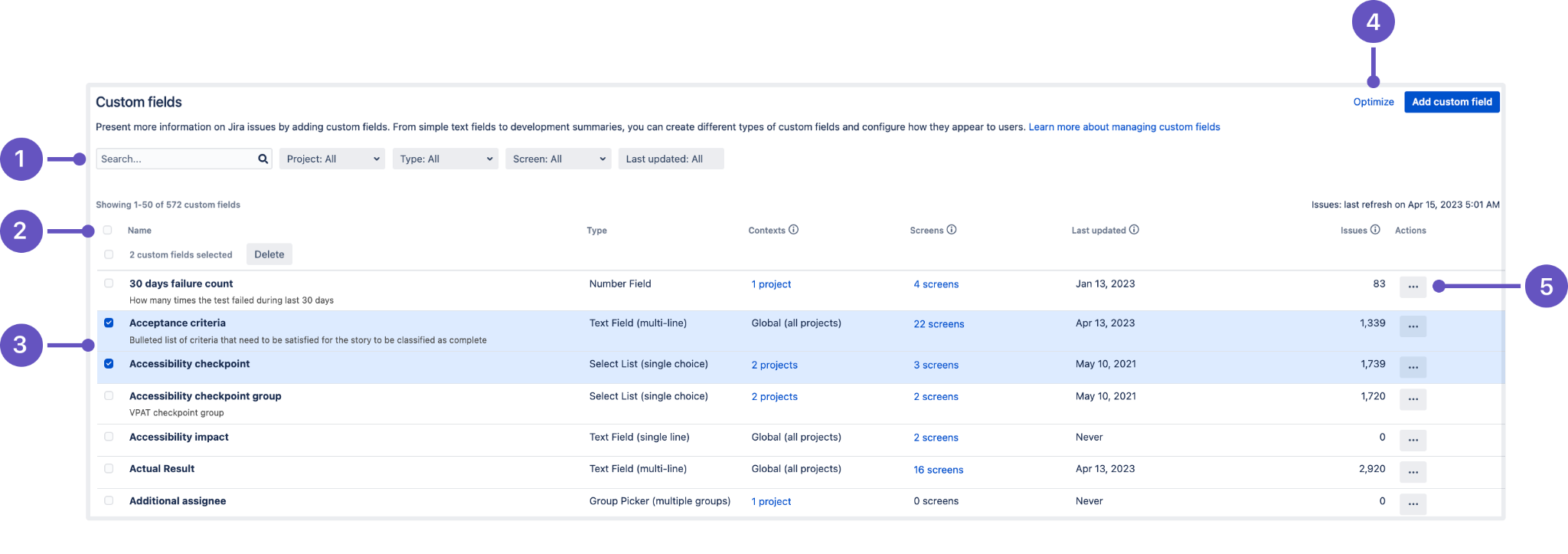
This means teams can use:
- JQL to search test objects
- Jira dashboards and gadgets
- Standard workflow approvals
- Native exports
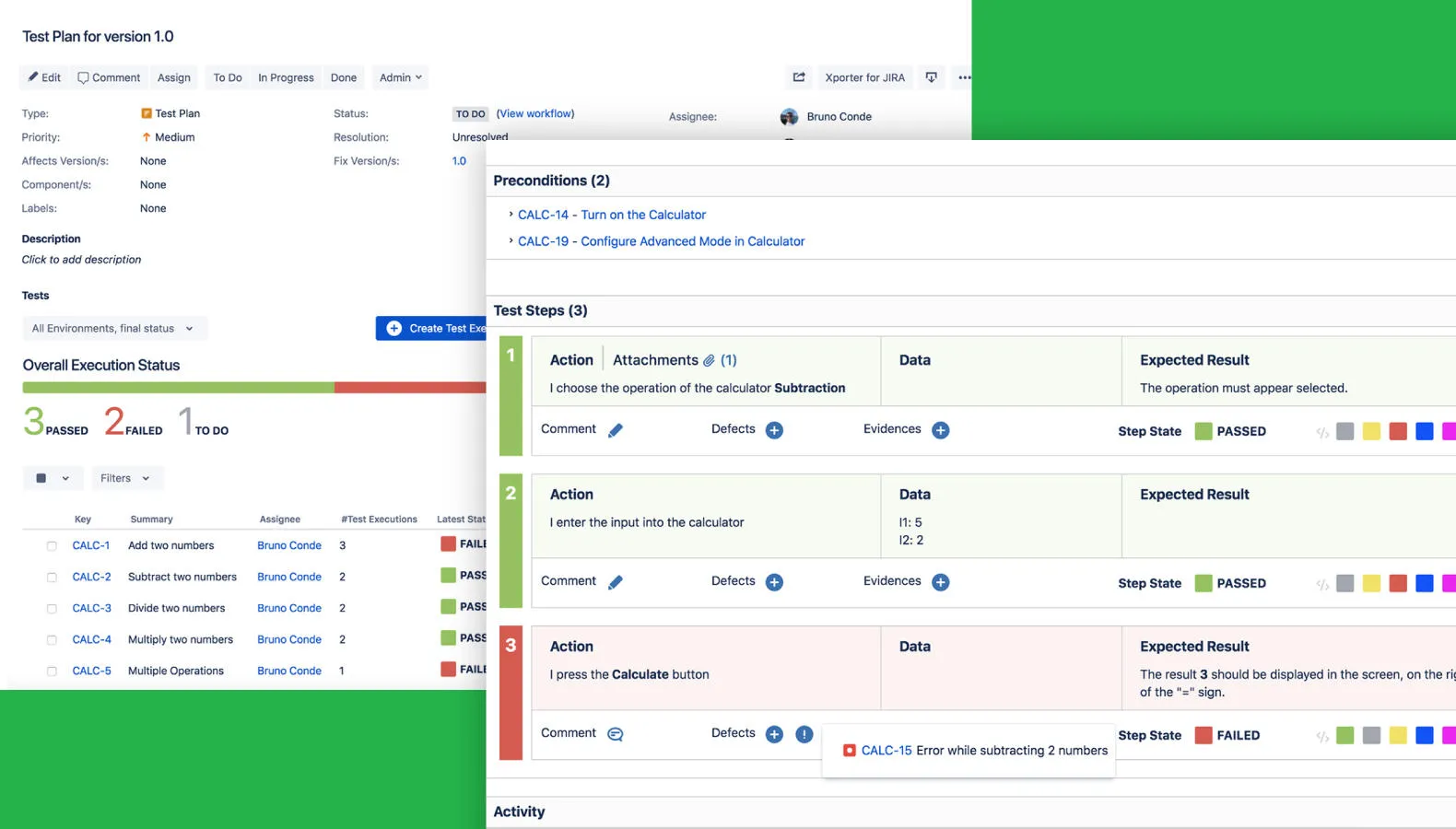
Xray
- Uses its own Xray Design System
- Some elements stored within Jira issues, others external
- Requires additional configuration complexity
For enterprises prioritizing minimal training and adoption friction, UI consistency with Jira matters.
Test Case Management Capabilities
Both tools support core test management capabilities such as:
- Manual test case creation
- Test plans
- Test executions
- Workflow-based reviews
- JQL searchability
However, there are key differences.
Appsvio
- Call Test Case capability
- Test case preconditions as fields
- Organizes test cases into Test Plans
- AI test case generation with Atlassian Rovo
Xray
- Supports automated, manual, and generic test case types
- Test Sets and hierarchical tree views
- Enterprise plan required for versioning
- Attachments stored on custom servers
- Import from automation frameworks like JUnit and TestNG
Xray may currently offer deeper automation integrations, but Appsvio is clearly investing in native AI and Forge-aligned extensibility.
Execution, Traceability, and Reporting
Enterprise test visibility is critical, and reporting can be just as important as any other feature. Here are a few differences related to this area.
Appsvio
- Test execution directly on Jira issue
- Execution results stored in issue fields
- Traceability matrix
- Requirement coverage tracking
- Upcoming execution prediction reporting
- CSV and PDF export
Xray
- Execution via Testing Board
- Execution results view-based
- Backward traceability reports
- CSV export
Both tools support coverage and traceability, but Appsvio’s deeper Jira-field integration simplifies reporting and dashboard configuration.
AI Capabilities and 2026 Innovation Direction
AI is transforming software testing. These companies have different approaches to AI from what we understand today.
Appsvio
- AI test case generation powered by Atlassian Rovo
- AI-driven test updates
- Future-proof alignment with Atlassian’s AI roadmap
Xray
- Uses third-party AI providers in enterprise plan
Enterprises looking to consolidate AI tooling may prefer solutions aligned with Atlassian-native AI investments rather than external providers.
CI/CD and Automation Integration
Xray
- Strong integrations with Jenkins, Azure DevOps, Bamboo, GitHub, GitLab
- GraphQL-based API
- Mature automation imports
Appsvio
- CI/CD integrations coming soon
- Forge REST API module




If CI automation maturity is your primary requirement today, Xray may have a current advantage. If architectural alignment and long-term roadmap alignment are more important, Appsvio may be compelling.
Pricing Comparison at Enterprise Scale
Features aren’t everything. Cost becomes significant at scale. From our research using the Atlassian Marketplace user counts, here are the cost deltas between the two solutions.
Across tiers, Appsvio averages 44.08% of Xray’s cost. For large enterprises, that delta becomes material. It’s especially a fiscal consideration when you are working across multi-project deployments.
When Should Enterprise Teams Choose Appsvio?
Choose Appsvio if your organization prioritizes:
- Forge-native architecture
- Data residency alignment
- Atlassian trust program eligibility
- Native Jira UI experience
- AI alignment with Atlassian Rovo
- Lower total cost of ownership
- Simplified governance model
When Might Xray Be the Right Fit?
Xray may be preferable if:
- You require advanced CI/CD automation integrations today
- Your organization is already deeply invested in Xray workflows
- Enterprise plan features like test versioning are required immediately
- External automation imports are mission-critical
Which Test Management Platform Makes Sense in 2026?
The right choice depends on enterprise priorities. If your organization is optimizing for:
- Atlassian-native architecture
- Marketplace trust alignment
- Cost predictability
- AI-forward innovation
Appsvio presents a compelling option for 2026.
If your focus is:
- Mature automation ecosystem integrations
- Deep historical adoption
- Enterprise-tier feature breadth
Xray remains a strong contender.

For many enterprise teams, this decision comes down to whether architectural alignment with Atlassian’s evolving cloud and AI roadmap outweighs immediate ecosystem maturity.
As an Atlassian Gold Solution Partner, SPK and Associates helps enterprises do many things, including the following:
- Evaluate Appsvio vs. Xray in regulated environments
- Design test management governance models
- Implement traceability frameworks
- Optimize Jira-based testing workflows
- Integrate CI/CD automation
- Prepare environments for AI-enhanced testing
Choosing a test management platform is not just a feature decision. It is an architectural decision that impacts compliance, cost, scalability, and long-term DevOps maturity. If you are evaluating Jira test management platforms in 2026, our team can help guide your decision with structured assessments and implementation expertise. Contact us today.