
Key takeaways
- Agentic software development goes beyond AI coding assistants: GitLab Duo Agent Platform gives AI agents context across issues, source code, merge requests, CI/CD pipelines, security findings, and development history.
- GitLab and Gemini combine lifecycle context with flexible AI models: GitLab provides the DevSecOps context and orchestration, while Gemini Enterprise Agent Platform provides access to models and managed AI infrastructure.
- Organizations can scale AI with stronger governance: The integration helps teams standardize AI-assisted development around existing Google Cloud infrastructure, security policies, and a shared system of record.
- The goal is a governed agentic development environment: Together, GitLab, Gemini Enterprise Agent Platform, and Agent Engine provide a path for moving from isolated AI experiments to enterprise-scale agentic software development.
AI agents are rapidly improving, with the newest innovation being agentic software development. AI agents are now able to reason across workflows, collaborate with other agents, and help teams move work through the entire software development lifecycle. GitLab is positioning its platform around this shift. Their Duo Agent Platform brings AI agents directly into the DevSecOps lifecycle. This broader platform approach has received industry recognition, as GitLab was named a Leader in the 2026 Gartner Magic Quadrant for DevSecOps Platforms.
Now, GitLab is extending its agentic development capabilities through its collaboration with Google Cloud. By integrating GitLab Duo Agent Platform with Gemini Enterprise Agent Platform, organizations can combine GitLab’s software lifecycle context and orchestration capabilities with Google Cloud’s AI models and infrastructure. The result is an environment where AI agents can participate across the SDLC while remaining within the security, governance, and cloud infrastructure organizations already use.
What Is Gemini Enterprise Agent Platform?
Gemini Enterprise Agent Platform, formerly Vertex AI, is Google Cloud’s platform for building and deploying AI and machine learning applications. It gives organizations access to Google’s Gemini models along with tools and managed infrastructure for developing AI applications and agents. An important component of Gemini Enterprise Agent Platform is Model Garden, which provides access to a broad collection of first-party, partner, and open models. Organizations can discover, test, customize, and deploy models depending on the requirements of a particular workload. Google Cloud currently describes Model Garden as providing access to more than 200 models. That flexibility becomes especially valuable as enterprises adopt AI across more workflows.
A model that performs well for code generation may not necessarily be the best model for security analysis, complex reasoning, or another specialized task. Organizations may also have requirements surrounding cost, data governance, performance, or regulatory compliance. Gemini Enterprise Agent Platform helps resolve these problems. Instead of locking every AI workflow into one model, the Agent Platform gives organizations a foundation for selecting models based on the task. For GitLab users, Gemini Enterprise Agent Platform provides the underlying model infrastructure that agents can call while GitLab provides the context and orchestration surrounding the software lifecycle.
GitLab and Gemini Enterprise Agent Platform
GitLab Duo Agent Platform became generally available in January 2026 as an intelligent orchestration layer for agentic software development. The platform enables software teams and specialized AI agents to work together across activities such as planning, coding, reviewing software, and remediating vulnerabilities. The integration with Gemini Enterprise Agent Platform adds another layer to that architecture. Agents within GitLab Duo Agent Platform can natively call Gemini Enterprise Agent Platform models on Google Cloud, combining GitLab’s DevSecOps context with Google Cloud’s model infrastructure. This distinction is important.
Many AI coding tools operate primarily inside the developer’s editor. They may have detailed visibility into a file or repository but limited knowledge about everything surrounding that code. GitLab has a much broader view. Due to issues, merge requests, repositories, CI/CD pipelines, security findings, and delivery workflows all existing within GitLab, GitLab Duo agents can reason using information from multiple stages of the lifecycle. For example, the GitLab Duo Planner Agent can analyze backlog information, break larger initiatives into structured tasks, and help teams prioritize work. Meanwhile, security-focused agents can analyze vulnerabilities, explain risks, and recommend remediation. Built-in flows can then coordinate actions across agents so developers do not have to manually orchestrate every step.
Agentic Chat Adds Lifecycle Context
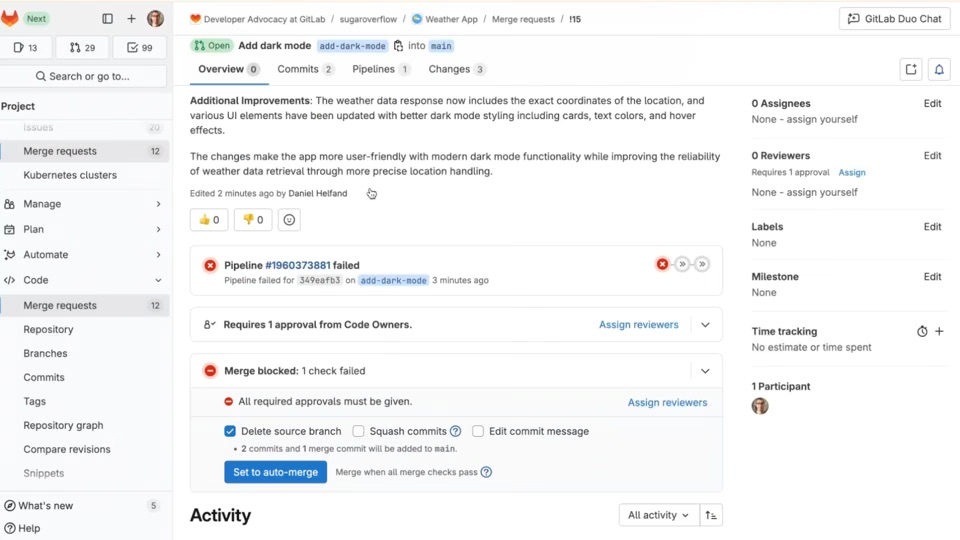
Agentic Chat helps tie these capabilities together. Instead of simply asking an AI assistant to explain a piece of code, developers can interact with an agent that understands the broader state of their project. That context may include:
- Issues and requirements
- Merge requests
- Source code
- CI/CD pipelines
- Security findings
- Development history and project context
The difference is between an AI tool that knows what is in front of the developer and an AI system that understands what is happening across the software lifecycle. This lifecycle context is one of the most important pieces of agentic development. An agent cannot make useful decisions about a security vulnerability, backlog priority, or failed pipeline if it cannot understand how that information relates to the rest of the project.
Amplified by Gemini Enterprise Agent Platform
Gemini Enterprise Agent Platform strengthens this architecture by providing the models and AI infrastructure that GitLab agents can use. That model flexibility can become increasingly important as agentic workflows become more sophisticated. As the models available through Gemini Enterprise Agent Platform improve in areas such as reasoning, context handling, and tool use, those improvements can expand what GitLab Duo agents are capable of accomplishing.
GitLab also supports Bring Your Own Model (BYOM) capabilities for Duo Agent Platform, giving enterprises additional flexibility around where models are hosted and how AI infrastructure aligns with internal governance requirements. Rather than forcing developers to evaluate and manage individual models themselves, GitLab can abstract much of this complexity from the development experience. Developers continue working in GitLab while Gemini Enterprise Agent Platform powers AI capabilities behind those workflows.
What the GitLab and Gemini Platforms Mean for Google Cloud Customers
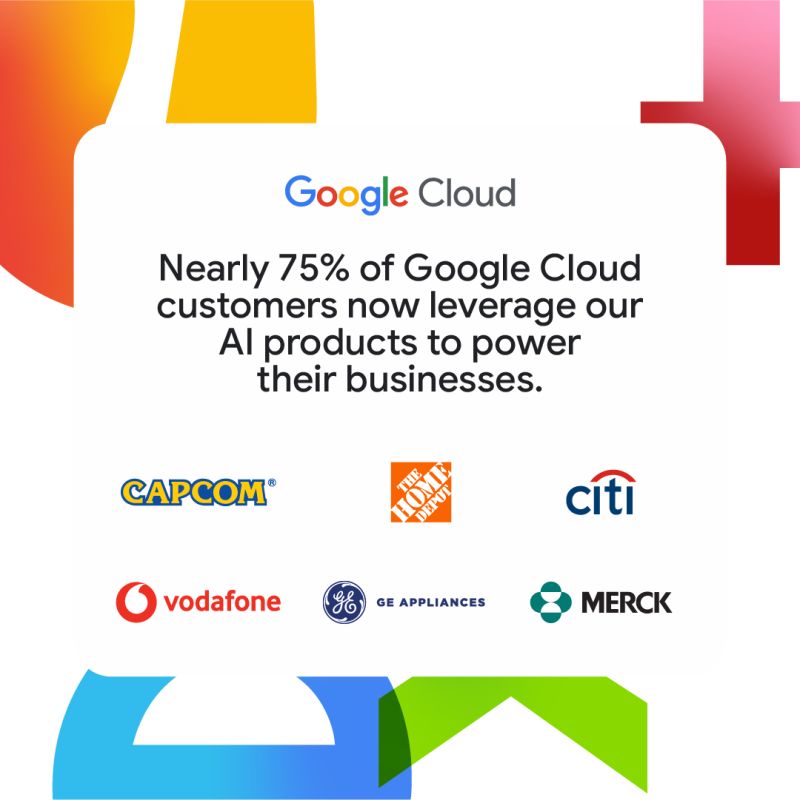
For organizations already standardized on Google Cloud, the integration has an important advantage: AI-assisted software development can align more closely with the infrastructure and governance models the organization already has in place. Instead of introducing dozens of independent AI coding tools, teams can create a more standardized environment where:
- AI agents operate with lifecycle context.
- Development teams remain within a shared system of record.
- Approved models can support different AI workflows.
- Security and governance remain part of the DevSecOps platform.
- AI usage can align more closely with existing Google Cloud policies and infrastructure.
Benefits Across Teams
This can be particularly valuable for platform engineering teams. As organizations rapidly adopt AI, platform teams may otherwise find themselves responsible for governing many independent coding assistants, model providers, browser tools, extensions, and AI APIs. Integrating Gemini Enterprise Agent Platform through GitLab provides another approach: centralize AI-assisted development around the DevSecOps platform developers already use.
In addition to this, security teams can benefit as well. Typically, an AI system identifies a vulnerability in one tool, sends information to another tool, and requires a developer to manually carry the remediation back into GitLab. Now, agents can work closer to the same environment where vulnerabilities are already identified, reviewed, prioritized, and resolved.
For enterprises, this is where agentic AI begins to become more scalable. The goal is not simply to add more AI tools. It is to give AI access to the right context and workflows while retaining the governance required to operate those agents responsibly.
GitLab and Google Cloud have collaborated on AI and software development initiatives for years, with Google Cloud previously supporting AI capabilities within GitLab Duo. The expanded Gemini Enterprise Agent Platform integration takes that relationship further by supporting the transition toward enterprise agentic DevSecOps.
Deploying AI Agents with GitLab and Agent Engine
The GitLab and Google Cloud relationship also extends beyond using Gemini Enterprise Agent Platform to power GitLab Duo agents. Developers can use GitLab to help build, secure, and deploy their own AI agents into Google Cloud Agent Engine. Agent Engine is Google Cloud’s managed runtime for deploying AI agents into production. It handles much of the infrastructure surrounding an agent, allowing development teams to focus more heavily on the agent itself rather than building and maintaining the environment required to operate it.
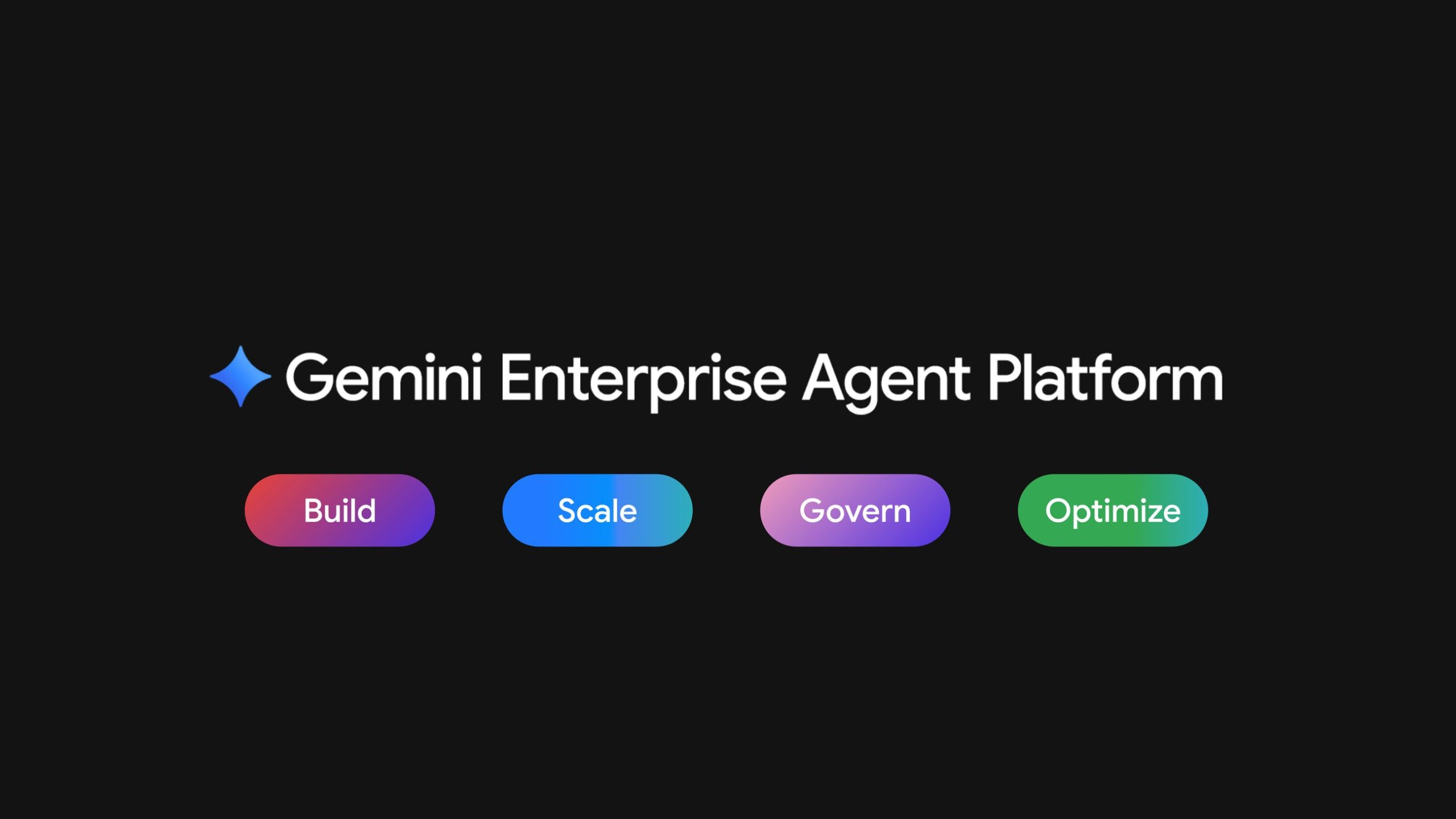
Google describes its agent platform as providing managed capabilities for building, deploying, governing, and operating enterprise AI agents. This becomes useful because developing an agent is only one piece of putting agentic AI into production. Organizations must also consider:
- Authentication and cloud permissions
- Infrastructure
- Deployment pipelines
- Vulnerability management
- Monitoring
- Scaling
- Session management
- Agent memory
- Governance
Agents are applications. They contain code, dependencies, permissions, infrastructure, and potential vulnerabilities. They therefore require many of the same DevSecOps practices organizations already apply to traditional applications. Using GitLab as the delivery and governance layer for agents helps organizations extend those existing practices into this new development model.
Moving Toward Governed Agentic Software Development
The transition from AI-assisted coding to agentic software development represents a much larger change than adding another developer productivity tool. AI agents increasingly need to understand requirements, source code, security findings, pipelines, deployments, and the relationships between them. They also need controlled access to models, infrastructure, tools, and enterprise data. GitLab provides the software lifecycle context and orchestration layer while Gemini Enterprise Agent Platform provides powerful models and managed AI infrastructure. Agent Engine provides a production environment for organizations building agents of their own. Together, these capabilities give Google Cloud customers a path toward agentic software development without creating a separate AI toolchain.
For organizations exploring how to move from individual AI experiments toward enterprise-scale agentic development, that combination of context, orchestration, model flexibility, security, and governance may ultimately be what allows AI adoption to scale. If you are interested in GitLab and Gemini for your organization, contact our team.