

Key Takeaways
- AI adoption alone does not prove ROI. Teams must measure how AI coding tools impact development speed, software quality, engineering capacity, and overall costs.
- Developer time saved must translate into business value. Tracking recovered hours, engineering throughput, and additional productive capacity helps organizations understand AI’s impact.
- Faster code generation does not always mean faster delivery. Metrics like DORA, engineering cycle time, and pull request velocity reveal whether AI improves the entire development process.
- Code quality, testing, and security remain essential. Teams should monitor defect rates, test coverage, rework, and security findings to ensure AI-generated code meets quality standards.
- A balanced AI ROI scorecard provides a clearer picture of success. Combining productivity, delivery, quality, and financial metrics helps teams identify where AI creates measurable value and where improvements are still needed.
AI coding assistants help with tasks such as writing code, generating tests, and creating documentation. While these capabilities sound productive, they do not automatically prove that an AI investment is creating value. Measuring AI coding ROI requires looking beyond adoption statistics. A high number of prompts, accepted suggestions, or lines of AI-generated code may show that developers are using a tool, but they do not show whether the business is better off because of it. Product teams must connect AI usage to changes in speed, quality, cost, and engineering capacity to truly measure the value of their AI tools. Here are 12 ways to measure your AI coding ROI.
1. Measure Developer Time Saved
One of the simplest places to start is developer time. Teams can compare how long developers spend on common activities before and after introducing AI coding tools, such as writing code, creating tests, debugging, or searching documentation. The important distinction is between activity and usable time saved. If AI saves a developer four hours each week, determine where those hours go. If developers use that time to improve architecture or strengthen testing, the organization can begin connecting AI productivity directly to business value.


2. Track Software Delivery Performance
AI coding tools should eventually affect the speed at which software moves through development, not simply how quickly an individual developer writes code. DORA metrics provide a useful starting point by measuring deployment frequency, lead time for changes, change failure rate, and mean time to recovery.
Product teams can also track engineering cycle time, such as the time from issue to merge request, story to completion, or feature to release. This helps expose an important AI tradeoff: developers may generate code faster while code review or QA becomes the new bottleneck. If coding gets faster but total cycle time stays the same, the organization has improved one step without improving overall delivery.
3. Measure Pull Request and Code Review Velocity
Pull requests provide another useful view into whether AI is improving development flow. Teams can measure time to first review, time to approval, and time to merge before and after adopting AI coding tools. This is particularly important because increased code generation can create more work for reviewers. If developers produce code faster but reviewers face larger queues or spend significantly more time validating AI-generated changes, some of the productivity gain disappears. Product teams should therefore measure the full path through review rather than treating faster code creation as ROI by itself.
4. Watch Code Quality and Defect Rates
Faster delivery has limited value if it creates more production problems. Product teams should pair productivity metrics with quality measures such as defect escape rate, change failure rate, rework, test coverage, and security findings. A defect escape rate measures how many defects make it through internal testing and reach production. Rework can provide another useful signal by showing how much development time is spent correcting defects, misunderstood requirements, or poor-quality code. If AI increases output while defect rates and rework also increase, the organization may simply be moving work downstream rather than eliminating it.
Defect escape rate = (Number of defects found in production / total defects found across the lifecycle) x 100
5. Measure Engineering Throughput
Product teams ultimately care about completed work. That makes throughput another useful metric for AI coding ROI. Teams can compare the number of completed stories, features, bugs, or other work items per sprint or release before and after introducing AI assistance. However, quantity should always be considered alongside quality. Completing more stories is not valuable if those stories create additional defects, require significant rework, or fail to deliver the intended functionality. Throughput is most useful when paired with cycle time and quality metrics. Together, those measurements show whether the team is actually delivering more finished, usable software rather than simply generating more code.
6. Track Developer Experience
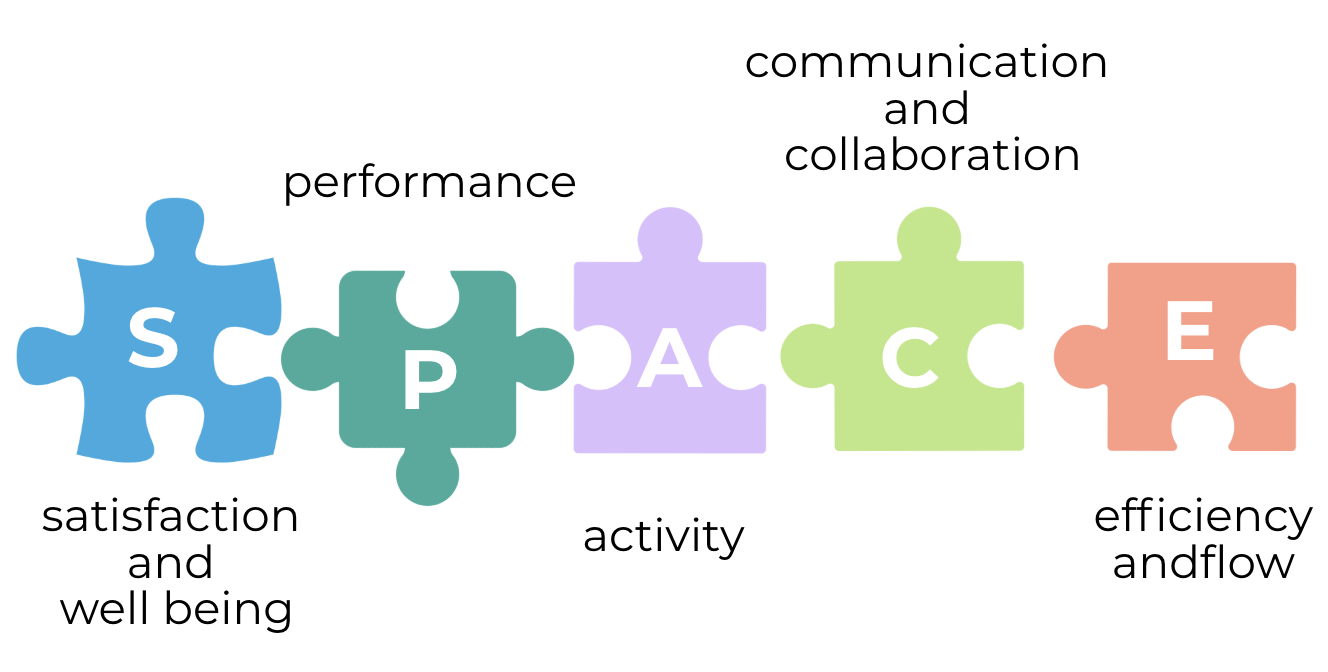
Not every AI benefit appears directly in a Git repository or project dashboard. AI coding tools can also change how developers experience their work. The SPACE Framework provides one approach for looking beyond raw activity metrics. Product teams can survey developers about whether AI reduces repetitive coding, makes it easier to solve problems, decreases time spent searching for documentation, or gives them more time for architecture and higher-value engineering work. Developer feedback can also identify problems that operational metrics miss. A coding assistant may appear productive on paper while developers spend significant time correcting low-quality suggestions. Combining quantitative metrics with developer feedback provides a more accurate picture of whether the tool is actually helping.
7. Calculate Engineering Capacity Gained
For leadership, one of the most useful ways to communicate AI coding ROI is through engineering capacity. Instead of reporting that AI saves an average of 20 or 30 minutes on a particular task, calculate the cumulative effect across the engineering organization. If 50 developers each recover several productive hours every week, that capacity becomes significant over the course of a year. The next question is what the business does with that capacity. Connecting recovered time to additional productive capacity makes the impact of AI much easier for business leaders to understand.
Teams can translate those recovered hours into full-time equivalent (FTE) capacity by dividing total productive hours saved by the annual working hours of one engineer. This allows organizations to communicate results in more meaningful terms, such as gaining the equivalent capacity of 7 full-time engineers without adding headcount. However, this represents potential capacity rather than actual staffing reductions, so teams should also measure how that recovered time contributes to completed work.

8. Calculate the Cost Per Feature
Ultimately, organizations should compare the cost of AI with the cost of delivering software. A useful executive metric is cost per feature. Teams can estimate the engineering cost required to move a feature from planning through production and determine whether that cost changes after adopting AI coding tools. This incorporates productivity improvements in a way that metrics such as prompts, code suggestions, or lines of generated code cannot. Product teams should also include the actual cost of AI in the calculation. That can include licenses, model usage, infrastructure, implementation, integration, training, and ongoing administration. ROI exists when the value created through faster delivery, higher quality, or additional capacity exceeds those costs.
9. Measure AI Code Acceptance Rate
AI code acceptance rate helps teams understand how effectively developers are using AI-generated suggestions from tools such as GitLab Duo and GitHub Copilot. Teams can calculate this metric by dividing the number of accepted suggestions by the total number of suggestions presented. A higher acceptance rate may indicate that the AI assistant is providing relevant, useful code, while frequent rejections could point to poor suggestions that do not meet development standards. However, acceptance alone does not prove that the generated code is high quality. Teams should also evaluate how often developers need to modify accepted suggestions or correct AI-generated code later in the development process.

10. Track Test Coverage Improvement
AI coding assistants can help developers generate unit tests, create integration tests, and identify scenarios that existing test suites may have missed. Product teams can measure AI’s impact by comparing test coverage before and after adoption, along with the time required to create and maintain automated tests. An increase in coverage can indicate that AI is helping teams test more of their applications without increasing manual effort. However, teams should prioritize critical workflows and high-risk code paths rather than pursuing an arbitrary coverage percentage. The goal is to determine whether AI helps developers identify defects earlier and improve overall software reliability.
11. Measure Documentation Velocity
Documentation often falls behind development because engineers prioritize coding, testing, and releasing new features. AI coding tools can help reduce this gap by generating release notes, technical documentation, API references, and explanations of existing code. Teams can measure documentation velocity by tracking how long it takes to create or update documentation before and after introducing AI. They should also monitor how frequently documentation stays current with code changes and how much manual editing AI-generated content requires. Faster documentation is valuable when it reduces the time engineers spend searching for information and makes it easier for teams to maintain accurate technical records.
12. Monitor Security Findings
Security provides another important measure of AI coding ROI, particularly for organizations developing regulated or safety-critical products. Teams can track the number of critical and high-severity vulnerabilities and dependency issues identified during development. AI-assisted capabilities in platforms such as GitLab and GitHub can help developers identify vulnerabilities earlier, explain security findings, and suggest remediation steps. However, an increase in detected vulnerabilities may initially indicate improved detection rather than declining code quality. Product teams should therefore measure how quickly vulnerabilities are identified and resolved, how many reach production, and whether AI reduces the manual effort required for remediation. These metrics help organizations determine whether AI is improving security while reducing the cost of addressing software risks.
Build an AI Coding ROI Scorecard
While these 12 metrics can help, no single metric can officially “prove” if your AI coding is working. Product teams should establish a baseline before deployment and then track a small group of metrics that represent different parts of software delivery.
A practical scorecard might include:
The objective is not to make every metric improve but to understand the tradeoffs. If developers write code 30% faster but review time increases 40%, the organization needs to address the review bottleneck before assuming it has gained 30% productivity.
Proving the Value of AI Coding
AI coding ROI should ultimately appear in the same places product and engineering leaders already look for performance: delivery speed, product quality, engineering capacity, and development cost. Metrics such as AI-generated code or suggestion acceptance can explain how developers are using the technology, but they are only part of the story. The strongest measurement approach starts with a baseline, introduces AI into specific workflows, and then compares changes across several business-relevant metrics. At SPK and Associates, we help engineering organizations evaluate and implement AI within real product development workflows rather than treating AI adoption as the goal itself. By connecting AI tools with your processes, we help your team determine where AI is generating real value and where your approach still needs improvement. Contact us to learn how we can help your organization build a measurable approach to AI adoption.