

Tracking metrics is a vital component of any successful requirements management or development system. A thorough understanding of your progress or position in the delivery cycle is crucial! Within this article, we will discuss how to create and trace metrics to manage your delivery cycle in Windchill Requirements, Validation & Source (RV&S), formerly known as PTC Integrity Lifecycle Manager.
Trace Metrics in Windchill RV&S (PTC Integrity): Relationship Reporting
Many engineers utilize trace relationships in Windchill RV&S (PTC Integrity) to link document contents inside or outside a given document domain. The diagram below describes the trace relationships between three document domains that handle input, requirements, and design content.
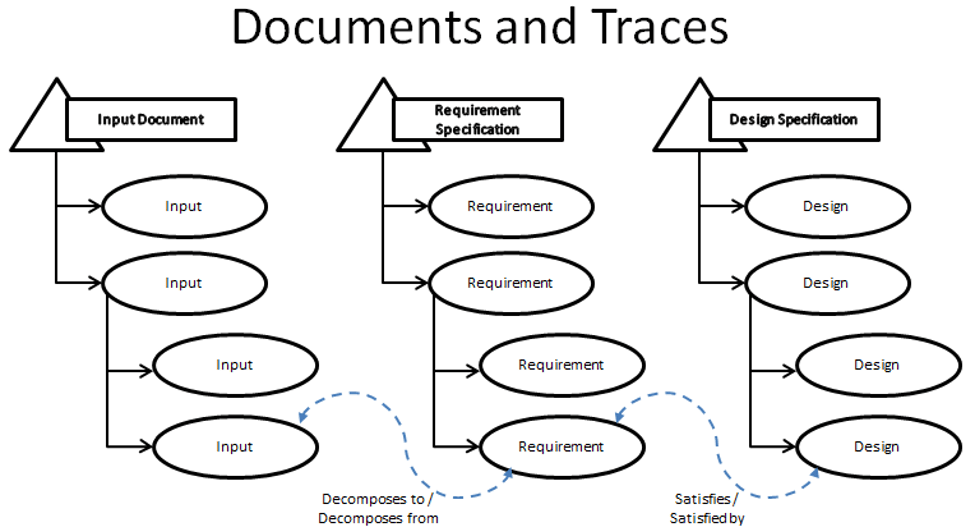
Input will “Decompose to” one or more requirements, which are “Satisfied by” the design. This process represents ‘forward’ or ‘downstream’ relationships. Similarly, when the design “Satisfies” one or more requirements, then the requirement “Decomposes from” the input. This process refers to a ‘backward’ or ‘upstream’ relationship. Moreover, it is also possible to trace content laterally within the same document type through the use of peer traces, such as “Is Related To”.
Trace Metrics in Windchill RV&S (PTC Integrity): Backtraces
Traceability metrics ensure content items from the various documents are properly tracked and sourced through the documents. One of the best features of Windchill RV&S (PTC Integrity) is the ability to thoroughly count backtraces. This is especially helpful for counting the number of Requirement content items that relate back to Input content items. Moreover, this type of tracing typically appears on the document item itself through a series of special fields. The diagram below demonstrates the recorded traces:
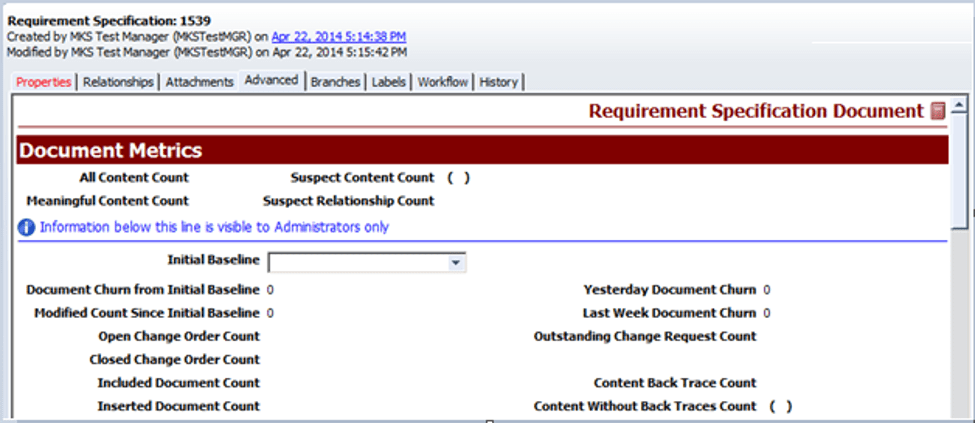
Specific metrics triggers store these computations in special fields, demonstrating an out-of-the-box solution from Windchill RV&S (PTC Integrity). In addition, you can customize the trigger’s schedule to perform calculations on items contained within active projects.
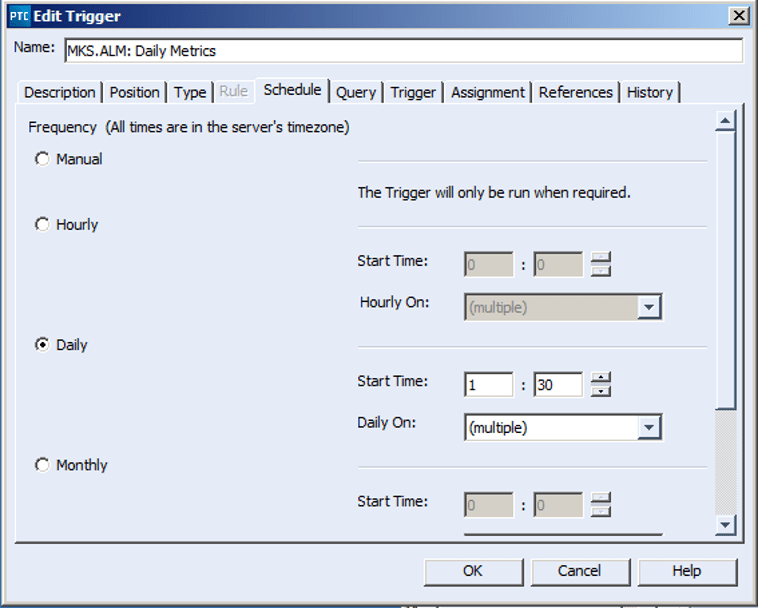
Furthermore, the trigger runs on a daily basis, but it is subject to customization based on your specific needs!
Next Steps
- Contact SPK and Associates to discuss and identify how we can help your engineers with navigation, automation, and efficiency within Windchill RV&S (PTC Integrity).
- Read our White Papers & Case Studies for examples of how SPK devises accessible, unique solutions, as well as the options within Windchill RV&S (PTC Integrity) for further productivity.
- Subscribe to our blog to stay informed on product development and engineering efficiency topics.