
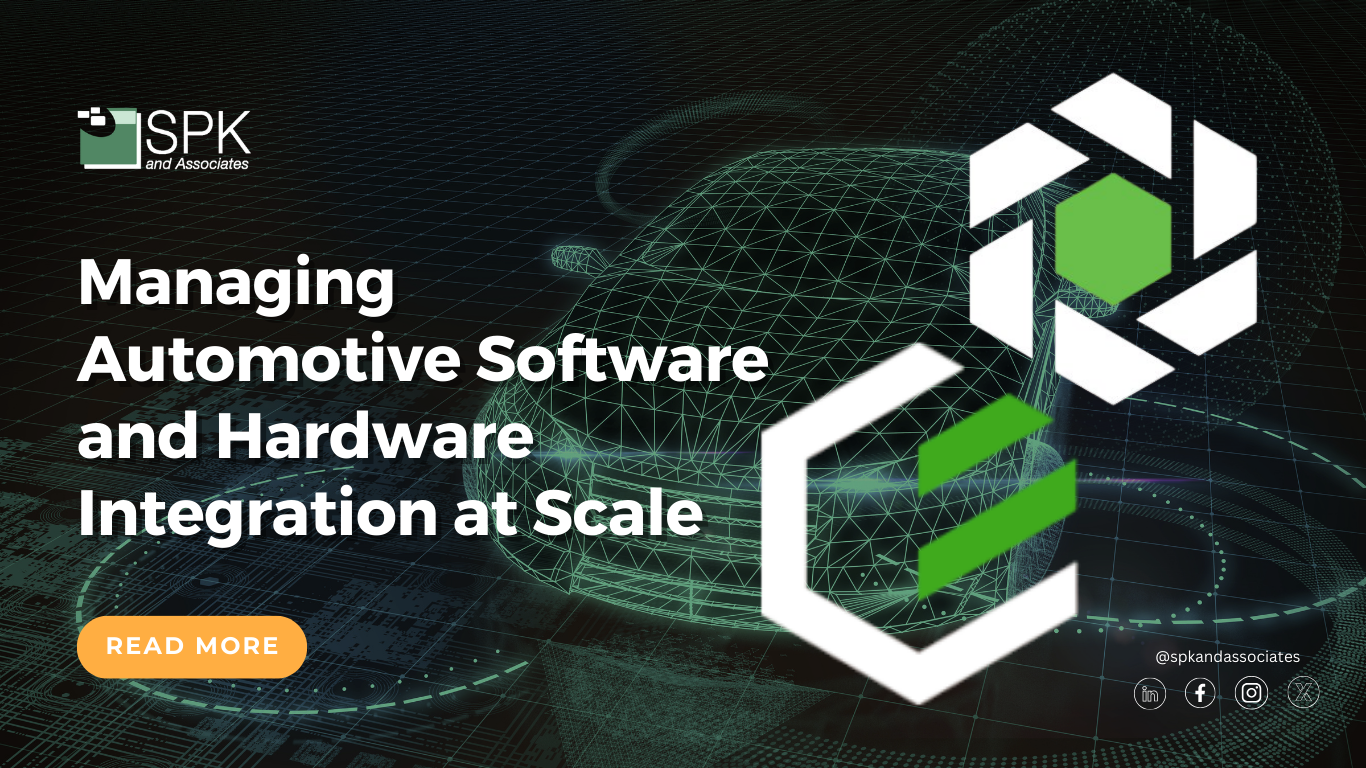

Advanced driver assistance systems, connected vehicle services, and electrification platforms. What do all of these features have in common? The answer: software. As these features increasingly make their way into mainstream automotive development, vehicles are incorporating dramatically more software into their design. As a result, automotive OEMs and suppliers must manage greater complexity across mechanical, electrical, and software domains. Engineering teams must coordinate designs and compliance artifacts across globally distributed teams and suppliers. Meanwhile, rapid innovation from global automakers is forcing OEMs in the U.S. and Canada to accelerate their development timelines. Balancing these shorter timelines with maintaining strict quality and safety standards is a challenge.
To compete in this environment, engineering organizations need more than traditional development tools. They need a connected lifecycle that integrates Application Lifecycle Management (ALM) and Product Lifecycle Management (PLM). By connecting systems such as PTC Codebeamer and Windchill, organizations can create a digital thread that maintains compliance, quality, and speed.


Software-Defined Vehicles and New Engineering Challenges
The rise of the software-defined vehicle has fundamentally changed how vehicles are designed and delivered. Modern vehicles can contain millions of lines of code and dozens of interconnected electronic control units. These systems must interact seamlessly with mechanical components, electrical architectures, cloud services, and mobile applications.
Several market forces are accelerating this complexity:
Connected Vehicle Architectures are Expanding Rapidly
Vehicles now function as connected platforms rather than standalone machines. Features such as infotainment systems, remote diagnostics, and autonomous capabilities require sophisticated software architectures. These architectures must integrate with hardware components and cloud ecosystems.
Customization Expectations are Increasing
Consumers increasingly expect personalized vehicle experiences. This ranges from software-enabled features to configurable driving modes and subscription-based services. This growing customization adds significant complexity to product configurations and lifecycle management.
Global Competition is Accelerating Innovation Cycles
Chinese automakers in particular are introducing new vehicle models at unprecedented speeds. These teams often leverage software-centric development strategies. This leads to global OEMs and suppliers shortening development timelines due to pressure from competitors. Doing so without compromising quality or compliance is a challenge in itself.
Supply Chain and Cost Pressures Continue to Grow
Disruptive tariffs, complex global supply chains, and rising labor and material costs are squeezing margins. OEMs must deliver advanced capabilities while controlling costs across the entire product lifecycle.
Electrification Strategies are Evolving
OEMs are refining their EV strategies while continuing to develop hybrid and internal combustion platforms. Managing multiple propulsion strategies simultaneously increases engineering complexity.
Regulatory and Safety Requirements Remain Stringent
Automotive development must comply with standards such as ISO 26262 and ASPICE. These frameworks require extensive quality assurance, testing, and traceability across the entire development lifecycle.
Without a unified system to manage these interconnected requirements, engineering organizations often experience fragmented workflows, duplicated efforts, and delays in development cycles.
Integrated ALM and PLM: Connecting Windchill and Codebeamer
To address the complexity of software-defined vehicles, automotive organizations are increasingly adopting integrated ALM and PLM ecosystems. PTC provides one of the most powerful connected lifecycle platforms through the integration of Codebeamer and Windchill.
Codebeamer: Managing Automotive Software Development
PTC Codebeamer provides a single system for managing requirements, risk analysis, test cases, defects, and compliance artifacts. It is particularly well-suited for automotive organizations because it supports safety-critical frameworks such as ISO 26262 and ASPICE. By maintaining full digital traceability between requirements, tests, and validation results, engineering teams can ensure that safety requirements are verified throughout development.
Windchill: The Backbone of Product Lifecycle Management
PTC Windchill serves as the central PLM system of record for product data. It manages CAD models, bills of materials, configurations, documentation, and engineering changes across the entire product lifecycle. Windchill enables collaboration across mechanical, electrical, and manufacturing teams while maintaining strict configuration control. Its multi-CAD capabilities also allow organizations to work with diverse design environments across global engineering teams and suppliers.
A Connected Digital Thread
When Codebeamer and Windchill are integrated, they create a unified digital thread that connects software development with hardware design and manufacturing processes. This connected lifecycle provides several key advantages:
- Requirements traceability across hardware and software systems
- Synchronized change management across engineering domains
- Improved collaboration between development, quality, and manufacturing teams
- Greater visibility into product configurations and dependencies
- Faster compliance verification for safety standards
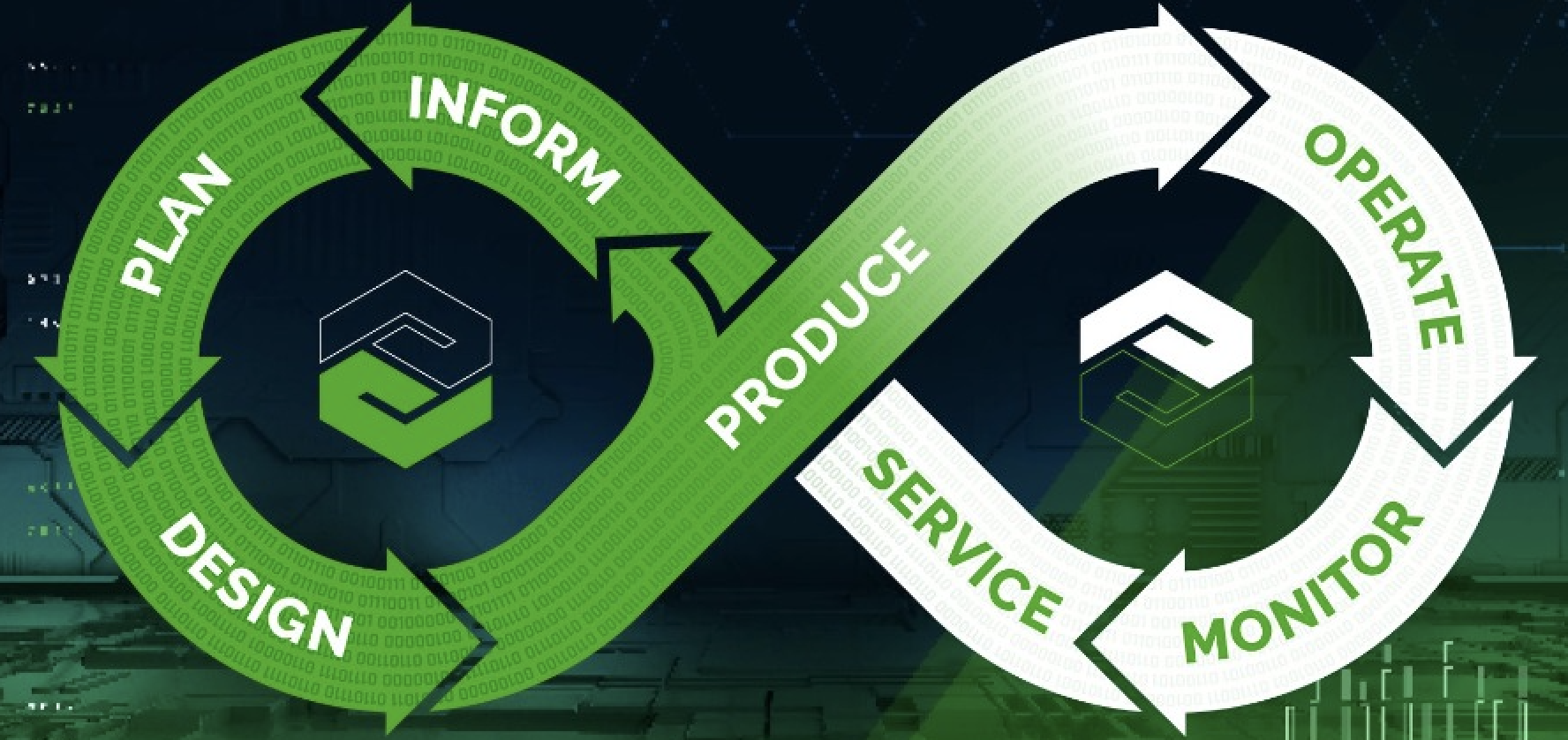
Organizations adopting this connected ALM and PLM approach have seen measurable improvements, including:
- 20% reduction in vehicle development timelines
- 3% reduction in vehicle lifecycle costs
- 10% reduction in the total cost of quality
These gains are achieved by eliminating disconnected systems and enabling engineering teams to work from a shared product data foundation.
How SPK Helps Automotive Engineering Teams Manage Complexity
While PTC’s technology provides a powerful foundation, successfully implementing a connected lifecycle requires deep expertise in both engineering processes and tool integration. SPK and Associates helps automotive OEMs and suppliers unlock the full value of PTC’s ALM and PLM ecosystem. Our team works with Tier 1 and Tier 2 suppliers to design and implement digital thread strategies that align with real-world development and compliance requirements.
SPK helps organizations:
- Integrate Codebeamer and Windchill into a unified lifecycle platform: We connect requirements, designs, test results, and change management processes to create full traceability across hardware and software development.
- Align engineering processes across teams and suppliers: Automotive development often involves global collaboration across multiple engineering disciplines. SPK ensures that workflows support cross-functional collaboration while maintaining compliance and configuration control.
- Extend traceability across the supply chain: Suppliers play a critical role in vehicle development. SPK helps organizations securely connect supplier ecosystems into their digital thread while protecting intellectual property and maintaining visibility.
- Accelerate adoption of modern development practices: We help engineering teams implement agile development approaches for software while maintaining the rigorous quality and safety standards required for automotive systems.
Automotive ALM-PLM Integration Success
As software-defined vehicles become the norm, automotive organizations must rethink how they manage engineering complexity. By integrating ALM and PLM systems such as PTC Codebeamer and Windchill, automotive OEMs and suppliers can create a connected lifecycle. This digital thread enables engineering leaders to manage complexity at scale while accelerating innovation. By synchronizing mechanical, electrical, and software development, SPK can help your automotive team reduce development timelines, improve quality, and remain competitive in the era of software-defined vehicles. Reach out to us today to learn more.