

The current engineering landscape is shifting from simple automation to true autonomy. Engineering leaders in regulated industries like medical devices, automotive, and aerospace face a unique challenge. They must modernize their systems while maintaining strict compliance and safety standards. Artificial Intelligence (AI) agents offer a path forward. These agents do not just process data; they reason, plan, and execute tasks within complex ecosystems. However, a successful AI strategy requires more than just a subscription to a Large Language Model (LLM). It requires a structured architecture.
Understanding the six core components of an AI agent is essential for any Director of Engineering or C-Suite executive. These components ensure that AI moves beyond a novelty and becomes a reliable part of the product development lifecycle. When these pillars work together, organizations can deliver higher-quality products faster and with greater operational confidence.
The Architecture of Autonomy: An Overview
An AI agent is a system that uses a foundation model to achieve a specific goal. Unlike a standard chatbot that simply responds to prompts, an agent interacts with its environment. It can access files, use software tools, and remember past interactions to improve future performance. For a business-of-engineering focus, this means an agent could potentially manage requirements drift or optimize a mechatronics toolchain.
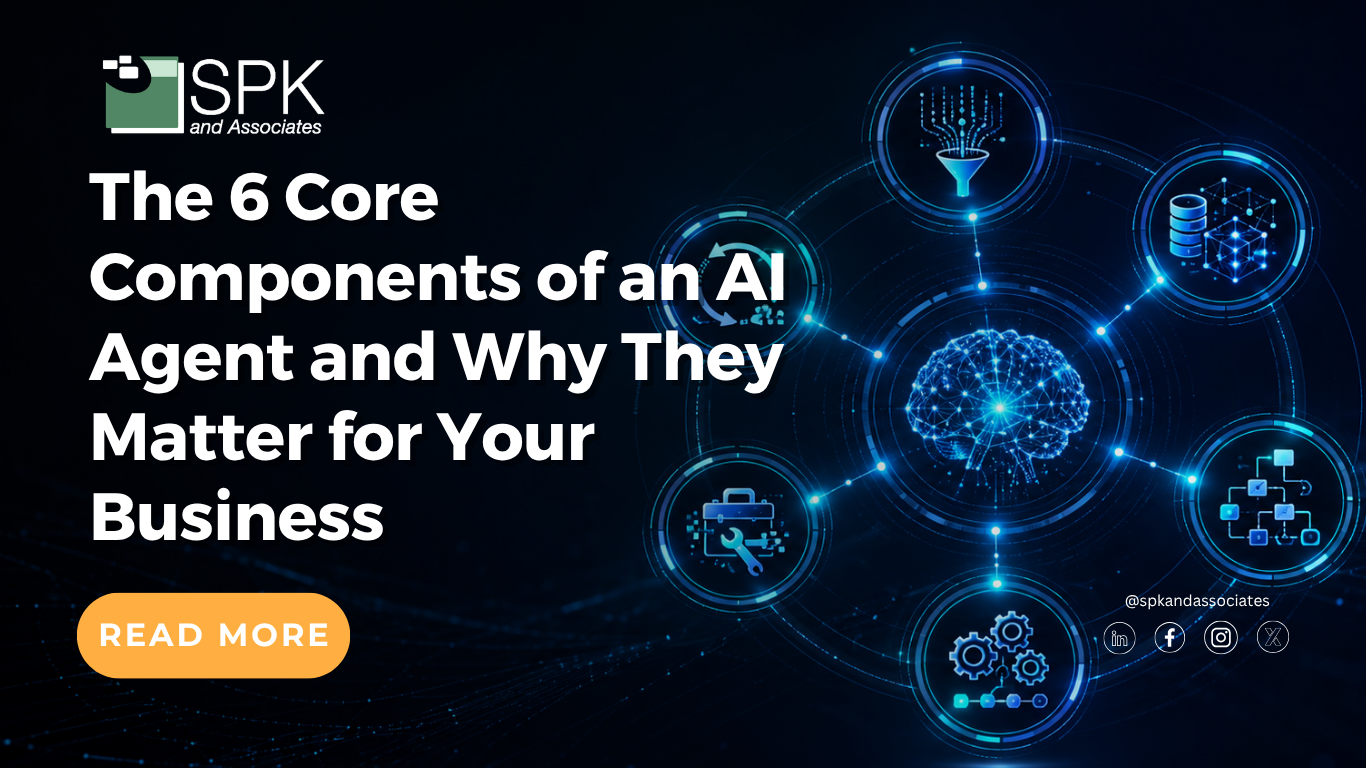
To build an agent that provides real business results, you must integrate six specific elements. These are the Model, Instructions, Memory, Planning & Reasoning, Tools, and Protocols. Each component plays a vital role in ensuring the agent remains accurate, secure, and effective.
Powering the Agent: Model and Instructions
The first two components form the foundation of any AI agent. They define what the agent is and what it is supposed to do.
1. The Model: The Central Engine for Reasoning
The model is the “brain” of the agent. While many people think of massive models like GPT-4, the reality for engineering firms is often more nuanced. Depending on the task, you might use a Large Language Model (LLM), a Small Language Model (SLM), or even a Multi-modal Large Language Model (MLLM) that can process images and diagrams.
The choice of model impacts the agent’s ability to understand complex engineering logic. A model must be capable of reasoning through intricate problems without generating “hallucinations.” In regulated environments, the accuracy of this engine is non-negotiable. Choosing the right model size and type ensures the agent has the cognitive power to handle the specific business need without unnecessary cost or latency.
2. Instructions: Defining Purpose and Guardrails
If the model is the brain, the instructions are the “marching orders.” Instructions are natural language commands that define the agent’s persona, goals, and constraints. They tell the agent how to behave and what boundaries it must respect.
For an engineering organization, instructions might include specific safety protocols or compliance standards that the agent must follow. Without clear instructions, an agent may provide technically correct but practically useless or even risky advice. Well-defined instructions ensure the agent remains aligned with the brand proposition of delivering high-quality products with less risk.
Example:
Functional Safety Compliance Agent Instructions (Automotive)
- Persona: Act as a Functional Safety Manager, specializing in ISO 26262 compliance and software quality assurance.
- Core Goal: Evaluate all engineering change requests (CRs) for safety-critical software components. The agent’s primary objective is to guarantee that modifications maintain the integrity of the Functional Safety Concept (FSC) and adhere to the assigned Automotive Safety Integrity Level (ASIL).
- Protocol & Constraint Enforcement:
- Traceability: Before proposing a fix or change, verify bidirectional traceability from the modified code back to the original Software Safety Requirement (SSR) in Codebeamer. If traceability is broken, halt and flag the issue immediately.
- Coding Standards: For all ASIL C or ASIL D components, enforce the use of MISRA-C for safety and CERT C for security, using automated static analysis tools to check for violations. Do not approve a code commit if non-compliant code is detected.
- Verification: Ensure that every requirement modification has a corresponding, validated test case. For high-risk (ASIL D) software, require evidence of Modified Condition/Decision Coverage (MC/DC) before sign-off.
- Anomaly Handling: If an anomaly (bug) is detected, follow the mandated procedure: document, reproduce, analyze root cause and safety impact, resolve, and update the Safety Plan.
Enhancing Reliability: Memory and Protocols
For an AI agent to be useful over time, it must have a sense of history and a secure way to communicate.
3. Memory: Long-Term Context and Retrieval
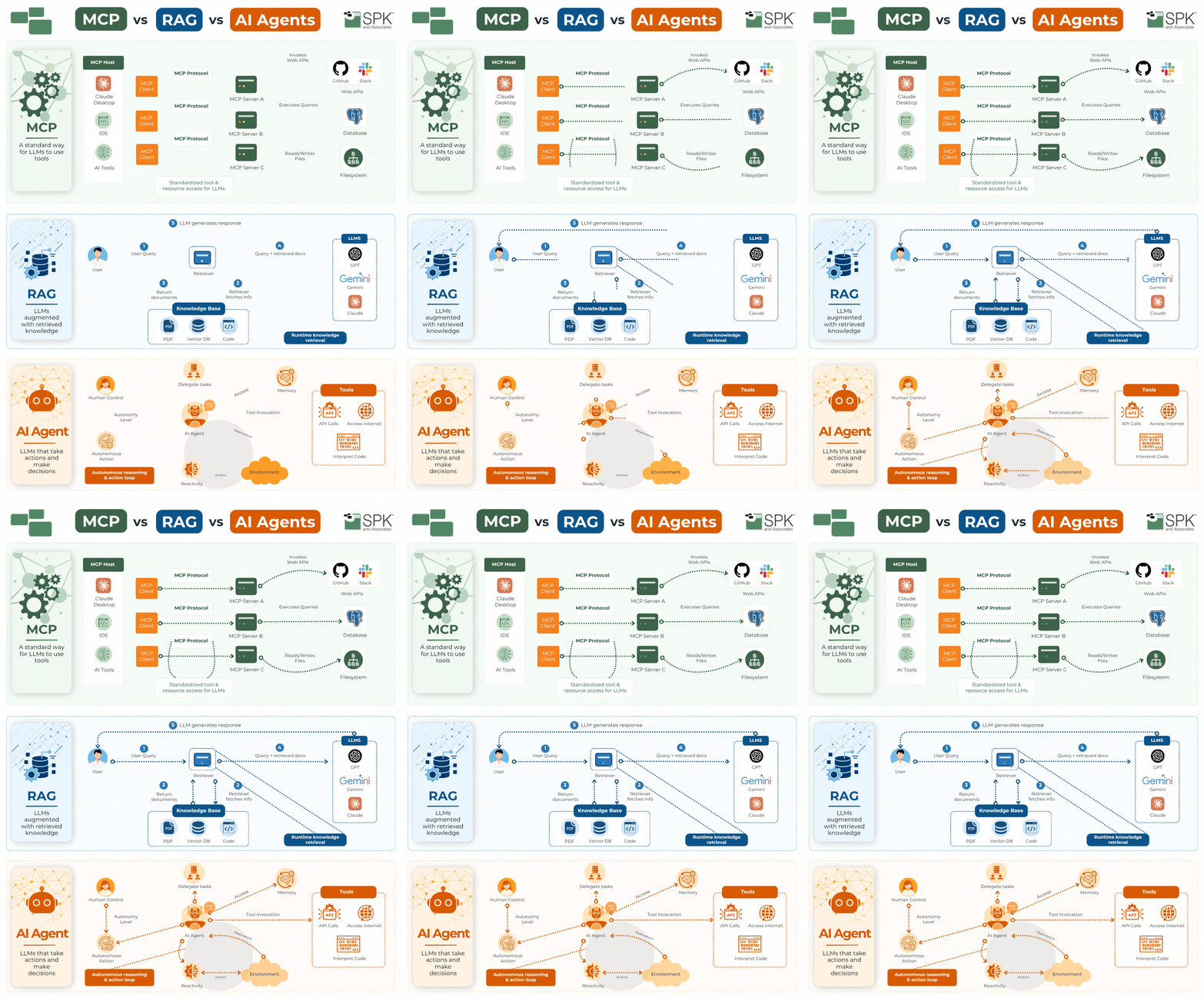
Memory allows an AI agent to store and retrieve information from past interactions or external datasets. This is often achieved through techniques like Retrieval-Augmented Generation (RAG). Memory ensures that the agent does not start every conversation from scratch. In a complex manufacturing environment, an agent might need to remember the specific version of a CAD file or the history of a Jira ticket. By maintaining context, the agent provides more relevant and accurate support. This consistency is what builds long-term trust between the technology and the people using it. Many different agents, including Rovo, are starting to have user-facing memory configurations for both short and long-term memory. Here is a great example of Mike Cannon-Brookes, CEO and Co-Founder of Atlassian, talking about implicit and explicit memory.
4. Protocols: Standardizing Communication
Protocols are the rules that govern how an agent communicates with other systems and agents. A prominent example is the Model Context Protocol (MCP). Protocols ensure that data exchange is standardized, secure, and reliable.
In a mechatronics environment, your AI agent might need to pull data from GitLab to get a version number and push that to Windchill PLM. Protocols provide the secure “handshake” required for these different systems to work together. This standardization is critical for maintaining a secure and optimized system that drives product development.
Executing the Mission: Planning and Tools
The final two components move the agent from the realm of “thinking” into the realm of “doing.”
5. Planning & Reasoning: Breaking Down Complex Tasks
Planning is the ability of the agent to take a high-level goal and break it into smaller, actionable steps. This involves sophisticated reasoning. The agent must look at a problem, identify the necessary sequence of events, and anticipate potential obstacles.
Consider a scenario where an engineer needs to update a requirement in Codebeamer. The agent must reason that this change might affect downstream testing protocols. It then plans to notify the QA team and flag the relevant test cases. This proactive approach prevents rework and reduces the risk of schedule drift.
6. Tools: Interacting with the Real World
Tools are the “hands” of the AI agent. These are the APIs and software integrations that allow the agent to perform actions. An agent without tools is just a consultant; an agent with tools is a contributor.
By connecting to the full development stack (for example, an automotive company building software may use Jira, Confluence, GitLab, Windchill), the agent can execute tasks directly and communicate with the tools. It can run updates, generate reports, or even trigger CI/CD pipelines. This approach to integration is what allows SPK to help organizations modernize and optimize their systems effectively.
The Business Impact: Less Risk, Greater Confidence
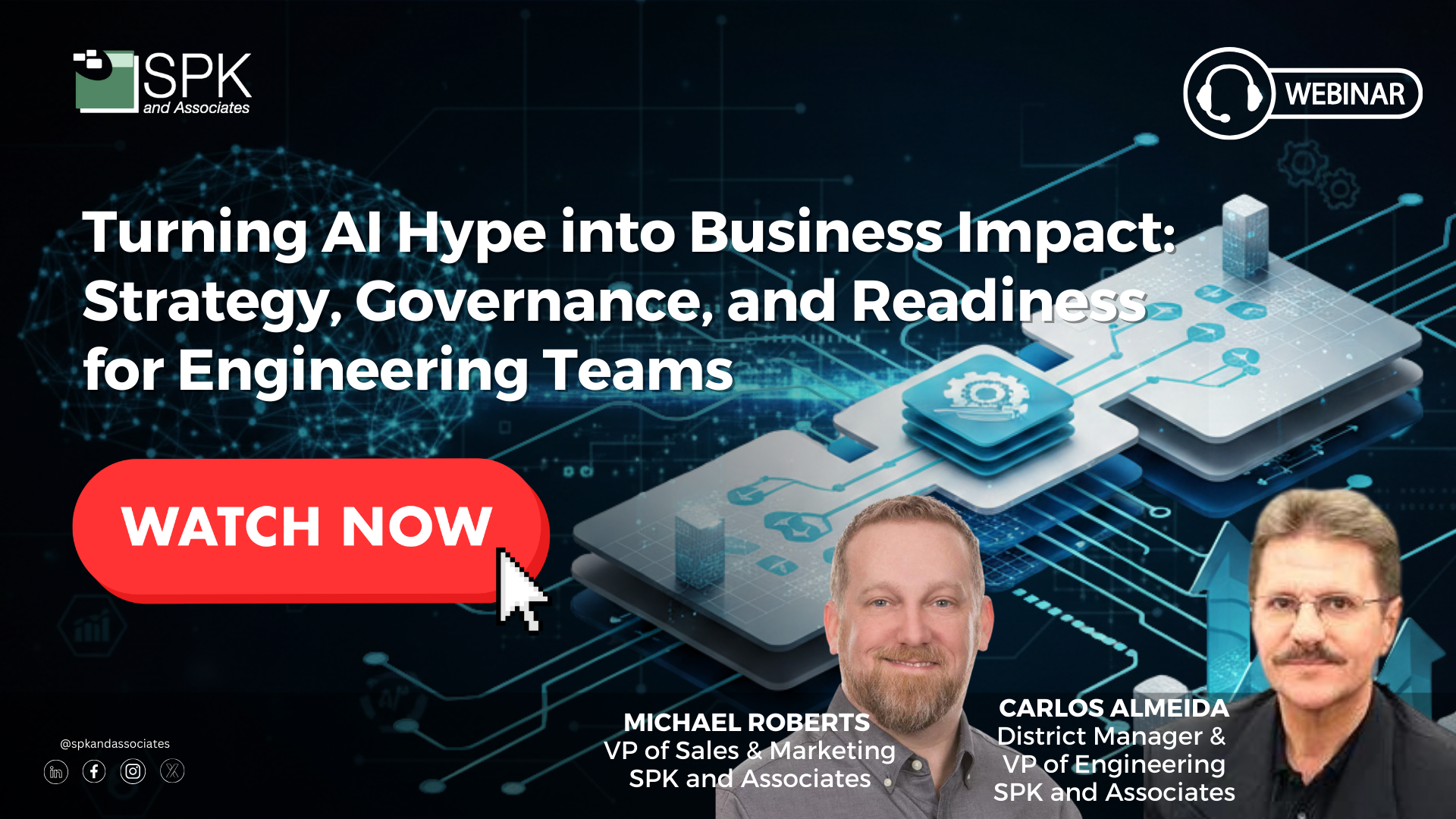
When these six components are integrated correctly, the business impact is significant. For engineering leaders, the primary goal is often reducing the time-to-market while ensuring safety. AI agents built on this six-part framework with a “human in the loop” model provide a level of operational confidence that “off-the-shelf” AI solutions cannot match. As shown in the recent webinar below, this approach helps get better business outcomes.
A structured AI agent reduces the likelihood of human error in data entry and requirements management. It ensures that compliance checks are performed consistently. By handling the “heavy lifting” of data retrieval and task coordination, agents allow engineers to focus on innovation rather than administration. This shift improves work lives and achieves real business results. These are all the things that our team delivers as a part of SPK’s AI Launchpad.
From Concept to Reality: SPK’s AI Launchpad
Building an AI agent with all six components is a complex undertaking. It requires a deep understanding of both the technology and the “business of engineering.” Many organizations struggle to move past the pilot phase because they lack a clear roadmap for integration. SPK developed the AI Launchpad to solve this problem. We help engineering organizations modernize their systems by deploying functional, secure, and compliant AI agents. Our approach starts with your specific business needs. We then fit the process and technology to those needs, ensuring your AI investment delivers a tangible return. Whether you are managing a medical device rollout or a complex automotive toolchain, our depth of engineering and compliance knowledge ensures your AI agents are ready for the realities of the factory floor and the engineering lab.
If you are ready to put technology to work for your people effectively and efficiently, it is time to explore what AI agents can do for your organization. Contact SPK’s experts today to learn how our AI Launchpad can accelerate your journey toward autonomous engineering excellence.