
Standing on the stage during my breakout session at Atlassian Team ’26 in Anaheim (or even as I entered the main stage where Mike Cannon-Brookes gave his keynote), I looked out at a room full of engineering leaders, IT directors, and others who all seemed to be asking the same silent question:
“Is the AI hype finally going to meet the reality of my daily workload?”
– Everybody in the audience at Team ’26, silently to themselves… probably.
For years, we’ve been told that AI would “transform” work, but as I walked the expo floor and sat in the keynotes this year, the conversation shifted. We are moving past the era of “AI-assisted” work, where you ask a chatbot to summarize a meeting. We’re now entering the era of the AI-Native Organization.
Atlassian Team ’26 made one thing clear. AI has changed everything. It’s given rise to a new kind of organization, where AI agents execute, and humans bring what only humans can: intent, judgment, trace-offs, and intelligence that will help us solve more problems than ever before. The future of teamwork isn’t just about better tools. It’s about a new anatomy for the enterprise. The market is seeing a $40B investment in AI, yet only 6% of companies are seeing value. Here is what that means for your organization and the strategic hurdles you’ll need to clear to get there.
The Teamwork Graph: Your Organization’s New Nervous System
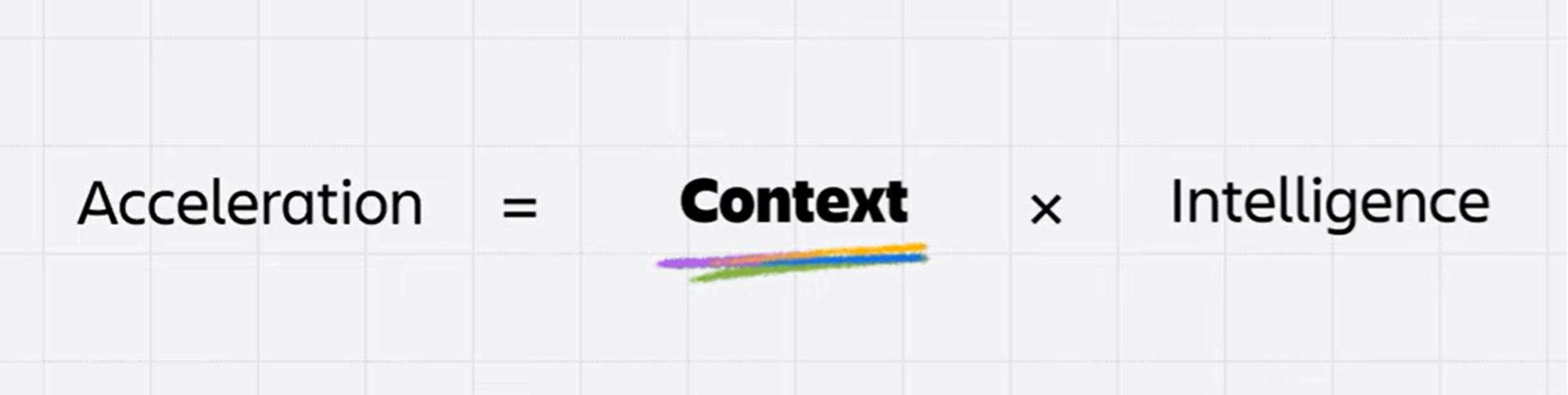
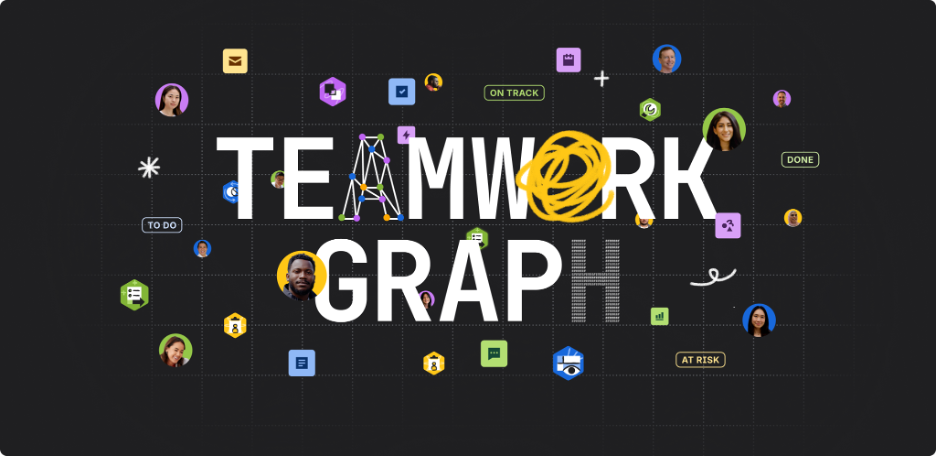
The most significant takeaway from the conference was the evolution of the Teamwork Graph. Atlassian CEO Mike Cannon-Brookes put it perfectly: “Intelligence is the engine; context is the fuel.” In 2026, anyone can buy “smarts” by the token. Raw LLM power is becoming a commodity. The real competitive moat for a modern engineering firm is its institutional memory. Every plan, every Jira ticket, every Confluence page, and every decision your team has ever made is now part of a unified map spanning over 150 billion connections.
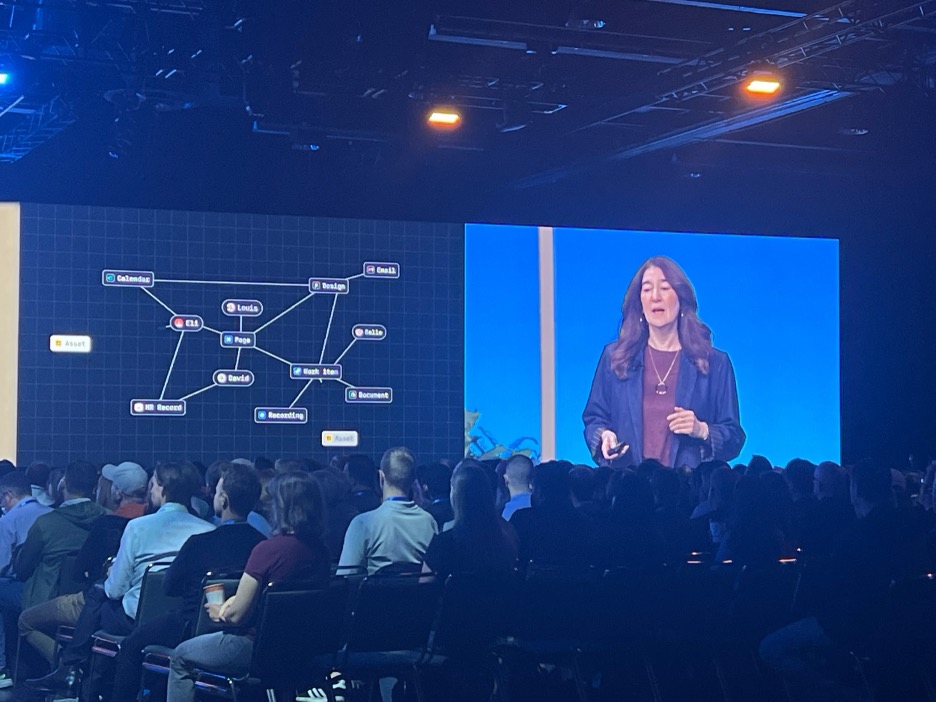
This “nervous system” allows AI to move beyond generic responses. It can now reason across your specific business context. When an agent can see the relationship between a requirement in a medical device project, the code commit that addressed it, and the regulatory filing it supports, the “Context Gap” finally begins to close. Atlassian even announced that it is seeing 23 billion objects, 84 billion relationships, and 1.5 billion updates per week for the Teamwork Graph, with over 5 million accesses to Rovo each month.
Discovering Your Own Graph
After the discussion on Teamwork Graph at the opening keynote, many of the attendees went right to teamworkgraph.com to see what their own personal Teamwork Graph looked like. They wanted to understand that level of connection. The intent of Teamwork Graph is to create a better context, and one of Atlassian’s stated benefits of the Teamwork Graph is savings.
Cannon-Brookes went on to say that building on Rovo will provide better results, faster results, and cheaper results. He touted a 44% improved answer quality due to the Teamwork Graph and 48% reduction in the use of tokens from LLMs. Thus, building on the Atlassian platform has built-in cost savings rather than building your own integration to LLMs such as OpenAI (ChatGPT), Anthropic (Claude), or Google (Gemini). For those interested in using the Teamwork Graph in new ways, Atlassian also announced it is available in Atlassian’s MCP server, as well as a CLI.
Unlocking the Teamwork Graph and Rovo
Cannon-Brooks told a story about how the Atlassian Williams F1 team was using assets to create better outcomes with Teamwork Graph and Rovo. He said, “Around 50% of our customers have real-world physical objects as a core part of their business. This includes logistics, manufacturing, building things, cars, trucks, and satellites. And 100% of our customers have some form of physical assets. In our case, that’s things like meeting rooms and protectors and laptops. Assets allow you to bring those objects into the Teamwork Graph. So if you think about a car, like this very fancy one that goes very fast, it’s made up of a few thousand components.
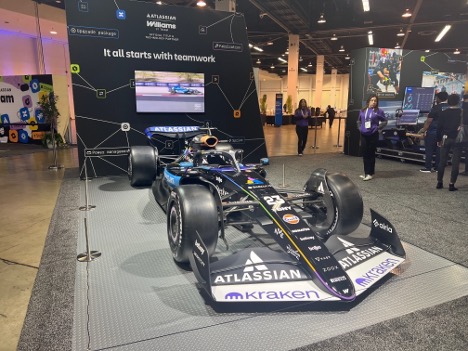
If you’re missing some parts, even one, you’re not going to win a race. [You] can’t do that if you’ve only got three wheels on the car. So that’s what Atlassian Williams has done. They have modeled all of the components of a Formula 1 car as First Class objects in Assets. These components are no longer in spreadsheets or in some sort of disconnected system. They now show up in the Teamwork Graph. But that means they are connected to their work, their people, their code, their service requests, projects, and all the knowledge that Atlassian Williams has from their 48 year history. Now, why is that so powerful?
Formula 1 and Atlassian
Well, if you don’t know about Formula 1, between each race, they make upgrades. They are constantly changing the car. Like upgrading a suspension bracket that is holding up one of those wheels. When they are upgrading that, they are wondering if it’s worth it to do the upgrade, and if they can get the work done in time for the next race. Now, that’s a hardware question. But it’s also a knowledge question based on their history. So one of their race engineers can now ask Rovo exactly that.
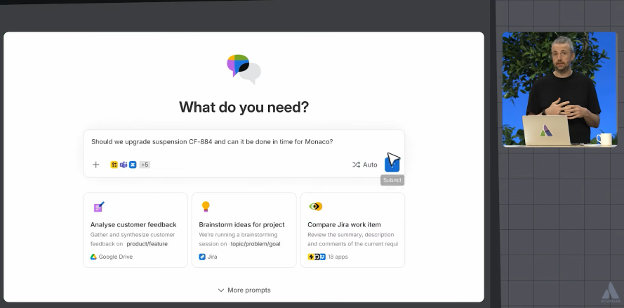
Rovo will pull in the information from lots of different sources related to that specific part that is stored in Assets across projects, service requests, and knowledge bases. Then it makes actual recommendations about prioritizing the upgrade while making certain tradeoffs. And the important part is that the answer crossed system and team boundaries. No single person at Atlassian Williams had that context. But the Teamwork Graph did.”
Incident Command Center Powered by Teamwork Graph
At Team ’26, Atlassian also introduced a new update to the Incident Command Center, an AI-native feature powered by the Teamwork Graph, that fundamentally transforms how engineering and operations teams manage service disruptions. By leveraging a unified context layer that spans Jira, Confluence, Bitbucket, and third-party observability tools, the Incident Command Center automatically correlates logs and repository changes to pinpoint the exact moment a service began to degrade. Rovo Ops further accelerates this process by validating root causes against SRE data and utilizing Atlassian’s new Code Intelligence to identify specific code-level changes responsible for the failure.
This intelligence extends into the resolution phase, where operations teams can follow dynamically updated workbooks, while Rovo Dev ensures long-term reliability by automatically adding necessary fixes to the development backlog. According to Forrester, organizations adopting this integrated approach through the Service Collection can save an average of 55 minutes per incident, significantly reducing downtime and mitigating the operational risks inherent in complex, regulated environments.
Get Customer Feedback Easier
Atlassian also recently announced that it is creating a new bundle called Product Collection. At the moment, the only capability in this collection is the Jira Product Discovery app, which Atlassian launched a few years ago. This app helps teams determine what to build next. The new app added to the Product Collection is “Feedback.” This app helps pull together feedback from clients directly or connects to other tools, such as Pendo for customer data and feedback. This new Feedback app is being rewritten to use the Teamwork Graph and will be fully integrated into the Atlassian product suite before being officially released. But not to worry, it will be available soon. When completed, it will also be able to generate other product ideas and associate them with the Goals app in Atlassian Cloud as well.
Dia Browser Acquisition
Last year, Atlassian acquired a next-generation browser company named Dia. At Team ‘26, Dia’s CEO, Josh Miller, joined Cannon-Brooks on stage. After the acquisition, the ability to use Dia went back to a waitlist. However, Josh did showcase many of the features of Dia that make it a potential AI game-changer. While there are some serious hurdles to overcome in the IT and security realm, Dia does have many more features for power users than your standard Chrome or Safari may offer.
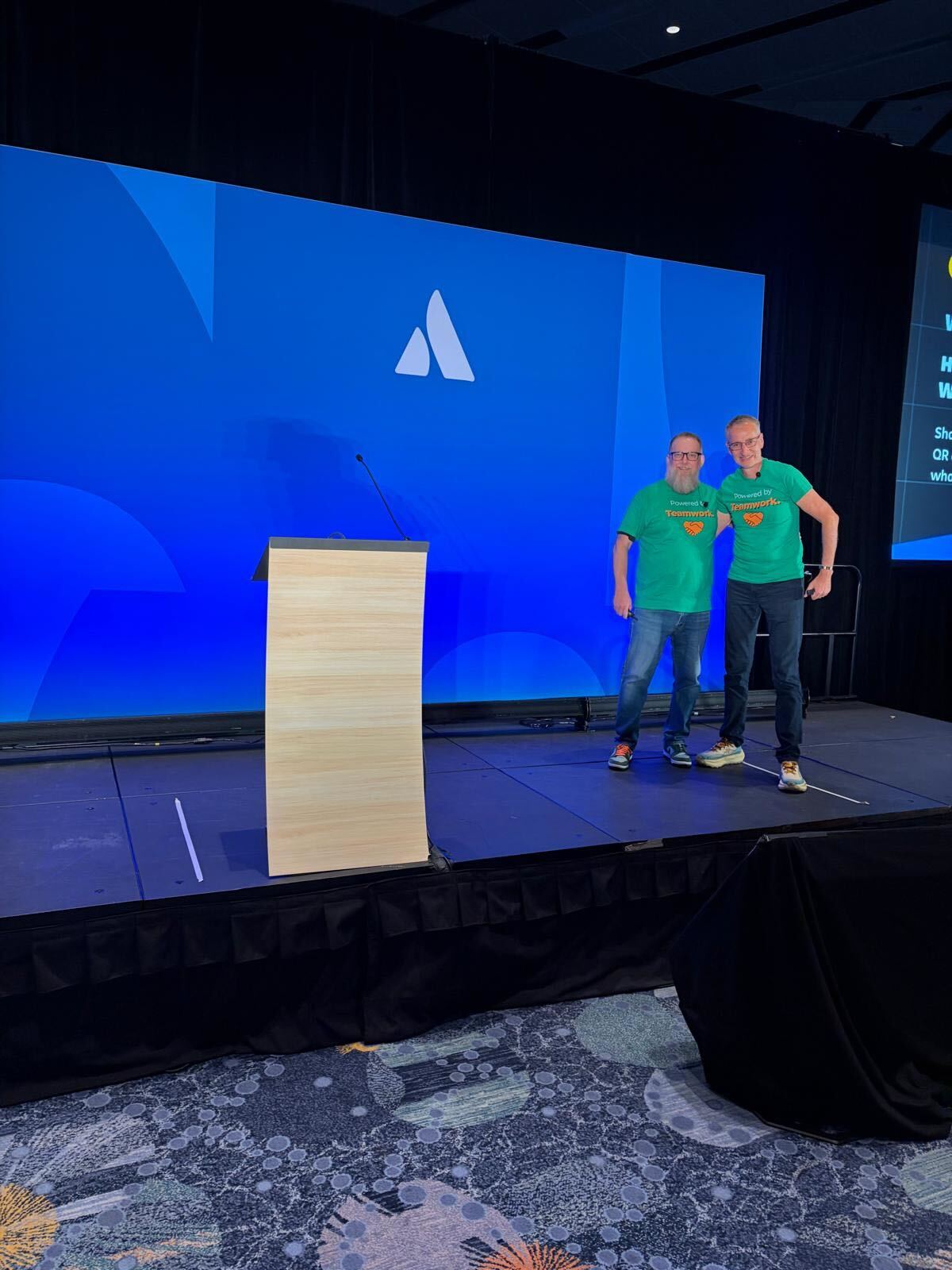
SPK’s Michael Roberts and Stryker’s Tobias Kuechen on stage at Team ’26 presenting the topic “Agile Enterprise Coaching Success with Teamwork Collection”
Things I Should Have Known
Confluence Remix
While looking at the Teamwork Collection booth and discussing some features that clients were interested in, one of the Atlassians at the booth made mention of Confluence Remix. I told her I hadn’t seen it and that I’d love a demo. In short, Remix is a new AI-powered capability within Confluence that allows teams to instantly transform written content into more engaging and consumable formats such as charts, infographics, scorecards, presentation summaries, prototypes, and visual storytelling assets using Atlassian Rovo. Rather than forcing users to manually recreate information in separate tools, Remix keeps generated visuals connected to the original source content inside Confluence. This helps organizations maintain context, traceability, and a single source of truth.
Atlassian positions Remix as a way to turn Confluence from a static documentation repository into a dynamic knowledge and collaboration engine that supports different learning styles, accelerates communication, and enables AI-native workflows across engineering, IT, and business teams. This feature is out of beta and is in GA. Learn more here.
Customer Service Management
Another demo I got while I was at the conference was Atlassian’s Customer Service Management app. This is available as part of the Atlassian Service Collection and is an AI-first customer support solution built to connect frontline support teams directly with development, operations, and product organizations on a single platform. Unlike traditional customer support tools that operate in silos, Customer Service Management leverages Atlassian’s Teamwork Graph, Rovo AI agents, omnichannel support capabilities, and Jira-native workflows to provide agents with full customer and operational context. It does all of this while accelerating issue resolution and improving customer experiences.
Atlassian positions the platform as a modern approach to customer support that reduces tool sprawl, strengthens collaboration across technical and business teams, and creates tighter feedback loops between customers and the teams building and maintaining products. For those familiar with the Atlassian ecosystem of products, think about Customer Service Management replacing JSM for any support to users outside your organization, while Jira Service Management is solely used for internal use cases and incident/change management. That is still several iterations away, but this is Atlassian’s approach to this tool. After my demo, I can confirm that Customer Service Management is an AMAZING tool that goes well beyond what I thought it was before.
Why Data Resilience is Non-Negotiable
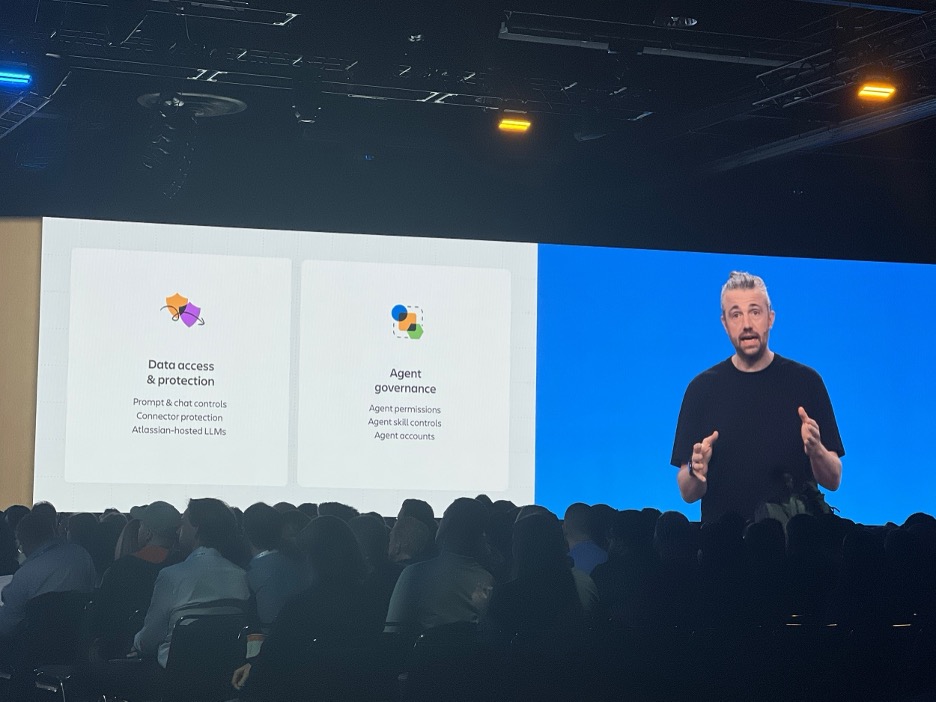
While the vision of AI-native teamwork is inspiring, the conference also forced a moment of deliberate realism regarding the “Business of Engineering.” Macroeconomic data shared during the event highlights a harsh reality: while standard inflation has stabilized around 2.7%, SaaS inflation is running at a staggering 12.2%. Between Atlassian’s own cloud price increases and the rising costs of the broader marketplace, the “App Sprawl” that many organizations ignored during the growth years is now a silent killer of ROI. The average enterprise instance now carries 23 or more installed apps. This fragmentation doesn’t just cost money in licensing; it creates a “Context-Switching Tax” that drains your team’s productivity. To fund the AI revolution, leaders must first consolidate their stack. As we lean more heavily into the Teamwork Graph and agentic execution, the stakes for data security and availability have never been higher. If your “institutional memory” is your moat, what happens if someone breaches or drains it?
Shared Responsibility Model
One of the most critical discussions at Team ’26 revolved around the Shared Responsibility Model. Many leaders still mistakenly believe that moving to the Atlassian Cloud means Atlassian is responsible for their data integrity. They aren’t. Atlassian protects the infrastructure; you protect the data. This is why we’ve been working so closely with partners like Revyz. Their “Command Center” approach is the pragmatic remedy to the risks of the AI-native era. By providing a “digital lifeboat”, including off-site backups, data immutability via AWS S3 Object Lock, and the ability to restore data into a sandbox in minutes, they ensure that your move to the cloud doesn’t leave you vulnerable to ransomware or accidental deletions. In an era of 12.2% SaaS inflation, Revyz’s commitment to flat pricing and vendor consolidation (replacing up to seven point solutions with one platform) is exactly the kind of “Business-first” thinking engineering leaders need right now.
The Path Forward for Leaders
Atlassian Team ’26 told us that the future of teamwork is fast, context-rich, and increasingly autonomous. However, it also warned us that this future requires a stable foundation.
To lead an AI-native organization, you must:
- Master your context. Context is everything. Ensure your contextual data is connected so the Teamwork Graph can actually work for you.
- Empower your humans. Agents are powerful, but you must shift your team’s focus from execution to “intent engineering.”
- Protect your moat. Implement a robust data resilience strategy that goes beyond native cloud defaults.
The “jagged frontier” of AI means progress will be uneven. Some of your teams will sprint ahead, while others struggle with the shift. Our job as leaders is to build the nervous system that allows the whole organization to move as one. Ready to audit your Atlassian roadmap for the AI-native era? SPK helps engineering organizations modernize and optimize the systems that drive product development. Contact us today to get started.