

Key Takeaways
- A connected digital thread helps prevent schedule delays: Linking CAD, simulation, PLM, ALM, and DevOps gives aerospace teams better visibility into dependencies, changes, and risks across the lifecycle.
- Earlier validation reduces costly rework: Creo and simulation capabilities help engineers identify design problems before physical prototypes and late-stage testing make changes more expensive.
- Traceability makes complex changes easier to manage: Windchill and Codebeamer connect product data, requirements, risks, tests, configurations, and changes so teams can understand downstream impacts sooner.
- Connecting hardware and software workflows improves collaboration: Integrating DevOps with ALM and PLM provides context across requirements, software work, testing, product configurations, and releases.
- Tools alone are not enough: Organizations need strong integrations, data ownership, change workflows, and governance to turn individual engineering platforms into a truly connected environment.
In Part 1 of this series, we explored common causes of aerospace programs missing deadlines. While there are many causes, the common denominator is disconnected engineering systems and processes. When systems are not connected, teams struggle to understand dependencies and identify problems before they affect the schedule.
So how do aerospace organizations solve the problem?
Leading organizations must connect CAD, simulation, PLM, ALM, and DevOps into a broader digital engineering environment. This makes it possible to validate designs earlier, improve traceability, manage changes more effectively, and give teams better visibility across the entire program.
Preventing Missed Deadlines with a Digital Thread
One of the most effective ways to protect an aerospace development schedule is to identify design problems earlier. Traditional development processes can leave teams dependent on physical prototypes and late-stage testing to determine whether a design will perform as expected. At that point, correcting a problem may require redesigning components, updating drawings, changing tooling, repeating tests, and revising downstream documentation.
CAD and Simulation
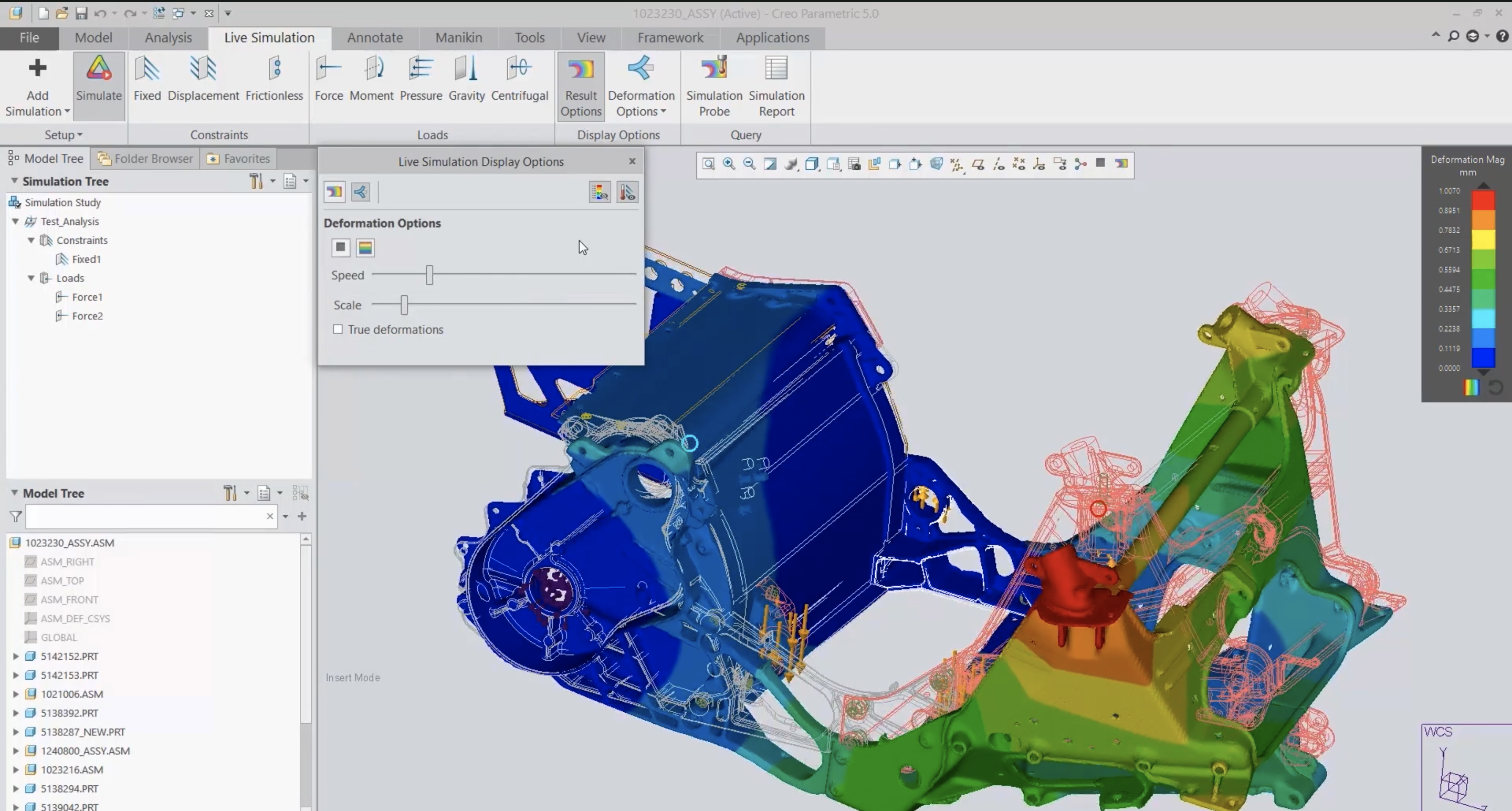
Modern CAD and simulation tools move more of that validation upstream. Creo supports parametric modeling, advanced simulation, generative design, and optimization. Engineers can evaluate structural, thermal, and performance considerations while a design is still evolving rather than waiting until a physical prototype is available. Simulation-driven design also allows teams to compare more design alternatives early in development. Engineers can identify weak points, optimize components, and make better design decisions when changes are still relatively inexpensive.

As digital twin strategies mature, simulation data can also contribute to a more complete digital representation of the product throughout its lifecycle. Creo’s model-based definition capabilities further improve communication by incorporating product manufacturing information directly into the 3D model. Manufacturing, quality, and suppliers can work from richer engineering information without depending entirely on disconnected 2D drawings. The result is earlier validation and less risk of discovering critical design issues late in the program.
PLM
Finding design problems earlier is only part of the equation. Aerospace organizations also need to control the enormous amount of product information generated throughout a program. That is where product lifecycle management becomes critical. Windchill provides a centralized environment for managing CAD files, parts, bills of materials, configurations, documents, revisions, and engineering changes. Instead of relying on shared drives, email attachments, or manually maintained spreadsheets, teams can work from controlled product information with defined ownership, access, and revision history.

This is particularly important in aerospace because a single program may involve numerous product configurations, suppliers, engineering disciplines, and manufacturing locations. A design change rarely affects only one file. It can influence parts, assemblies, requirements, manufacturing instructions, test procedures, supplier data, and certification documentation.
PLM helps teams understand and control those relationships.
Windchill can support:
- Configuration and version management
- EBOM and MBOM alignment
- Engineering change workflows
- Supplier collaboration
- Part and assembly reuse
- Manufacturing planning
- Controlled access and approvals
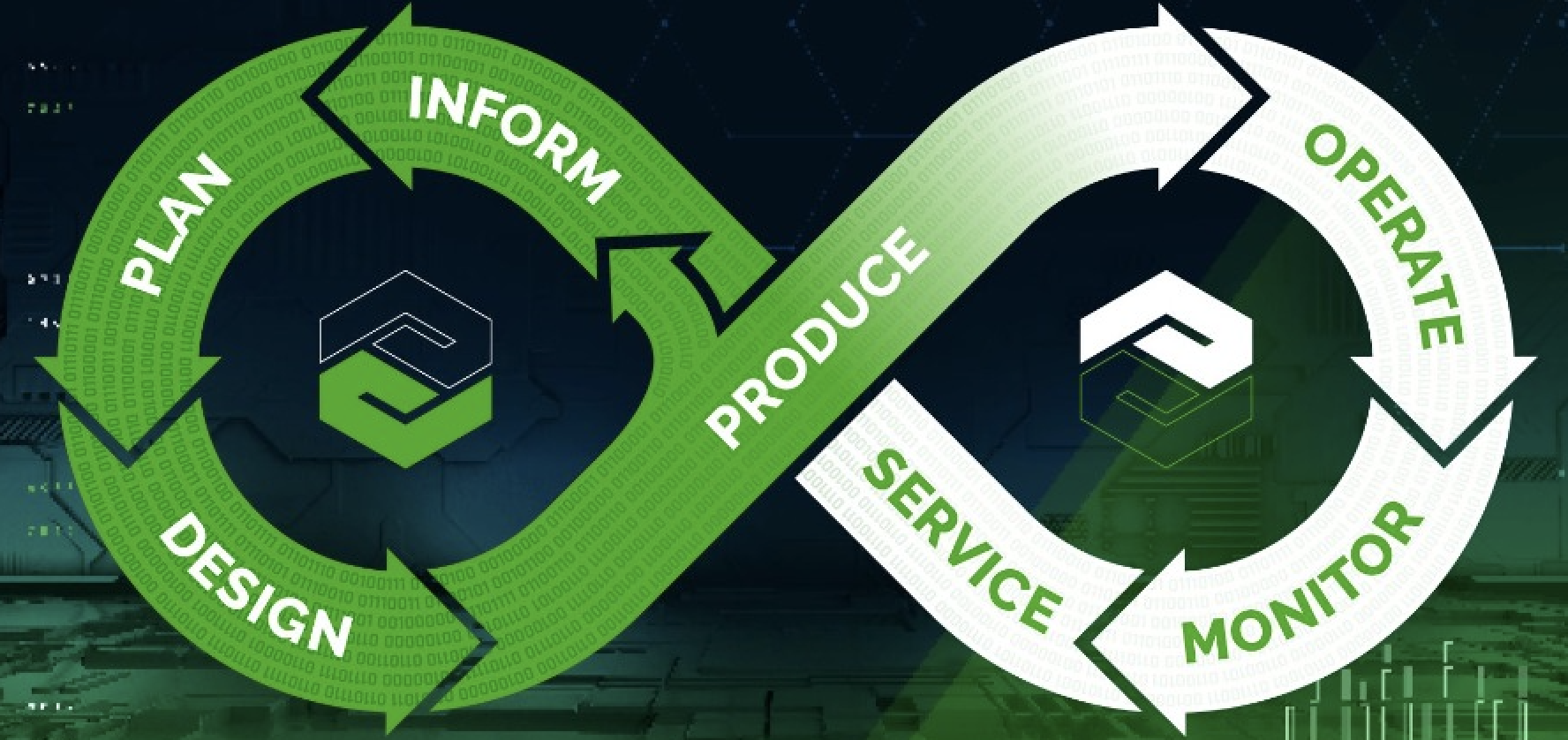
Most importantly, PLM becomes an important foundation for the broader product digital thread. When teams can see the correct product configuration and understand how a proposed change affects downstream activities, they can make decisions faster and reduce the likelihood of avoidable rework.
ALM
As aerospace products become increasingly software-defined, managing the product definition requires more than CAD and PLM. Organizations must also maintain traceability across system requirements, software requirements, risks, tests, defects, and verification evidence. This is where application lifecycle management plays an important role.
Codebeamer supports requirements, risk, testing, defect, and lifecycle management for complex product development environments. Aerospace engineering teams can connect requirements with the activities used to implement and verify them. For example, a requirement can be linked to associated risks, development work, test cases, test results, and defects. If the requirement changes, teams have a clearer view of what else may need to be reviewed or repeated. That traceability is especially important when supporting compliance efforts associated with frameworks such as DO-178C for airborne software and DO-254 for airborne electronic hardware. Instead of reconstructing relationships between requirements and test evidence manually at the end of a program, organizations can build traceability into the development process.

Codebeamer can also support product line engineering and reuse. Common requirements and test assets can be shared across product variants while teams maintain control of configuration-specific differences. This can reduce duplicated effort while helping organizations manage increasingly complex aerospace product families.
DevOps
Software development has become a major component of aerospace innovation, yet software teams often operate separately from traditional systems and mechanical engineering groups. That separation can create another source of schedule risk. Developers may manage code, issues, builds, and releases in tools such as GitLab or Jira. Meanwhile, systems engineers manage requirements and mechanical engineers work within separate CAD and PLM platforms.
Modern aerospace organizations must connect those workflows. DevOps practices provide automation across source control, code review, testing, security scanning, builds, and deployment processes. CI/CD pipelines can help embedded software teams identify problems more consistently and shorten the feedback loop between software changes and verification activities. While these are all amazing features, DevOps becomes even more valuable when it is connected to ALM and PLM.

A software task in Jira or GitLab should not exist without context. Teams should be able to understand the requirement driving the work, the product configuration affected by it, the tests that verify it, and the engineering change associated with its release. When these systems are integrated, organizations can begin creating traceability across both hardware and software development.
Creating a Connected Digital Thread
When all of these capabilities are connected, aerospace teams achieve more success. Creo can support product design and simulation while Windchill can manage product data, configurations, and engineering changes. Codebeamer can manage requirements, risks, and testing, and tools like Jira and GitLab can support software development and DevOps workflows.
Together, these systems can create a lifecycle that looks more like:
Requirements → Risks → Designs → Parts → Software → Tests → Changes → Production
Instead of individual teams maintaining isolated pieces of the program, information becomes connected across engineering disciplines. For example, when a requirement changes, teams can determine which tests need to be repeated, which software components may be affected, which product configuration is involved, and whether an engineering change must be initiated.
Similarly, a design change made in Creo can be managed through Windchill and connected to the appropriate product structure, approvals, and downstream manufacturing information. This visibility can significantly improve change impact analysis. Rather than discovering downstream effects through meetings, email chains, or failed tests weeks later, teams can identify dependencies earlier and respond before the change becomes a program-level delay.
What Are the Business Outcomes?
A connected engineering environment is ultimately about more than improving data management. It should produce measurable program outcomes. PTC has reported that industrial organizations using connected digital thread strategies can achieve development timeline improvements of 15% or more.
For aerospace organizations, the benefits can extend throughout the program.
- Earlier simulation and validation reduce the amount of late engineering rework.
- Better configuration management reduces the risk of teams using outdated information.
- Requirements traceability helps identify downstream impacts before changes reach verification.
- DevOps automation accelerates feedback within software development.

Connected systems also improve collaboration because engineering, manufacturing, quality, software, and suppliers have greater visibility into the information surrounding their work. The result can include faster development cycles, reduced engineering rework, and lower program and compliance risk. Additionally, products may be reused, change management becomes more predictable, and overall collaboration improves across hardware and software teams. These improvements become increasingly important as aerospace companies face pressure to deliver more complex products without allowing program timelines to expand indefinitely.
SPK’s Perspective: Tools Alone Are Not the Solution
Organizations can purchase excellent engineering tools and still struggle with missed deadlines. The reason is simple: tools do not create a connected engineering lifecycle by themselves. Integration and process do. Installing CAD, PLM, ALM, and DevOps platforms independently can simply replace one group of silos with newer silos. The objective should be to connect the systems, establish clear data ownership, define change workflows, and build traceability between hardware and software development.
SPK and Associates helps aerospace and defense organizations build those connected environments. Our teams work across PTC technologies such as Creo, Windchill, and Codebeamer as well as platforms like Jira and GitLab. This allows us to help organizations connect engineering systems instead of optimizing each platform in isolation. That may include connecting Jira or GitLab with PLM and ALM environments using integration solutions like OpsHub. We may also provide services such as migrating legacy engineering data, implementing cloud infrastructure, or supporting ongoing administration and optimization.

Our team brings experience supporting regulated engineering organizations, where traceability, validation, configuration control, security, and auditability must be considered alongside speed. The objective is to create an engineering ecosystem in which information moves with the product, so teams can identify risks before they turn into schedule delays.
Keeping the Next Aerospace Program on Schedule
In Part 1, we looked at why aerospace schedules begin to slip. Delays rarely originate from one catastrophic event. They accumulate through disconnected requirements, late validation, uncontrolled changes, software and hardware silos, supplier issues, and limited visibility across the lifecycle. Solving those problems requires the same lifecycle-wide perspective.
CAD and simulation help engineers validate designs earlier. PLM controls product information and configurations. ALM connects requirements with risks and testing. DevOps accelerates and automates software delivery. Connecting those capabilities through a digital thread gives engineering organizations something even more valuable: visibility. Teams can understand what changed, what it affects, what needs to happen next, and who needs to respond. For aerospace organizations trying to shorten development timelines while managing complexity, that visibility can be the difference between reacting to the next missed milestone and preventing it. If your aerospace organization is ready to stop missing deadlines, contact our experts.