

Key Takeaways
- AI failures are often foundation problems, not technology problems: Engineering AI initiatives frequently stall because organizations lack clear business objectives, trusted data, connected systems, and scalable processes.
- AI needs connected, contextualized engineering data: Data siloed across systems limits AI effectiveness. A strong digital thread helps AI understand relationships across requirements, designs, tests, and product data.
- Successful AI adoption requires workflow and governance changes: AI must fit naturally into how engineers work while organizations establish clear ownership, security, compliance, model validation, and risk controls.
- SPK’s AI Launchpad creates a practical path forward: The Launchpad assesses existing AI capabilities, data readiness, risks, and workflow opportunities, then provides a prioritized 12–36-month roadmap for quick wins and long-term AI scalability.
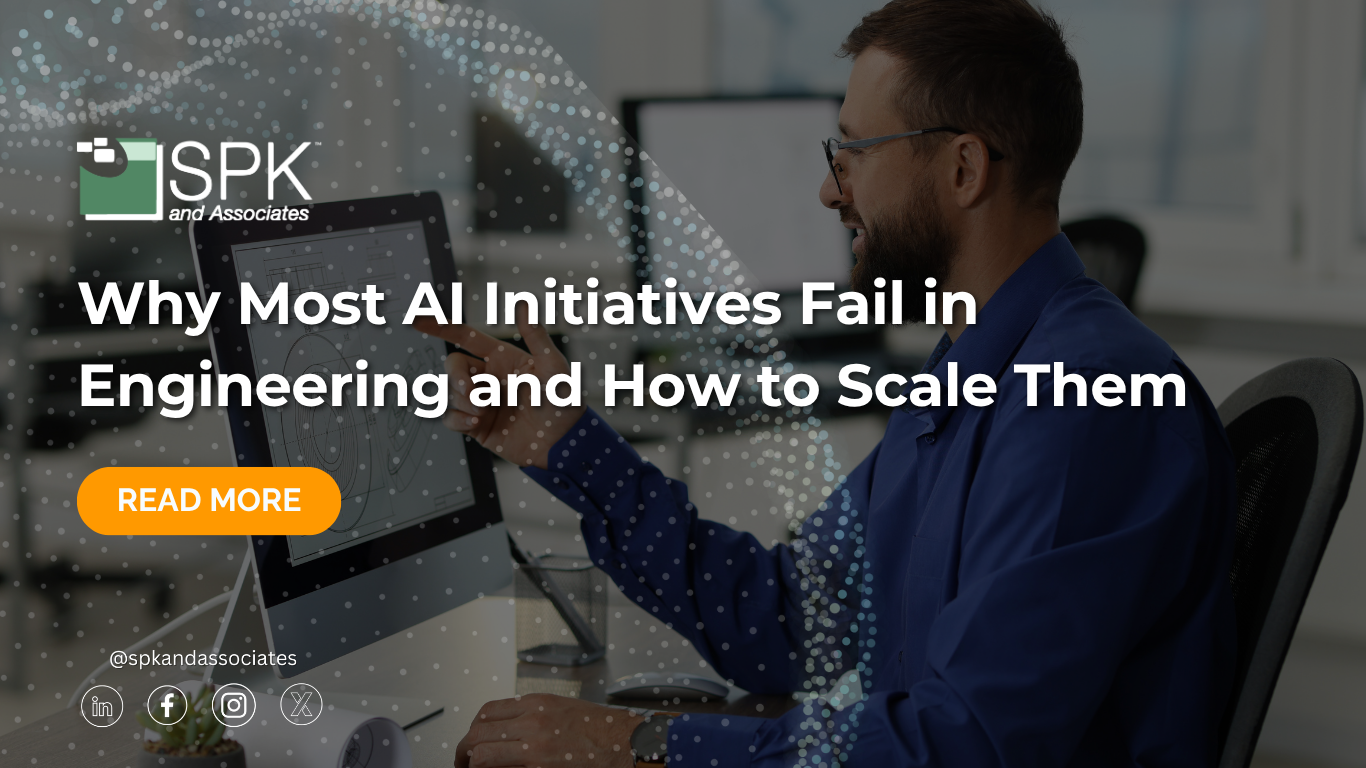
The promise of Artificial Intelligence in engineering is immense. Automated requirements traceability, predictive maintenance, accelerated simulation cycles, and generative design all sound amazing. Yet, for most engineering organizations, the reality is far less glamorous. While many teams have successfully launched small-scale pilots or experiments, a staggering number of these initiatives stall before they ever reach production, with even fewer delivering measurable business value. The hard truth is that many engineering AI initiatives fail not because the technology is lacking, but because the foundation is cracked. Organizations often treat AI as a simple tooling decision rather than what it actually is: a fundamental engineering transformation problem. To move beyond the hype and achieve real-world scalability, leaders must shift their focus from the models themselves to the data, governance, and workflows that power them.
Why Engineering AI Initiatives Stall and Fail to Scale
There is no one-size-fits-all formula for AI success, but there are several common pitfalls that consistently derail engineering initiatives.
Hammer in Search of a Nail
Driven by industry hype and a fear of missing out (FOMO – Yes, we did just add FOMO to one of our blogs), many companies adopt AI tools before they have identified a specific business need. When AI is implemented without a clear objective, it becomes a “science project” rather than a strategic asset. Without a target problem to solve, leadership quickly loses interest when the ROI remains murky. In other words, AI is the solution, but there may not be a “problem” waiting to be solved.
The Data Readiness Gap
AI-ready data is more than just “high-quality” data as we traditionally know it. Typical parameters of data quality such as accuracy and completeness are necessary but not sufficient for AI. Engineering data is notoriously siloed across PLM, ALM, CAD, and ERP systems. If the data isn’t connected, contextualized, and trusted, the AI model will produce hallucinations or irrelevant results. AI needs a digital thread to understand the relationship between a requirement, a design decision, and a test result.
Ignored Workflows and Human Factors
Models are frequently optimized for technical accuracy rather than fitting smoothly into daily human operations. If an AI tool adds friction to an engineer’s already complex workflow, they will bypass it. The primary obstacle isn’t technical capability; it’s the ability to adapt, reinvent, and scale new ways of working. This requires systemic redesign, not just tool adoption.
Siloed Experiments and Lack of Strategy
Too many engineering firms have random acts of AI happening in different departments without a cohesive strategy. These small pilots fail to scale organization-wide because there is no maturity model to measure progress, no consistent process for deployment, and no centralized governance to manage risk.
Building AI Readiness: The Path to Scalability
There is no one-size-fits-all solution when implementing AI, and scaling it requires a structured approach to readiness that addresses the technical, procedural, and cultural aspects of the organization. At SPK and Associates, we believe AI readiness is an engineering transformation problem. It starts with the realization that AI needs trusted engineering data. This means breaking down silos and implementing a digital thread strategy that ensures data is accessible and traceable across the entire product lifecycle. Operationalizing AI also requires robust engineering AI governance. Organizations must define who owns the data, how models are validated, and how security and compliance are maintained in a regulated environment. Without this framework, AI initiatives will eventually hit a wall of risk and liability.

How SPK Solves the Scaling Problem: The AI Launchpad
If your organization is struggling with inconsistent processes, unclear ROI, or a lack of expertise, you are not alone. This is exactly why we developed the AI Launchpad.
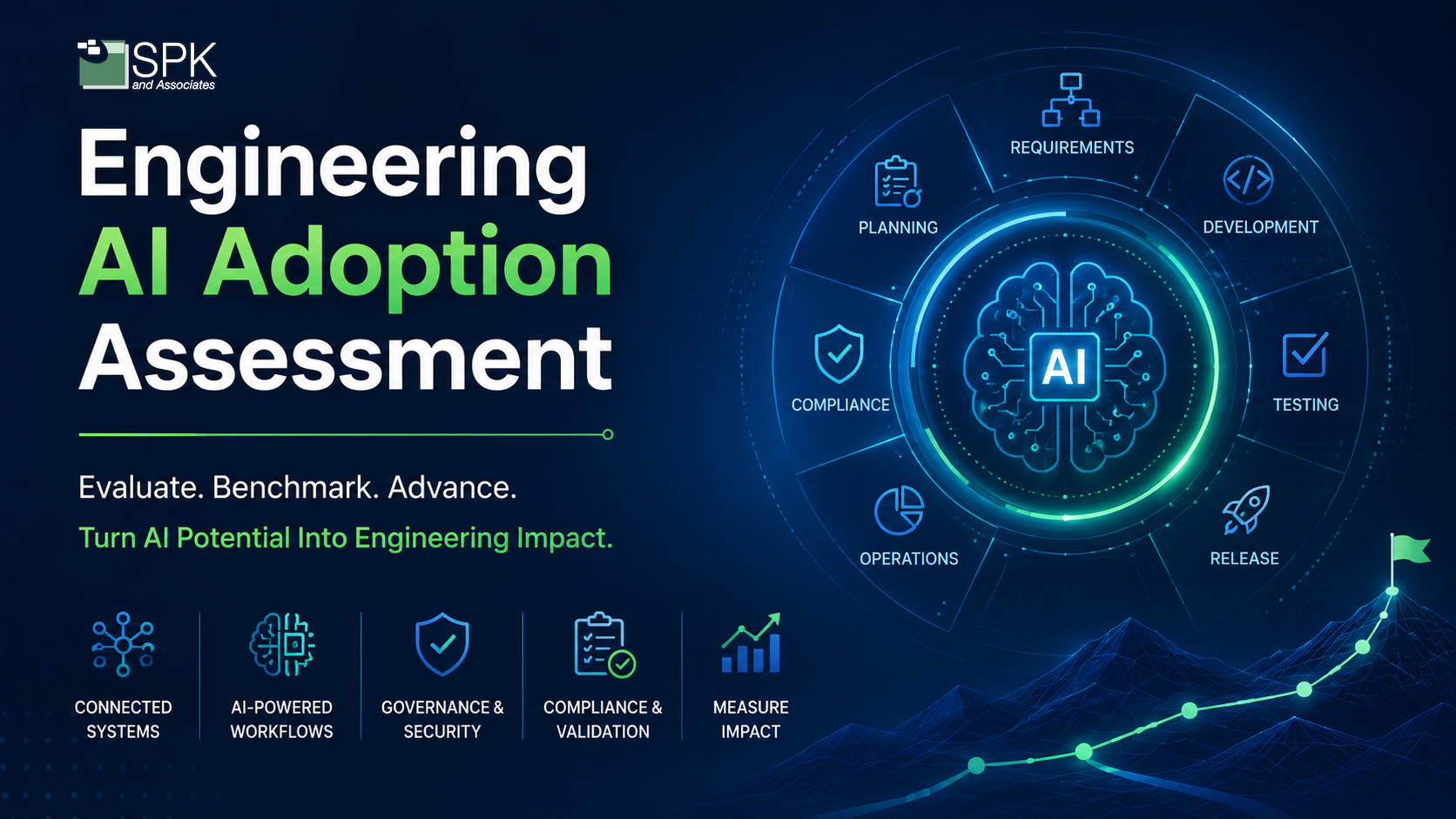
Our approach begins with understanding where your organization stands today, from data readiness and infrastructure to business use cases, skills, and governance. We benchmark your capabilities against a proven AI maturity model to identify your current position and uncover growth opportunities. You can take our free AI assessment here to get your own AI maturity score.
What’s Included in the AI Launchpad?
The AI Launchpad is designed to provide clarity, confidence, and a practical action plan. We move past the tech jargon to deliver real-world results through three core phases:
- Assess What AI You Already Have: We start by reviewing the tools and platforms you already use, such as Jira, Windchill, or GitLab, to see if you’re taking advantage of their built-in AI features. Many companies already have AI capabilities included in the software they pay for, so we make sure you’re not missing out. We also pinpoint “shadow AI” instances where your team may be using tools without corporate awareness.
- Review Your Data and Determine Risk: We then analyze where your data lives and how it’s organized. We identify the gaps holding you back and assess risks that could create security issues or threaten compliance. This gap analysis highlights what’s missing, whether that’s clean data, integrated systems, or specialized expertise.
- Map Out AI Opportunities: Finally, we review your most important workflows to see where AI can help. We explore opportunities to create AI agents or automations that streamline tasks across your tools, saving time and reducing manual work.

The Deliverable: You receive a clear report on where your data resides, how you’re using AI today, and a prioritized 12–36-month roadmap. This plan focuses on achieving quick wins while laying the foundation for long-term scalability, including measurable KPIs to ensure alignment with business objectives.
From AI Pilot to Productive Reality in Engineering
The transition from AI experimentation to AI integration is the defining challenge for engineering leadership this decade. The companies that succeed will be those that stop looking for magic tools and start focusing on the business of engineering, i.e., the data, processes, and people. Scaling AI is not about running the most pilots, but about building the most robust foundation. By focusing on AI readiness, trusted data, and a clear strategic roadmap, you can ensure your AI initiatives move out of the lab and into the heart of your production environment. Whether you need an AI readiness assessment or a full roadmap for your digital thread, SPK and Associates is here to help you navigate the complexities of engineering transformation. Contact us today to learn more about the AI Launchpad.