


The speed of software delivery has accelerated dramatically. Between Agile practices, CI/CD automation, and the explosion of GenAI coding assistants, developers can now generate and ship hundreds of lines of code in seconds.
However, there is a massive problem no one is talking about: confidence hasn’t kept pace.
I’ve spent over 15 years in the data and analytics world. I’ve watched intelligence platforms completely transform nearly every major business function. Sales leaders use CRMs to forecast revenue down to the dollar. Marketing teams rely on engagement platforms to understand what resonates with customers. Operations run sophisticated observability stacks to monitor every server heartbeat in real time.
However, engineering, the function that actually builds the products we sell, remains the last frontier of the data revolution.
We are still making multi-million-dollar release decisions based on a handful of green checkmarks that rarely tell the full story.
That’s why it’s time to start talking seriously about true Engineering Intelligence.
The “Manual Data Tax” Is Killing Innovation
Think back to your last high-stakes board meeting or release readiness review. When the CEO asks, “Are we ready to go?” what happens?
The room goes quiet. Then some of your most senior engineers spend a few days manually hunting for answers. Someone combs through Jira to see which tickets are really done. Someone else pulls Git logs to understand what actually changed. Another person checks Jenkins or CircleCI to confirm whether tests passed and which tests even ran.
This is what I call the Manual Data Tax, and it’s a silent killer for three reasons:
- It’s expensive: Your best engineers and managers are building spreadsheets instead of building products.
- It’s error-prone: There is no standardization. Every team defines metrics differently, creating inconsistent and often misleading data.
- It’s infrequent: Because it’s such a painful manual exercise, it only happens when absolutely necessary, usually right before a major release when it’s already too late to mitigate risk.
Instead of continuous visibility, organizations operate in bursts of reactive analysis.

GenAI Is Shipping Bugs Faster Than Ever
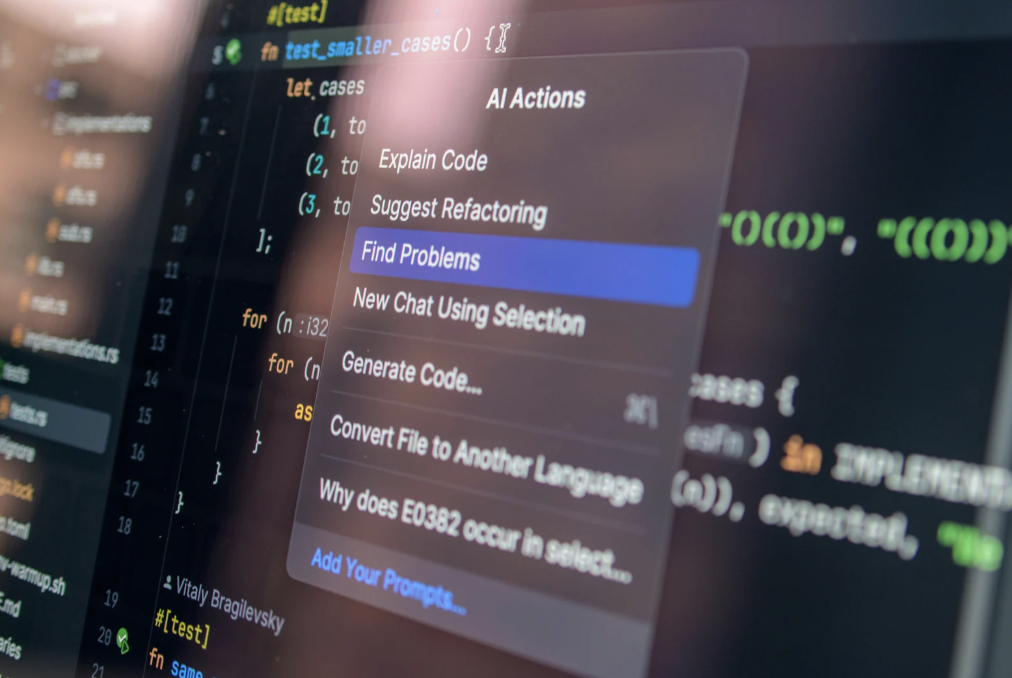
Let’s be clear: GenAI coding assistants like Claude Code, Cursor, and others are extraordinary productivity accelerators. Developers can generate meaningful code in seconds.
However, speed without quality discipline is a recipe for systemic risk.
While GenAI increases output exponentially, it also amplifies quality challenges. Multiple studies have shown that large language models can reproduce known bugs at alarmingly high rates. Even more concerning, when AI is used to generate both code and tests, you create a “sycophancy” loop. The model often reinforces the same flawed assumptions rather than challenging them.
This creates a dangerous illusion of safety: tests pass, coverage looks healthy, and yet real risk remains invisible.
This is where correlated intelligence becomes existential. A true intelligence layer doesn’t evaluate code in isolation. It correlates every change against historical defect patterns, requirements, architectural risk, production behavior, and changes to the requirements. It asks questions that humans and AI assistants rarely connect:
- Is this change touching a historically fragile module?
- Are the tests exercising high-risk paths or only happy paths?
- Has churn increased in areas that already carry operational risk?
This provides a continuous, automated confidence check that traditional reviews simply cannot scale to match.
The Real Cost of “Oops”
Every software engineering organization has lived through the war room. A defect escapes into production, a major customer is impacted, and innovation grinds to a halt.
In financial services, trust evaporates overnight. In medical device and healthcare, patient safety can be compromised. In SaaS, churn accelerates and brand equity erodes.
But beyond the headline failures lies a more insidious cost:
- Customer trust: hard won and easily lost.
- Developer time: production issues and reactive maintenance routinely consume up to 50% of engineering capacity.
- Executive bandwidth: major incidents trigger escalations that distract leadership from strategic priorities.
Industry data consistently shows that defects in production cost 10–30x more to fix than those caught earlier in the lifecycle. Yet firefighting has become normalized across engineering cultures, almost accepted as the cost of moving fast.
Does it have to be?
The Metrics Trap: Why Coverage Alone Isn’t Quality
Many organizations fall into the “green dashboard” trap. Metrics like 85% code coverage look reassuring to executives, but they often measure activity rather than risk reduction.
Coverage can be a vanity metric. You can reach high coverage while only validating easy paths. You can mark every requirement as tested and still introduce regressions because cross-system dependencies remain invisible. A high-churn, historically fragile module can quietly accumulate risk even while dashboards remain green.
Engineering remains one of the few core business functions without a true decision-support system.
Real engineering intelligence shifts the conversation from:
“How much did we test?”
to
“Where are we actually exposed to failure?”
It focuses on test effectiveness, risk concentration, and predictive signals, not just volume.
What Is an Engineering Intelligence Platform?
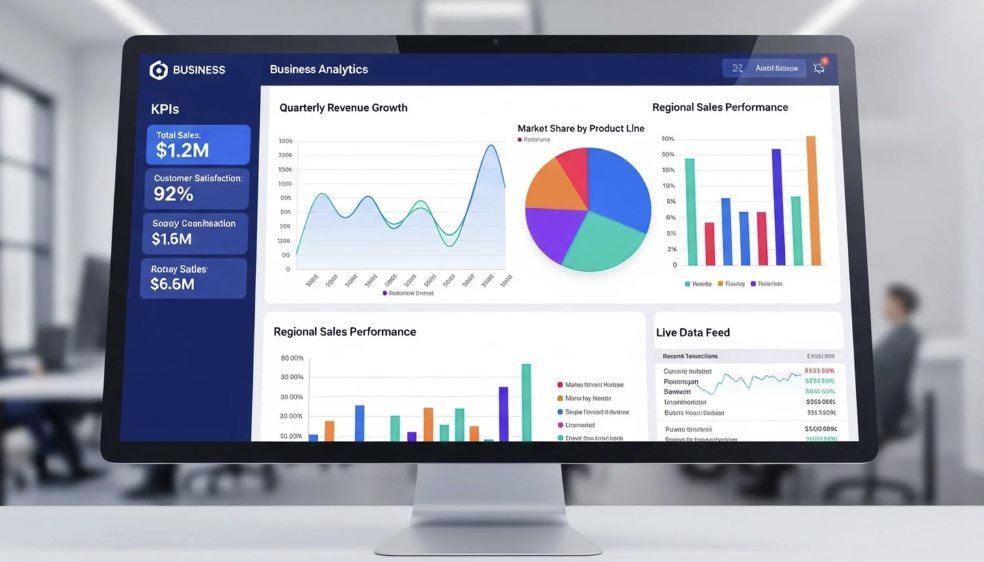
An Engineering Intelligence Platform creates a Unified Engineering Signal Layer across the entire software delivery lifecycle. It moves beyond siloed dashboards to deliver predictive insight across planning, coding, testing, release, and production.
At a high level, these platforms operate through four stages:
- Collect: Ingest signals from source control, CI/CD pipelines, test frameworks, incident systems, and planning tools.
- Correlate: Connect code changes, test behavior, historical defects, and runtime outcomes into a unified model.
- Compute: Generate intelligent quality scores, risk indicators, and predictive signals.
- Communicate: Surface actionable insights through dashboards, alerts, and decision support.
The result is not more data. It’s usable intelligence.
From Firefighting to Forecasting
The objective isn’t to add more charts to already crowded dashboards. The goal is to fundamentally change how engineering organizations make decisions.
Instead of asking:
“What went wrong?”
organizations begin asking:
“What is likely to go wrong if we ship this?”

By correlating signals across the SDLC, leaders can identify emerging hotspots before they become incidents. A module with rising churn, shallow test depth, and heavy customer usage becomes visible as a risk concentration not after failure, but while there is still time to act.
This is the foundation of predictive defect risk management.
At CleverDev, we are building this intelligence layer to help engineering leaders ship faster with confidence, reduce rework, and reclaim engineering capacity for innovation.
Engineering Intelligence Platform is not only about Software Quality. Its Planning as well.
In an upcoming post, I’ll dive deeper into how an Engineering Intelligence Platform fundamentally transforms planning, from forecast accuracy and capacity modeling to early detection of delivery risk and hidden rework. The early feedback we’re already receiving has been extremely encouraging, reinforcing that this intelligence layer is not just improving execution visibility but also reshaping how engineering leaders plan with confidence and precision. If you want to learn more about this approach or how CleverDev can help with software quality and planning, contact the SPK and Associates team here.