
Modern business tools are rapidly adopting AI, creating a major shift in how organizations work, collaborate, and innovate. Unlike traditional software, AI systems can learn, generate content, and make recommendations in ways that are not always fully predictable. For business and technology leaders, this creates an important balancing act. Organizations want the advantages of AI tools, while also managing risk. This is why many organizations are establishing enterprise AI governance boards. These groups often include stakeholders from IT, security, legal, compliance, operations, and business leadership. Their role is not to slow innovation, but to create structured frameworks that help organizations adopt AI responsibly, securely, and at scale. The goal is to enable innovation with clear guardrails so teams can move quickly while maintaining compliance.
AI Governance: Approval Workflows and Implementing Security Protections
One of the most complex aspects of AI governance is moving beyond a simple “yes or no” decision for a specific tool. High-performing organizations must shift from one-off approvals to framework-based governance. This means defining categories of AI usage, such as internal productivity, code generation, or data analysis. Each category has predefined rules and acceptable risk levels. A critical component of this framework is the approval workflow for data ingestion. As a board, you must determine exactly what data the AI tool can access and how to classify the data. You need to ask whether the AI is ingesting product software code, hardware design files, sensitive HR documents, etc. In regulated industries like medical device manufacturing or aerospace, the stakes are even higher. If an AI tool accesses a regulated data set without proper controls, the organization faces significant compliance risk.
Furthermore, the board must verify that prompts are isolated and sanitized. Prompt injection remains a significant threat where malicious inputs can cause AI to bypass safety filters or leak sensitive information. Implementing robust security protections ensures that content is filtered as part of the governance model. Experts, including our own at SPK, suggest treating the AI tool like an intern. An intern has some knowledge but lacks full context and experience. You would not allow an intern to push code directly to production without a review. Similarly, your approval workflows should include a “staging area” where humans validate AI-generated work before it reaches production systems.

Zero Trust and Least Privilege in AI Connections
Security doesn’t stop at filters and safety checks. The identity and privilege model is arguably the most technically demanding portion of AI governance. When AI features are embedded into tools like PLM, CAD, or ALM systems, they often require deep integrations. These connections can become vulnerabilities if not managed with a “Zero Trust” mindset. Your governance board must evaluate whether the AI tool supports scoped service accounts. The tool should operate with the least amount of privilege necessary to perform its task. For example, if someone tasks an AI agent with retrieving a requirement from an ALM system, it should not have administrative access to the entire database. It should only have read access to the specific project it is assisting with.
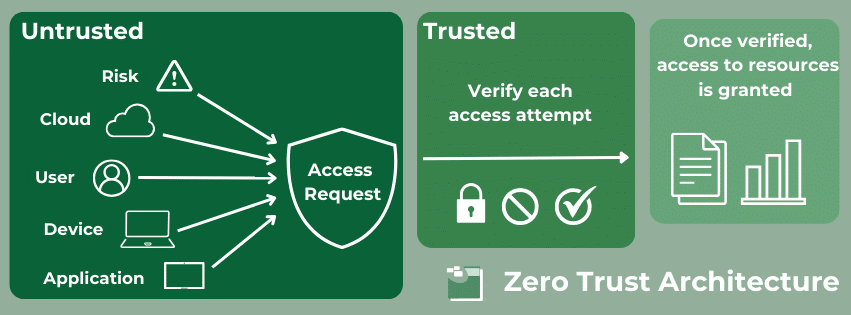
From a networking perspective, enforcing a Zero Trust environment is essential. This involves using short-lived tokens for API interactions that rotate frequently. It also means ensuring that the AI connection does not create a way to infiltrate your secure engineering environment. When we look at how AI governance boards function, they must scrutinize these integrations to ensure that the hardware and software toolchains remain secure.
Monitoring AI Usage Over Time
Governance is not a “one and done” event. Risk is dynamic. Models change, integrations evolve, and user workflows shift. Therefore, continuous monitoring is a non-negotiable requirement for engineering teams. You must track AI usage, log prompts and outputs where appropriate, and enforce access controls consistently. Monitoring allows the governance board to understand where AI is creating real business value and where it might be introducing “requirements drift” or rework. If an engineer uses AI to generate a complex requirement for a medical device, but it lacks the context of specific safety regulations, the resulting rework can be costly. Continuous logging helps identify these patterns early. Moreover, boards must ensure that company data is not used to train or improve external models. This is a major consideration for maintaining a competitive advantage.
You must ask questions like:
- Are all prompts being logged?
- Where are your vector databases being stored?
- What are the data retention limits?
Without these answers, you are essentially operating in the dark, which is an unacceptable risk in complex product development.
Accelerating Innovation with the SPK AI Launchpad
Navigating the complexities of data classification, zero trust networking, and continuous monitoring can feel like a hyper-complex process layered on top of innovation. At SPK and Associates, we help engineering organizations modernize and optimize these systems so your teams can deliver higher-quality products with greater operational confidence.
We designed our AI Launchpad service to help you move from uncertainty to a clear, actionable roadmap. We begin by understanding where your organization stands today, benchmarking your capabilities against a proven AI maturity model. We then perform a detailed gap analysis to uncover what is missing. This may be clean data, integrated systems, or specialized expertise. The AI Launchpad provides a 12–36 month roadmap focused on achieving quick wins while laying the foundation for long-term scalability. We help you assess the AI features already embedded in your existing tools, such as PLM and CAD systems or DevSecOps pipelines. Our goal is to ensure you have the right guidance to evaluate and implement these tools safely, turning AI into a pragmatic remedy for engineering complexity.

AI Governance Boards for Engineering Teams
The winning approach to AI in 2026 is responsible speed. Organizations cannot afford the risk of leaking confidential IP or failing a regulatory audit. By establishing a structured, transparent, and risk-based AI governance board, you create a culture where innovation is encouraged because the guardrails are clear. When your data access is understood, your privileges are controlled, and your integrations are monitored, you can put technology to work. This leads to real business results and improved work lives for your engineers. If you are ready to build a governance framework that supports your engineering goals, contact our experts today.
The Engineering Leader’s AI Governance Checklist
Use this checklist to evaluate your current AI readiness and guide your governance board’s decision-making process.