

Engineering and manufacturing operate in separate systems, processes, and teams. A CAD model may look perfect in Creo, but the realities of assembly, inspection, operator training, tooling, and production variability may not become clear until the product reaches the shop floor. By that point, resolving the issue can be expensive. Engineering changes may require new tooling, revised work instructions, additional validation, or production delays. Operators may rely on outdated documents, while quality teams struggle to connect defects back to the original design decision.
Manufacturing excellence does not begin when production starts. It begins during product design. By combining Design for Manufacturability practices with tools like Creo, Windchill, and Tulip, organizations can create a digital thread that links engineering intent with frontline execution.
Why Design Engineers Must Think Beyond CAD
Design engineers must consider more than whether a product meets its functional requirements. They must also understand how it will be manufactured, assembled, inspected, maintained, and used by operators. Design for Manufacturability, or DFM, is the practice of optimizing a product during development so it can be produced more easily, consistently, and cost-effectively. It helps bridge the gap between a successful prototype and scalable production.
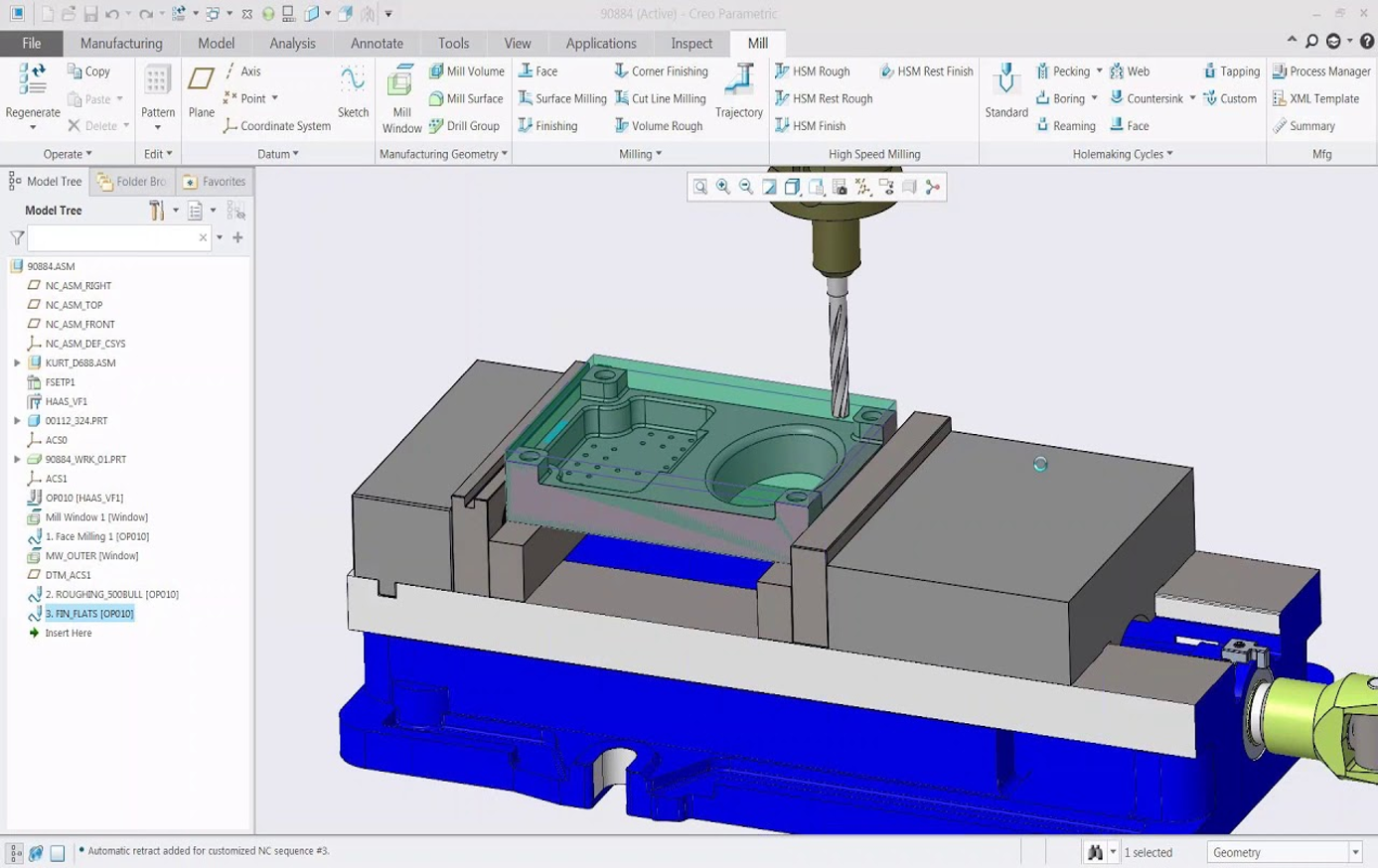
A design may be technically correct in a CAD program, but this does not mean it can’t create manufacturing challenges. Parts may be difficult to machine, fasteners may be hard to reach, tolerances may be unrealistic, or assembly steps may require unnecessary tools and operator movement. These issues can increase cycle time, scrap, rework, and training requirements.
DFM encourages engineering teams to evaluate questions such as:
- Can the product be assembled efficiently?
- Are components easy to access and inspect?
- Are tolerances appropriate for the manufacturing process?
- Can standard materials, parts, and tooling be used?
- Is the design resilient to normal production variation?
- Can operators complete each step safely and consistently?
Operator workflows should also influence design decisions. Engineers may understand the product model in detail, but frontline workers understand the realities of production. They know where instructions are unclear, where fixtures create delays, and where variation is likely to occur.
Bringing manufacturing and operator feedback into the design process earlier helps organizations avoid costly tooling modifications, reduce waste, improve quality, and accelerate time to market.
How Creo Supports Manufacturing-Friendly Design
Creo, a CAD solution from PTC, gives engineering teams tools to create designs that are not only functional but also practical to manufacture and maintain. Parametric design allows engineers to establish relationships between dimensions, features, and assemblies. When one part of the design changes, related elements can update automatically. This helps teams evaluate design alternatives more quickly while maintaining consistency across the product. Accurate product structures and bills of material are equally important. When CAD models, assemblies, and product data remain aligned, manufacturing teams are less likely to receive incorrect parts, missing components, or outdated configurations.

In addition to this, Creo supports assembly simplification. Engineers can create simplified representations that remove unnecessary details and make complex assemblies easier to understand. These representations can support manufacturing planning, service documentation, visualization, and operator training.
Model-based definition further strengthens the connection between design and manufacturing. Instead of relying only on 2D drawings, teams can include dimensions, tolerances, annotations, and product manufacturing information directly within the 3D model. This supports a model-based enterprise in which the digital model becomes the primary source of product definition across engineering, manufacturing, quality, and service. Manufacturing teams can access clearer product information, while quality teams can connect inspection requirements directly to engineering intent.
Standardized templates, libraries, materials, design rules, and modeling practices also help teams reduce variation. Rather than solving the same design problem differently across every project, engineers can reuse approved approaches that are already understood by manufacturing.
How Tulip Connects Engineering to the Shop Floor
Creo helps define what should be built. Tulip helps frontline teams understand how to build it, inspect it, and respond when conditions change. Tulip is a frontline operations platform that supports digital work instructions, operator guidance, quality workflows, traceability, and connected worker applications. It gives manufacturers a flexible way to digitize shop-floor processes without replacing every existing system.

One of Tulip’s major strengths is its no-code approach. Engineers, process owners, and frontline workers can create and update operational applications without relying heavily on traditional software development teams. In many organizations, even a small change to a shop-floor application requires a service ticket, approval process, and development work from an IT team located elsewhere. The people who understand the process best are often separated from the people making the software change. That creates delays and makes continuous improvement harder.
With Tulip, the people closest to the work can help update instructions, quality checks, data collection forms, and workflows more quickly. This allows manufacturers to respond faster to production issues, process changes, and evolving customer requirements.
Digital Work Instructions and Operator Guidance
Digital work instructions replace static documents and paper procedures with interactive, step-by-step guidance that can include images, videos, warnings, and quality checks. This helps operators follow the correct process for each product configuration while reducing outdated documentation and missed steps. Video and AI-assisted tools can also capture experienced workers’ knowledge, accelerate training, and standardize procedures across shifts and facilities.
Quality Workflows and Traceability
Tulip can embed inspections, measurements, defect reporting, and issue escalation directly into operator workflows. By connecting each activity to the operator, machine, material, serial number, and process step, teams gain greater visibility into production conditions and can investigate defects more efficiently. This creates a stronger feedback loop between manufacturing, quality, and engineering.
Composable MES and System Integration
Tulip’s composable MES approach allows manufacturers to improve frontline operations without replacing their existing ERP, PLM, quality, or machine systems. It can bring data from these platforms together in operator-friendly applications, creating a more unified experience at the point of work. Teams can modernize individual workstations, processes, or production lines gradually, reducing the cost and risk of a large-scale system replacement.
Creating a Digital Thread Between Design and Manufacturing
The greatest value comes when Creo and Tulip are not treated as isolated tools. A connected digital thread links product design, product lifecycle management, manufacturing execution, quality, and frontline operations. Information can flow from engineering to production and then return as feedback for future improvements.
- Creo serves as the source of detailed product geometry, assemblies, manufacturing information, and engineering intent.
- Windchill manages product structures, revisions, configurations, change processes, and controlled product data.
- Tulip coordinates production activities, machines, routing, and work orders, bringing relevant information to frontline workers through digital applications and captures data directly from the point of production.
- Quality systems manage inspections, nonconformances, corrective actions, and compliance records.
- ERP systems provide information related to materials, inventory, purchasing, scheduling, and production orders.
Together, these platforms can support a single source of truth across the product lifecycle.
Closed-Loop Architecture
When engineering releases a change, Windchill can control the revision and approval process. Updated information can then flow to manufacturing systems and digital work instructions. Operators receive the correct procedure for the product and configuration being built. If an issue is discovered during assembly or inspection, Tulip can capture the details and route them back to quality and engineering. Teams can then evaluate whether the cause relates to the design, process, material, machine, or operator instruction. This creates closed-loop manufacturing rather than a one-way handoff from engineering to production. A connected digital thread also supports configuration control. Manufacturers can ensure that the correct CAD model, BOM, software version, work instruction, and inspection plan are used for each product variant.
Real-World Manufacturing Improvements
Connecting design and manufacturing can improve both engineering performance and frontline execution.
Faster Operator Onboarding
Digital work instructions, visual demonstrations, and guided workflows help new operators learn tasks more quickly. Instead of relying only on classroom training or experienced employees, workers can receive contextual guidance at the workstation.
Reduced Rework and Scrap
Clearer engineering information and standardized operator workflows reduce avoidable mistakes. When issues are captured consistently, teams can identify common causes and improve the process before additional products are affected.
Better Traceability
Connected systems provide greater visibility into who completed each step, which materials and machines were used, what inspection results were recorded, and which product configuration was produced.
This is especially important in regulated manufacturing environments where organizations must demonstrate process control and product history.
Improved Product Quality
When quality checks are built directly into operator workflows, defects can be detected earlier. Engineering and manufacturing teams can use production data to improve designs, tolerances, tooling, and procedures.
Faster ECO Adoption
Engineering change orders are only valuable when the approved change reaches the shop floor.
By connecting Windchill change processes with digital work instructions and production applications, manufacturers can reduce the lag between engineering approval and frontline adoption. Operators are less likely to work from obsolete drawings or procedures.
Greater Operator Consistency
Interactive applications help standardize work across employees, shifts, and facilities. Teams can still improve processes locally, but approved methods can be shared and scaled across the organization.
Stronger Manufacturing Visibility
Real-time production and quality data give leaders a clearer view of performance, bottlenecks, downtime, defects, and training needs. This supports continuous improvement and more informed decision-making.
Bridging Design and Manufacturing
Manufacturing excellence does not start on the shop floor. It starts during design. Organizations that apply Design for Manufacturability principles in Creo can identify production challenges earlier, improve standardization, and create clearer product definitions. Together, Creo, Windchill, Tulip, MES, quality, and ERP systems can create a scalable digital thread that connects engineering intent with manufacturing execution.
SPK helps manufacturers bridge the gap between engineering and operations by connecting CAD, PLM, ALM, MES, and frontline manufacturing systems into a scalable digital thread. This connected approach gives organizations the visibility, traceability, and flexibility needed to improve quality, reduce waste, accelerate change, and support smart manufacturing. If your team is ready to put this into practice, reach out to our team.