


PTC NEXT Spring 2026 showcased a clear vision for the future of engineering software: connected product data, AI-powered workflows, modern cloud platforms, and an increasingly integrated digital thread spanning CAD, PLM, ALM, manufacturing, and service operations. Across Creo, Windchill, Codebeamer, Onshape, and other PTC solutions, one theme stood out above all others. Engineering organizations must modernize both their technology and processes to remain competitive.
For organizations developing complex products in regulated industries such as medical device, aerospace & defense, automotive, and manufacturing, these announcements signal more than just product enhancements. They represent a shift toward a more connected and intelligent product lifecycle. One that enables faster innovation while maintaining governance, quality, and compliance. Here are the five most important takeaways engineering teams should understand from PTC NEXT.
1. What’s Changing: PTC’s New Product Naming and Release Strategy
One of the most significant announcements was PTC’s transition to a new product release strategy. Moving forward, products will adopt year-based naming conventions, replacing traditional version numbering. While PTC will release Creo 13 shortly, customers will start seeing annual releases aligned to the calendar year, such as Windchill 2027. In addition to the name change, PTC is moving to a more predictable annual release cadence supported by long-term support and continuous SaaS innovation. Windchill will transition to annual releases, while cloud-based offerings such as Windchill+, Codebeamer+, and other SaaS solutions will continuously receive frequent enhancements throughout the year.



For engineering organizations, this change simplifies upgrade planning and aligns software modernization efforts with annual budgeting and governance cycles. However, it also means organizations must develop a strategy for staying current. Many companies struggle to maintain PLM and ALM environments because upgrades compete with engineering priorities. As a result, technical debt accumulates, and innovation adoption slows.
SPK helps organizations create sustainable upgrade and lifecycle management strategies through Windchill and Codebeamer application management services. Whether customers operate on-premises, in private cloud environments, or on Windchill+, having a roadmap for upgrades, governance, and platform optimization becomes increasingly important as PTC accelerates innovation delivery.
2. Creo is where Engineers Innovate and Speed Product Delivery
Creo continues to push the boundaries of engineering productivity. PTC announced more than 200 new capabilities focused on AI-assisted design, simulation-driven engineering, electrification, composite design, manufacturing optimization, and model-based definition (MBD). Creo users can expect significant performance improvements, including up to 70% faster assembly retrieval and dramatically faster composite calculations.
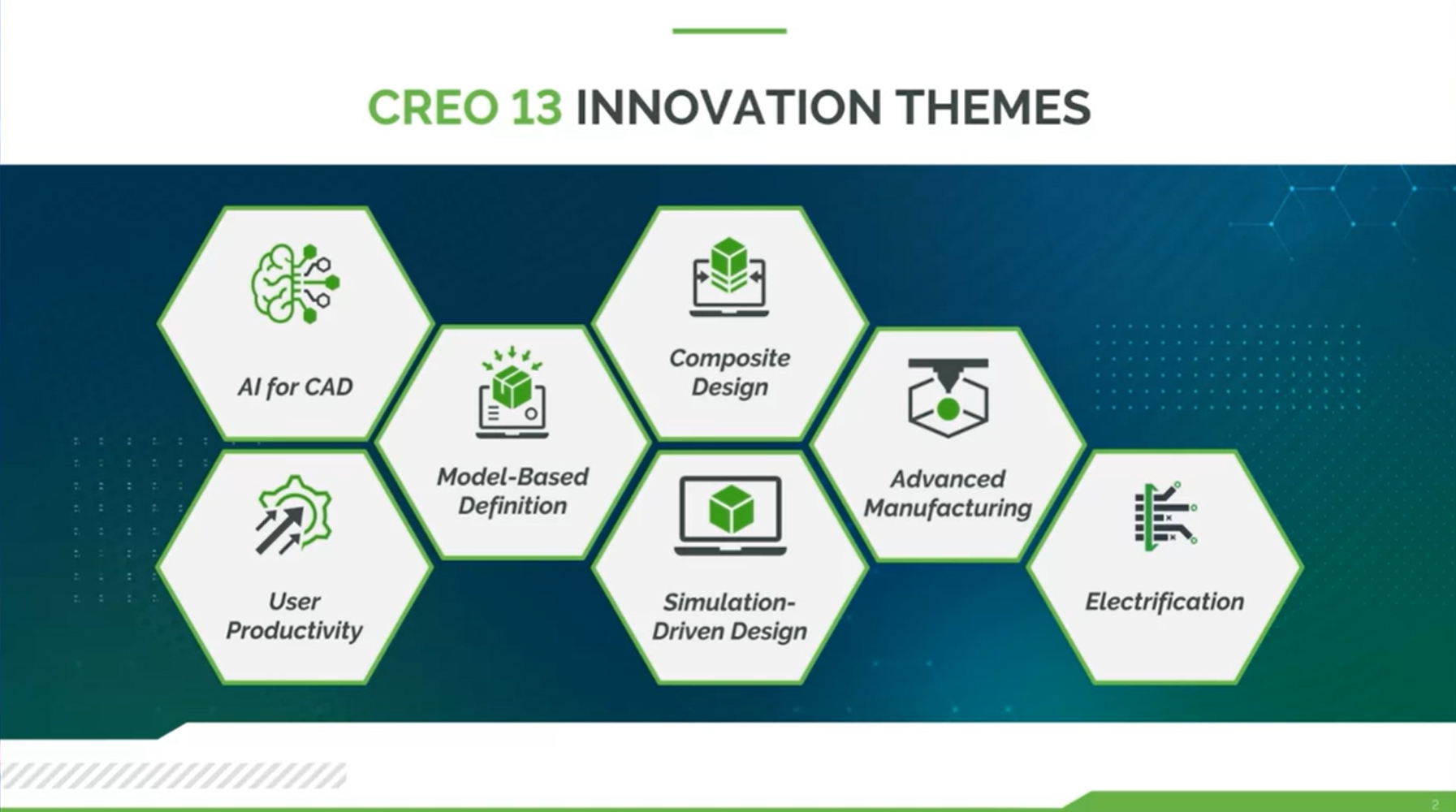
One of the most exciting developments is the introduction of the Creo AI Assistant. Rather than simply generating content, the assistant is designed to provide model-aware guidance and engineering-level automation directly within the design workflow. This reflects a broader shift occurring throughout engineering software: AI is becoming embedded into the tools engineers already use every day.
PTC also continues investing heavily in MBD, simulation-driven design, and electrification workflows. As products become increasingly software-defined and electronically enabled, mechanical, electrical, and software engineering teams must collaborate more effectively than ever before. This is where many organizations encounter challenges. Technology alone does not create a digital thread. Engineering teams must align processes, governance models, data structures, and collaboration methods across departments.
SPK helps clients maximize the value of Creo through implementation services, CAD process consulting, MBD adoption strategies, Windchill integration, and engineering workflow optimization. For organizations evaluating how AI fits into their engineering environment, SPK’s AI Launchpad provides a structured approach to identifying high-value AI use cases, assessing readiness, and creating a roadmap for implementation without introducing unnecessary risk.

3. PTC Is Investing in Windchill Modernization
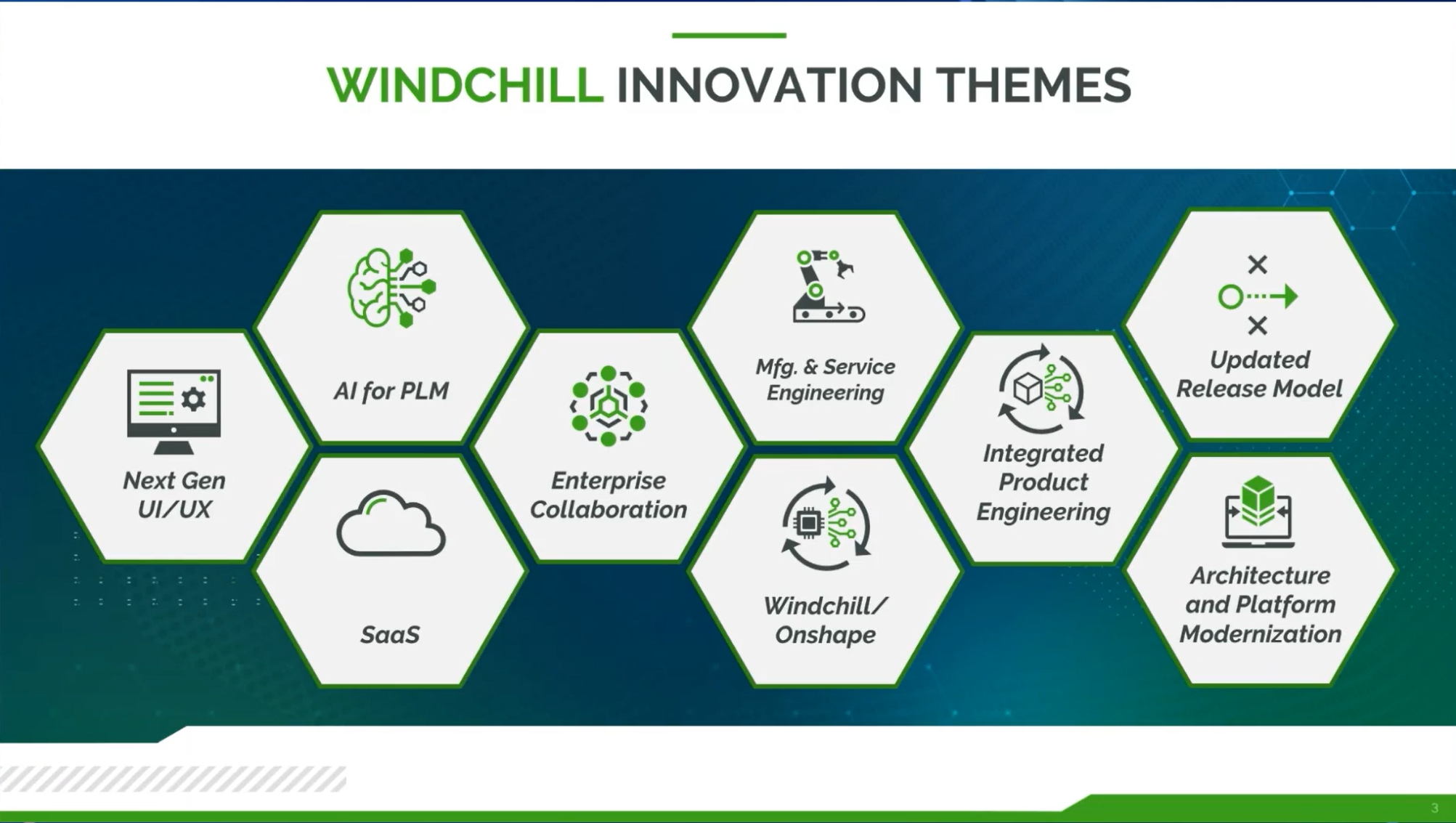
Perhaps no product received more strategic investment attention than Windchill. PTC’s vision for PLM is clearly centered around modernization, usability, collaboration, AI, and cloud adoption. New investments include a redesigned user experience, enhanced BOM management, manufacturing process planning, enterprise collaboration capabilities, integrated product engineering, AI-powered assistance, and architectural modernization.

The introduction of PTC Jetstream demonstrates PTC’s focus on expanding collaboration beyond traditional engineering teams. Meanwhile, Windchill AI Assistant and AI Parts Rationalization capabilities are designed to help organizations find information faster, identify duplicate parts, and improve data quality.
Equally important is Windchill+’s continued evolution as PTC’s SaaS PLM platform. Windchill+ provides cloud-native PLM with predictable upgrades, automated infrastructure management, and scalable architecture. PTC’s roadmap also highlights future investments in manufacturing planning, supplier collaboration, integrated product engineering, and AI-driven workflows.
Many organizations recognize the benefits of modernization but struggle with migration complexity. Questions around data migration, customizations, integrations, validation requirements, and regulatory compliance often delay initiatives.
Through our experience as a trusted PTC partner, SPK has helped in Windchill implementations, upgrades, migrations, cloud hosting, and application management. We have seen the value organizations get when they modernize to an enterprise PLM. Whether companies are moving from legacy PLM platforms, upgrading Windchill environments, or evaluating Windchill+ adoption, our experience in highly regulated industries helps ensure modernization efforts support both innovation and compliance objectives.
4. Faster to Market With Increased Control with Codebeamer
Codebeamer continues to evolve into one of the industry’s most comprehensive ALM platforms for complex product development. The Spring 2026 release introduced AI-powered assistants, semantic search, enhanced configuration management, product line engineering improvements, and expanded digital product traceability capabilities. The message from PTC is clear: organizations should not have to choose between speed and control.
Codebeamer’s new AI capabilities are focused on improving the quality of your requirements, accelerating engineering workflows, and delivering more meaningful search experiences. At the same time, investments in configuration management, variant management, and integrated product engineering help organizations maintain governance and traceability across increasingly complex products.

For regulated industries, this balance is critical. Medical device manufacturers, automotive suppliers, and aerospace organizations face growing pressure to accelerate innovation while maintaining compliance with standards such as FDA 21 CFR Part 11, ISO 13485, ISO 26262, ASPICE, and DO-178C.
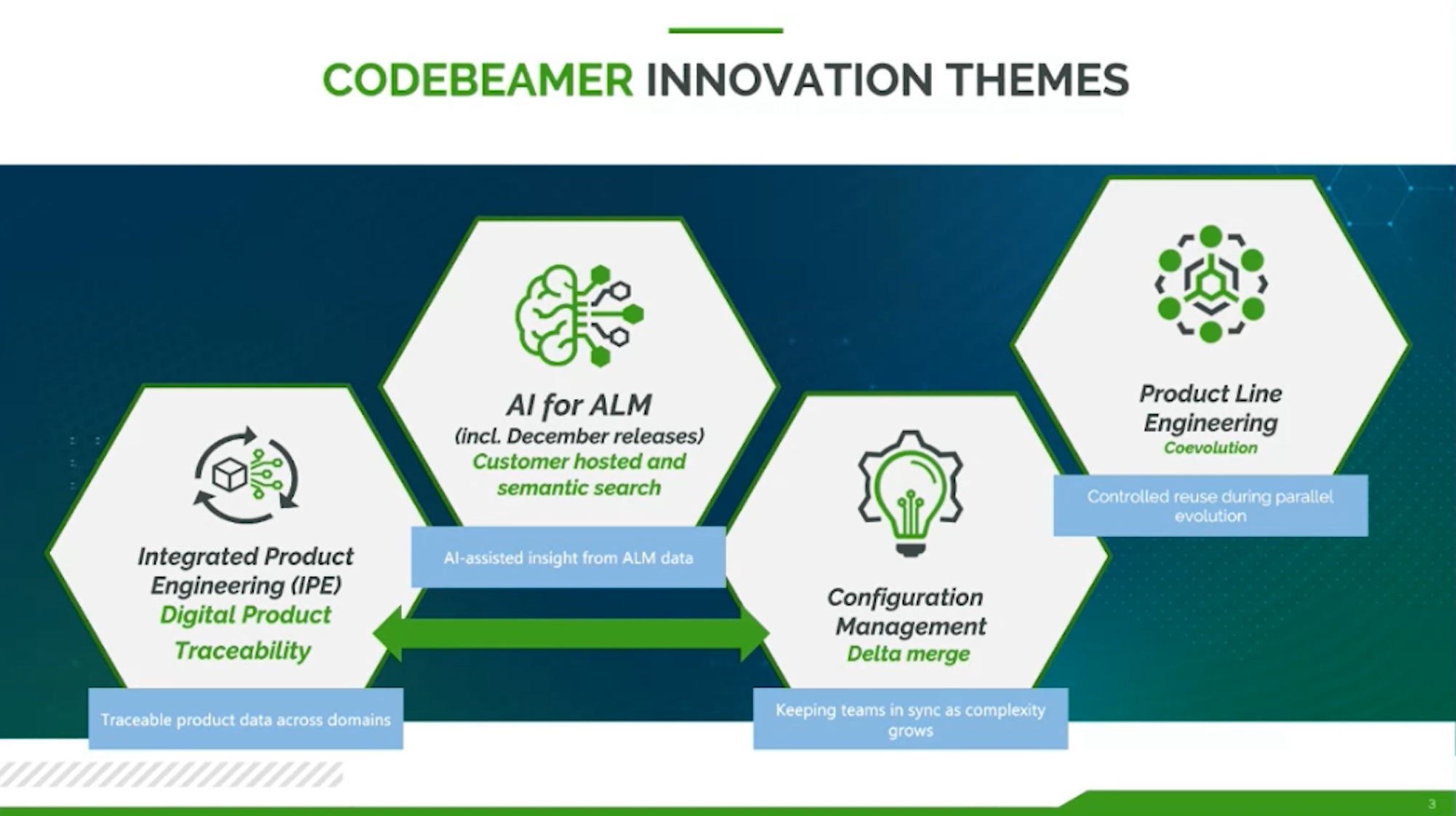
PTC’s future roadmap reinforces this commitment by emphasizing digital thread traceability, configuration management, AI-assisted requirements quality, reuse, testing, and industry-specific best practices.
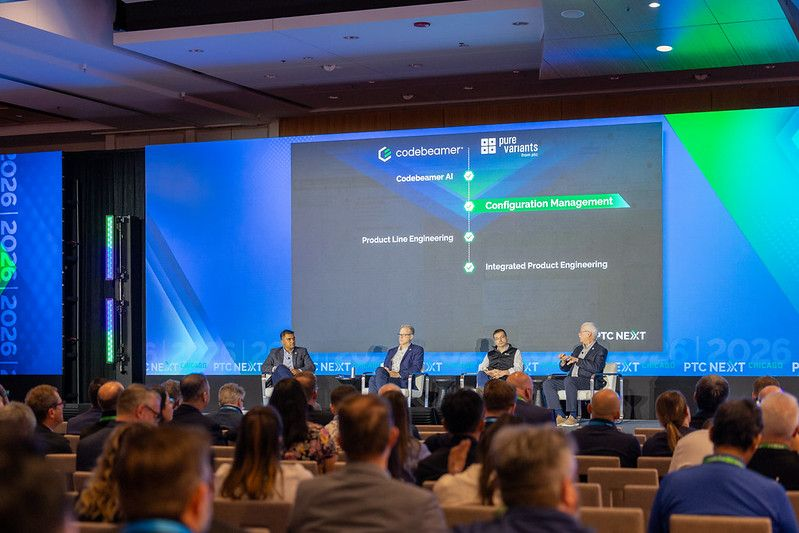
Being one of the core North America PTC partners with extensive Codebeamer experience, SPK’s team helps build ALM environments that support both agility and compliance. Our team assists with migrations from legacy ALM platforms, requirements management process design, traceability strategy development, validation support, and digital thread integration between Codebeamer, Windchill, Jira, GitLab, and other engineering systems.
5. AI Strategy and Technical Architecture Is The Future
While individual product announcements were impressive, the most important theme from PTC NEXT may be the overarching AI strategy. Across Creo, Windchill, Codebeamer, Onshape, ServiceMax, and Servigistics, AI is no longer being positioned as a standalone capability. Instead, it is becoming a foundational layer embedded directly into engineering workflows. PTC announced a new AI platform, numerous AI assistants, AI agents, semantic search capabilities, and intelligent automation across the product lifecycle. Their approach, however, is built on trusted product data. Throughout the event, PTC emphasized that AI effectiveness depends on connected data, open integrations, and a strong digital thread connecting CAD, PLM, ALM, and service information. Without that foundation, AI initiatives struggle to produce meaningful business outcomes.
This is a challenge many organizations face today. Teams are eager to deploy AI, but their data remains fragmented across disconnected systems, inconsistent processes, and siloed departments.

SPK’s team is very much aligned with PTC in its approach to AI. SPK’s AI Launchpad was designed specifically to address the challenges discussed above. Rather than starting with technology, AI Launchpad helps organizations assess their AI maturity, identify high-value opportunities, evaluate governance requirements, and create a roadmap aligned with business goals. The result is a practical strategy that turns AI hype into measurable business value.
The organizations that benefit most from AI over the next several years will not necessarily be those with the most advanced models. They will be the organizations that build strong data foundations, connect their engineering systems, establish governance, and align AI investments with business outcomes.
Final Thoughts
PTC NEXT Spring 2026 reinforced a clear direction for the future of engineering: connected product data, modern cloud platforms, integrated digital threads, and AI-powered decision-making. Whether you’re using Creo, Windchill, Codebeamer, or a combination of PTC technologies, the opportunity is no longer simply adopting new software features. The opportunity is transforming how engineering teams collaborate, innovate, and bring products to market.
At SPK, we help organizations maximize these investments through Windchill and Codebeamer implementations, migrations, application management, regulatory compliance consulting, digital thread strategy, engineering process optimization, and AI readiness assessments. As PTC continues to innovate, having the right strategy and partner can help ensure your organization captures the full value of these advancements. If you’re in need of a PTC partner to help you with your engineering journey, please reach out to our team of experts.