



As product organizations head into 2026, the pressure to build the right things faster and with clearer alignment to business outcomes has never been higher. Product leaders are expected to balance customer feedback, strategic priorities, delivery constraints, and cross-functional collaboration. Meanwhile, they must also keep stakeholders aligned and delivery teams moving.
Two tools that frequently come up in these conversations are Jira Product Discovery and Airtable. While both are used by product teams, they serve very different purposes. Choosing the wrong one (or stretching one beyond its strengths) can create friction between product, engineering, and leadership. Let’s break down what to know about Jira Product Discovery and Airtable in 2026, where each tool excels, and how to decide which one is right for your organization.


Why This Comparison Matters in 2026
In many organizations, product discovery has historically lived outside of engineering tools. Roadmaps were built in spreadsheets, slides, or standalone tools, while delivery happened somewhere else—often in Jira. The result? Misalignment, manual updates, and constant reconciliation between “what we plan to build” and “what teams are actually working on.”
As product organizations mature, they’re realizing that discovery and delivery must be tightly connected. That realization is driving deeper evaluations of tools like Jira Product Discovery, Airtable, and Productboard. Furthermore, it’s not just for features, but for how they fit into an end-to-end product operating model.
Airtable: Flexible, Familiar, and Great for Custom Roadmaps
Airtable is best described as a spreadsheet-database hybrid. It looks approachable like a spreadsheet but offers the structure and flexibility of a database. For many product teams, that combination makes Airtable an attractive place to start.
Where Airtable Shines
Flexible data model
Airtable’s custom fields allow teams to track almost anything in one place. This includes research notes, customer feedback, feature ideas, commitments, sprint references, owners, and more. This flexibility makes it easy to adapt Airtable to unique product workflows.
Dynamic views for roadmapping
Teams can create and save multiple views of the same data, including:
- Timeline views for roadmap planning
- Kanban views for high-level workflow
- Filtered views for leadership, customers, or internal teams
Low barrier to entry

Because Airtable feels familiar, teams can get started quickly without much training. This is especially appealing for early-stage product teams or organizations without a standardized product tooling strategy.
Where Airtable Starts to Struggle
As organizations scale, Airtable’s strengths can become limitations:
- Discovery data often becomes disconnected from delivery data
- Manual or brittle integrations are required to sync with Jira
- Ideation, prioritization frameworks, and outcome-based decision-making are largely DIY
- Governance, consistency, and traceability become harder across teams
Airtable is excellent at modeling data. However, it wasn’t designed to be a system of record for product discovery connected directly to engineering execution.
Jira Product Discovery: Built for Modern Product Discovery
Jira Product Discovery (JPD) was created to solve a specific problem: how product teams capture ideas, prioritize work, and make decisions while staying tightly aligned with engineering delivery.
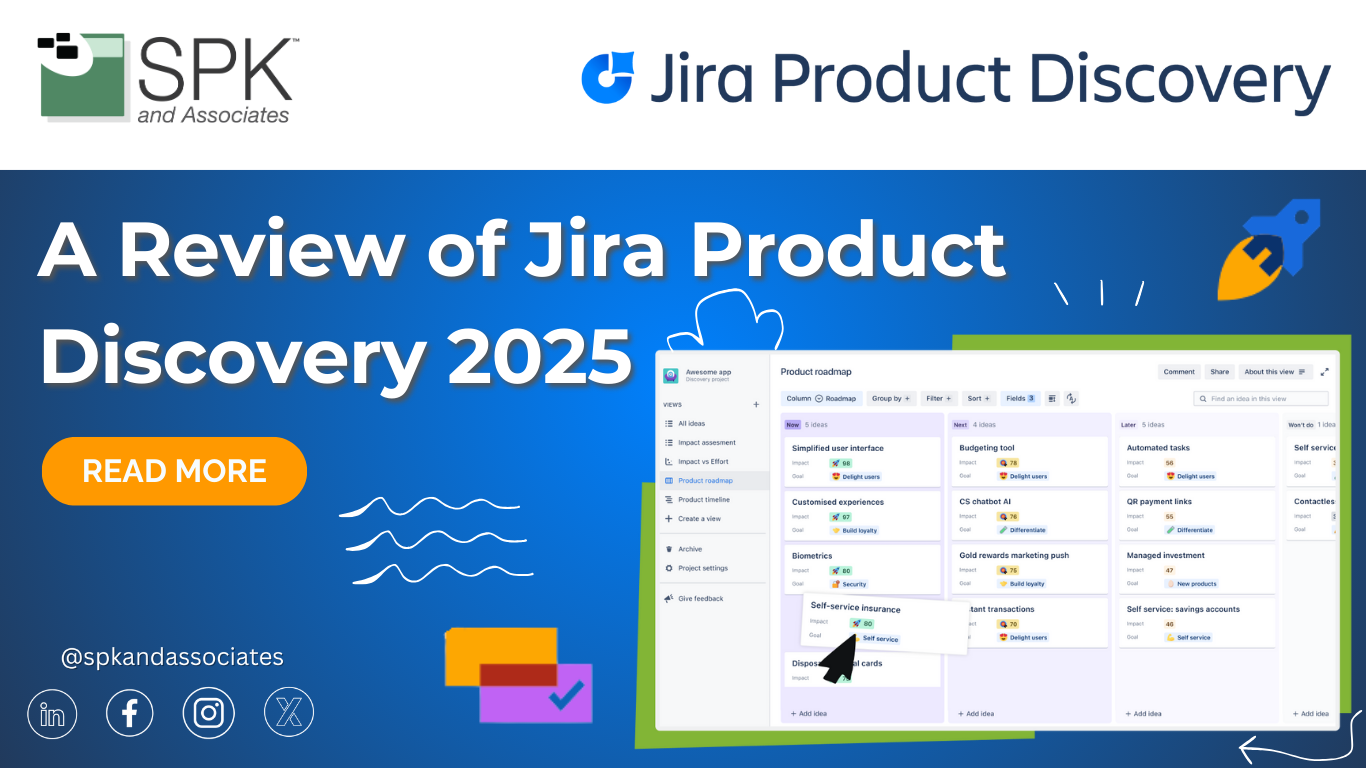
Rather than focusing only on roadmapping, JPD supports the entire discovery lifecycle.
Key Advantages of Jira Product Discovery
Native integration with Jira
This is the single biggest differentiator. Ideas, insights, and opportunities in JPD are connected directly to epics and issues in Jira Software, eliminating the need for fragile third-party integrations. Product and engineering teams work from a shared system, not parallel tools.
Discovery-first, not roadmap-only
Unlike tools that emphasize timelines and visuals, JPD is designed around:
- Capturing ideas from customers, stakeholders, and teams
- Grouping insights and validating problems
- Scoring and prioritizing opportunities using customizable frameworks
- Making transparent, evidence-based decisions
Roadmaps still exist, but they’re the output of discovery, not the starting point.
Multi-functional by design
JPD supports collaboration across product, engineering, design, and business stakeholders. Everyone can see why something is prioritized, not just what is on the roadmap.
Built for scale
JPD inherits enterprise-grade permissions, governance, and reporting because it lives inside the Atlassian ecosystem. As organizations grow, product practices stay consistent across teams.
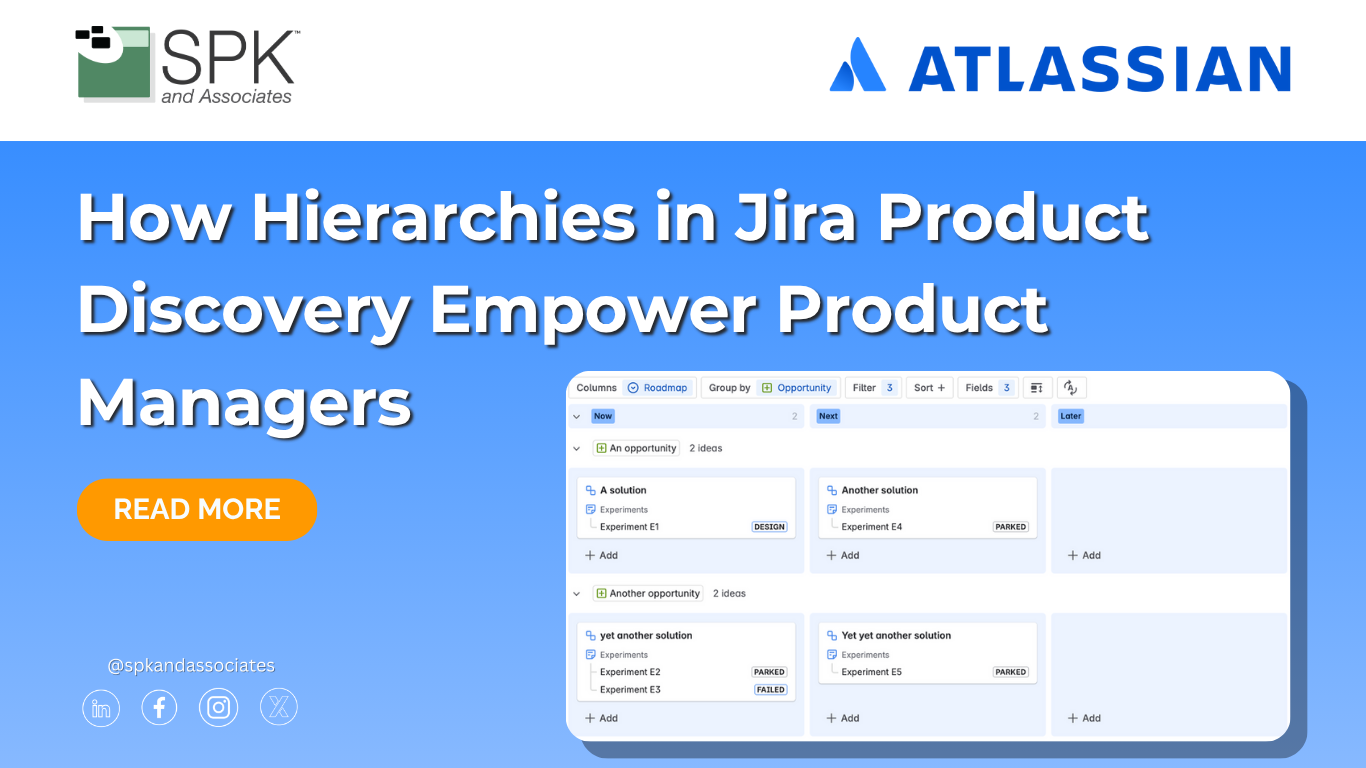
Jira Product Discovery vs. Airtable: A Practical Comparison
Which Tool Should You Use in 2026?
The answer depends on how mature your product organization is and where you want to go.
You may lean toward Airtable if:
- Your product team is small or early-stage
- You need maximum flexibility with minimal process
- Engineering alignment is informal or handled manually
You should strongly consider Jira Product Discovery if you(r):
- Use Jira for planning and delivery
- Want tighter alignment between discovery and execution
- Are scaling product practices across teams
- Want more rigor around prioritization and outcomes
- Leadership needs transparency into product decisions
Many organizations reach a point where Airtable simply can’t scale with them, and that’s often when JPD becomes a natural next step.
Migrating from Airtable to Jira Product Discovery
Moving from Airtable to Jira Product Discovery isn’t just a tool migration. It’s an opportunity to level up how your product organization works. Done well, it can:
- Reduce manual handoffs between product and engineering
- Improve confidence in prioritization decisions
- Increase delivery predictability
- Create a single source of truth for discovery and delivery
Done poorly, it can recreate old problems in a new tool.
How SPK and Associates Can Help
As an engineering consulting organization with over 20 years of helping product teams get their products to market more quickly, SPK and Associates helps product organizations evaluate, implement, and migrate to Jira Product Discovery in a way that aligns with their delivery model and business goals.
Whether you’re:
- Evaluating Jira Product Discovery for the first time
- Replacing Airtable or another roadmapping tool
- Looking to better connect JPD with Jira
- Standardizing product practices across teams
SPK brings deep Atlassian expertise and real-world experience helping organizations modernize their product tooling without disrupting delivery.
Ready to make product discovery work the way it should in 2026?
Contact our team today to start using Jira Product Discovery or to plan a smooth, low-risk migration from Airtable.