
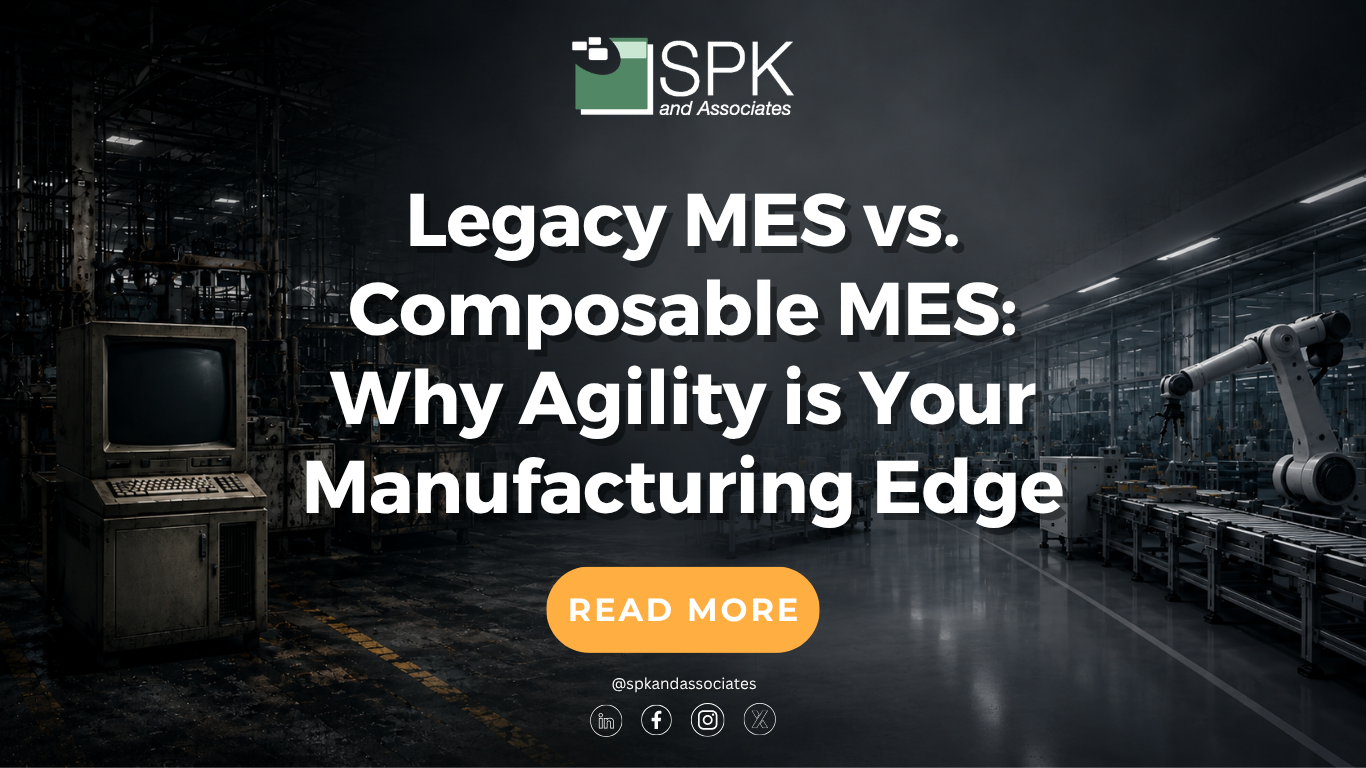

In modern manufacturing, the systems we use to manage production often feel like they were built for a different era. When engineering leaders evaluate Manufacturing Execution Systems (MES), they frequently encounter a choice between the way it’s always been done and a new, more agile approach. A common question manufacturers have is, what are the benefits of a modern MES that a legacy system simply can’t provide? The answer lies in the fundamental difference between a legacy MES and a composable, app-based MES. Legacy systems can be rigid, and if that system prevents you from adapting to changes in demand or product mix, it is no longer an asset, but an obstacle to innovation.
Legacy MES vs. Composable MES
To understand the advancement of a composable MES system like Tulip, we first have to look at the “monolith.” Legacy systems have been in the market for decades. They are often built on aging architectures with clunky interfaces that feel like Windows 95. The typical legacy process looks like this: you buy the software once every ten years. You lay out 100 requirements because it’s your one chance to get it right. You enter a one-to-two-year configuration cycle to get the software to fit your unique process. By the time you go live, your business has changed. The requirements you set 18 months ago are no longer relevant, but you are now locked into a rigid system. Making a single change in a legacy MES can take months of vendor intervention and high additional cost.
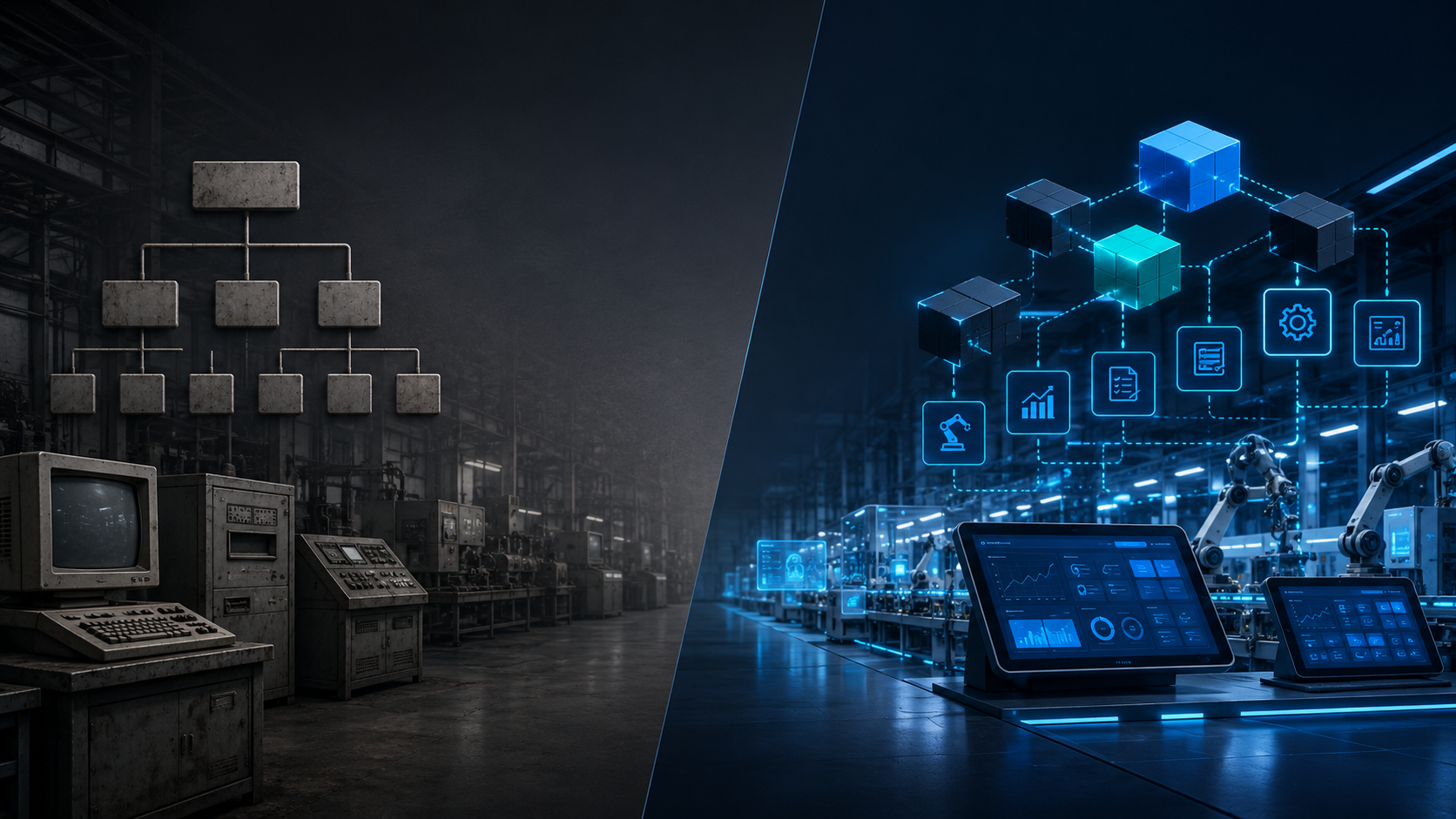

Tulip represents a fundamental shift. It is a composable system. Instead of a single, massive block of software, Tulip is a platform of “building blocks.” It is a no-code environment that is as user-friendly as PowerPoint. This allows the people who actually understand the process—manufacturing engineers, quality managers, and production leads—to create applications that solve real-world problems on the floor. They can do all this without needing a computer science degree.
Why Pick a Composable MES Over a Legacy System?
The move to a composable MES like Tulip isn’t just about a prettier interface. It’s about agility, cost, and time-to-value.
1. Rapid Time-to-Value
With a legacy MES, you might wait two years to see any ROI. With Tulip, you can create a Minimum Viable Product (MVP), such as a digital work instructions app, in a single day. We talk about delivery in weeks, not years. For a new facility, where processes are still evolving, this ability to react quickly is a massive competitive advantage.
2. Lower Total Cost of Ownership (TCO)
A legacy vendor might quote a lower initial license price, but the hidden costs of configuration, specialized consultants, and the inability to change the system post-launch often drive the TCO far higher than expected. Composable systems reduce reliance on external parties. When you own the system and can adapt it yourself. You control your future and your budget.
3. Continuous Improvement and Flexibility
Continuous improvement demands flexibility. In a legacy MES, you often have to change your physical process to fit the software. In a composable system, the software adapts to you. If you need to add an eighth process flow or insert a new quality inspection point, you simply drag and drop a new step into your app.
4. An Open Ecosystem vs. Vendor Lock-in
No single vendor can cover every use case a modern plant faces. Legacy systems are often closed monoliths that make it difficult to engage with new technologies. A composable MES is built on a cloud-native architecture with robust APIs, allowing it to act as a digital thread that connects to your ERP, edge devices, and other specialized tools.
How SPK and Tulip Help Teams Manufacture Better
At SPK and Associates, we understand the business of engineering and the realities of the factory floor. We don’t just provide a platform, we help you build a human-centric framework for managing operations.
By partnering with SPK and Tulip, manufacturing teams can:
- Empower Citizen Developers: We help train your frontline engineers to solve their own problems, reducing the burden on IT.
- Eliminate Paper and Silos: We replace manual point solutions and paper logs with a holistic platform where everything talks to each other.
- Scale with Confidence: Whether you are starting with a single station or overhauling a global enterprise, we provide the governance and data structure to ensure your apps remain harmonized.


Implementing Tulip’s Composable MES
Manufacturing leaders should no longer settle for the status quo of bloated, expensive, and rigid legacy systems. Agility is the only sustainable edge in a modern economy. A composable, app-based MES allows you to have the core functionality of a traditional system while retaining the freedom to innovate and extend into new areas. It turns your production system from a static record-keeper into a dynamic engine for growth. If you are tired of changing your processes to fit your software, it’s time to explore a more agile way to manufacture. Contact SPK and Associates today to see a demo of Tulip and discover how we can help you transition to a different way of working.