
Artificial intelligence is quickly becoming part of the software delivery lifecycle. Development teams are utilizing AI assistants to summarize issues, generate code, review merge requests, explain pipelines, and automate repetitive tasks. However, many organizations are running into the same challenge, that AI is only as useful as the context it can access. If an AI assistant cannot understand your projects, issues, merge requests, and CI/CD pipelines, its recommendations will remain limited. Not to mention the extra context from security findings, documentation, and connected systems. Developers may still need to jump between tools like GitLab, Jira, Slack, Zendesk, and other business systems to gather enough information to make the AI useful. This is where the GitLab Model Context Protocol, or MCP, becomes important.
MCP is an open standard that connects AI assistants to the tools, data, and workflows an organization already uses. This matters because it helps engineering and IT teams move from isolated AI experiments to connected, governed AI workflows across the software delivery ecosystem.
What Is the GitLab Model Context Protocol?
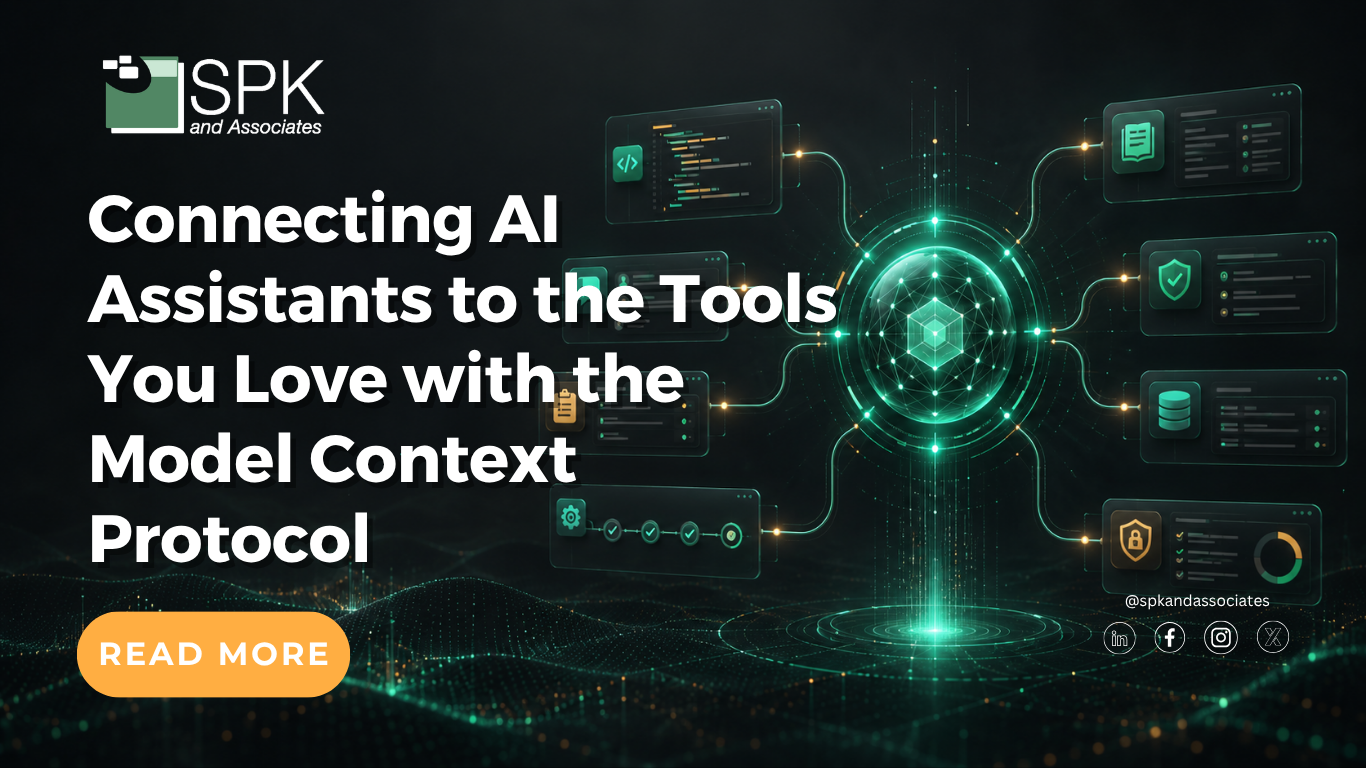
The Model Context Protocol is a standardized way for AI systems to communicate with tools and data sources. Instead of building a custom integration for every AI assistant and every platform, MCP creates a common connection layer. Before MCP, organizations often had to build and maintain separate integrations for each tool. For example, if an AI assistant needed access to Jira, Slack, Zendesk, and GitLab, each connection could require its own API setup, authentication flow, permissions model, and data mapping. That creates overhead for development, security, and platform teams.

GitLab’s MCP implementation helps reduce this complexity by supporting two complementary workflows:
- GitLab can act as an MCP client, allowing GitLab Duo Agent Platform capabilities to connect with external MCP-compatible tools.
- GitLab can act as an MCP server, allowing external AI tools such as Claude Desktop, Cursor, Claude Code, and other MCP-compatible assistants to connect securely to a GitLab instance.
This bidirectional approach is one of the most important parts of GitLab’s MCP strategy. It allows AI assistants to work both inside and outside of GitLab while maintaining a standardized, governed connection model.
Why MCP Matters for DevSecOps Teams
Modern software delivery depends on context. Code is only one part of the picture. A developer may also need to understand the:
Issue that requested the change
Customer impact
Security requirement
Failed pipeline
Test results
Deployment environment
Downstream documentation
Without that context, AI tools can provide generic answers. With that context, AI can become far more useful. For example, an AI assistant connected through MCP could help a developer understand why a merge request failed, summarize related issues, identify the pipeline stage that caused the problem, reference linked work items, and suggest next steps based on project-specific information. That is a much more valuable workflow than asking an AI tool a general coding question outside the development environment.
The GitLab Difference
GitLab as an MCP Server
The GitLab MCP server allows external AI tools like Claude Desktop or Cursor to connect to GitLab and access relevant project context through a standardized protocol. This helps developers ask for support with issues, merge requests, pipelines, or project information without manually copying data between tools. For teams, this reduces context switching while keeping GitLab as the governed source of truth. It is especially valuable for organizations using multiple AI assistants across different groups because it enables interoperability without sacrificing control, permissions, or governance.

GitLab as an MCP Client
GitLab’s MCP client support allows GitLab Duo Agent Platform to connect to external MCP servers and use context from other systems. This is important because software delivery information often lives across Jira, Slack, Zendesk, ServiceNow, and documentation platforms. With MCP, GitLab Duo can provide more complete answers by drawing on a broader workflow context, not just repository data. For example, a developer could ask GitLab Duo to summarize the background behind a feature, and the assistant could use related tickets, discussions, or support requests to provide a more informed response. In this way, MCP becomes more than an integration standard. It creates a foundation for smarter, cross-functional software delivery.
Why This Model Works
This bidirectional model is powerful because it reflects how modern teams actually work. Developers may use GitLab Duo inside their IDE or GitLab workflow. They may also use external AI assistants for research, coding, documentation, or troubleshooting. MCP helps these tools operate with better context while reducing the need for custom integrations. GitLab also brings MCP into the broader DevSecOps platform rather than treating it as a separate AI add-on. That is important for teams that want AI to support real software delivery outcomes, not just isolated productivity experiments.

Implementing GitLab MCP with Help From SPK
SPK and Associates helps organizations turn GitLab MCP from a technical feature into a practical part of your DevSecOps and AI adoption strategy. While MCP can unlock significant value, it must be implemented with the right architecture, governance, and workflow controls. SPK helps teams evaluate which AI tools should connect to GitLab, what projects and data should be accessible, how permissions should be scoped, and how MCP should be configured across self-managed, dedicated, or cloud environments. Our experts also help organizations determine how GitLab Duo, external AI assistants, Jira, Slack, Zendesk, ServiceNow, and other tools should work together while staying aligned with security, compliance, and audit requirements. Ultimately, our value is not just in enabling MCP but in helping organizations connect AI to the real systems that improve delivery speed, quality, and developer experience.
Implementing GitLab MCP
The GitLab MCP server is an important step toward more connected, context-aware AI in software development. For organizations already using GitLab, MCP creates a practical path to move beyond disconnected AI experiments. It can help organizations build a smarter, more connected software delivery ecosystem. SPK’s team of experts can help our organization assess GitLab MCP readiness, design secure AI-enabled workflows, integrate GitLab with the broader toolchain, and build a roadmap for scalable AI adoption. If you would like to learn more, contact us today.