
Key Takeaways
- SaaS data protection is your responsibility, not your vendor’s. Under the shared responsibility model, providers like Microsoft 365, Google Workspace, Salesforce, and Slack keep the platform running, but protecting and recovering the data inside is up to the customer.
- Native features are not a backup strategy. Uptime SLAs, recycle bins, version history, and sync don’t guarantee recovery. Sync can even spread a deletion or ransomware-encrypted files across your environment.
- Unmonitored third-party apps and untested recoveries are major blind spots. SaaS apps were the attack vector in 61% of ransomware breaches. More than 60% of organizations expect to recover within hours, but only 35% actually do.
- SpinOne closes the gap in a single console. It combines automated backups three times a day, AI-driven ransomware detection with a 2-hour response SLA, data leak prevention (DLP), and SaaS security posture management (SSPM) across Microsoft 365, Google Workspace, Salesforce, Slack, Jira, and Confluence.
- SPK helps regulated organizations put it to work. As a Spin.AI partner and SOC 2 Type 2 compliant MSP, SPK deploys and manages SpinOne with the audit trails and retention policies that FDA, ISO, and other frameworks expect.
Your SaaS provider ensures that its platform stays running, but it does not guarantee your data survives a cybersecurity incident. A ransomware attack or accidental deletion could wipe out all of your organizational data if you’re not careful. Under the shared responsibility model, protecting data is the customer’s job. If your organization has no independent, automated backup and recovery plan for its SaaS data, you have a gap in both your security posture and your compliance story. The solution here requires a deliberate strategy. Independent backups should be stored outside the SaaS platform, teams should continuously monitor for threats like ransomware and risky third-party apps, and a recovery process measured in hours, not weeks, should be in place. Spin.AI’s SpinOne platform delivers all of this in a single console. Rather than assuming your SaaS vendor has backups covered, you should know how to close the gap before it costs you.
Six Common Mistakes IT Leaders Make with SaaS Data
The shared responsibility model is documented by every major SaaS vendor. The problem is how it gets interpreted. According to the 2024 State of SaaS Data and Recovery report, 79% of IT professionals mistakenly believed SaaS applications include backup and recovery by default. That belief drives the mistakes below.
1. Confusing Uptime With Recoverability
SaaS providers advertise impressive availability SLAs, but those numbers measure whether the platform is running, not whether your data can be restored. If a user, an integration, or an attacker deletes or corrupts records, the provider is generally not obligated to put them back. Availability is the vendor’s job. Recoverability is yours.
2. Treating the Recycle Bin, Sync, or Native Retention as a Backup
Recycle bins, version history, and file sync are convenience features with limited retention windows. Sync can even make things worse by replicating a deletion or a ransomware-encrypted file across the entire system at once. A common failure pattern is discovering damaged or deleted data only after the native retention window has already expired.
3. Deleting Departed Employees’ Accounts Without Preserving Their Data
Deactivating accounts for former employees is good license hygiene. However, when the account goes, so do the emails, files, and project records tied to it. For regulated organizations, that data may be subject to retention requirements, legal holds, or audit requests long after the employee leaves.
4. Ignoring Third-party Apps, Browser Extensions, and Shadow IT
Every OAuth app or browser extension granted access to your SaaS tenant is a potential path for data leakage or ransomware. The average organization uses about 490 SaaS applications, yet only 229 are officially authorized, and SaaS applications served as the attack vector in 61% of ransomware breaches. You can’t protect what you can’t see.
5. Never Testing a Real Recovery
A green “backup successful” status is not proof you can recover. More than 60% of organizations believe they can recover from a downtime event within hours, but only 35% actually meet that target in practice. API rate limits, partial restores, and lost permissions turn what leaders expect to be a quick fix into days of manual work.
6. Protecting Only Part of the SaaS Estate
Many organizations back up email and leave everything else exposed. Backup coverage drops from 70% for Microsoft 365 to just 53% for Salesforce, and 45% of organizations still lack a formal SaaS backup strategy at all. CRM records, Slack conversations, and configuration data are often just as critical to operations and compliance.
How Spin.AI Closes the Gap with SpinOne
Spin.AI’s SpinOne platform addresses each of these mistakes from a single console. It protects data in Google Workspace, Microsoft 365, Salesforce, and Slack. Plus, Spin.AI has extended coverage to Jira and Confluence. Spin.AI reports more than 2,000 customers and 400+ partners, and its database has discovered more than 550,000 apps and extensions.
SpinBackup: Independent, Compliance-friendly Recovery
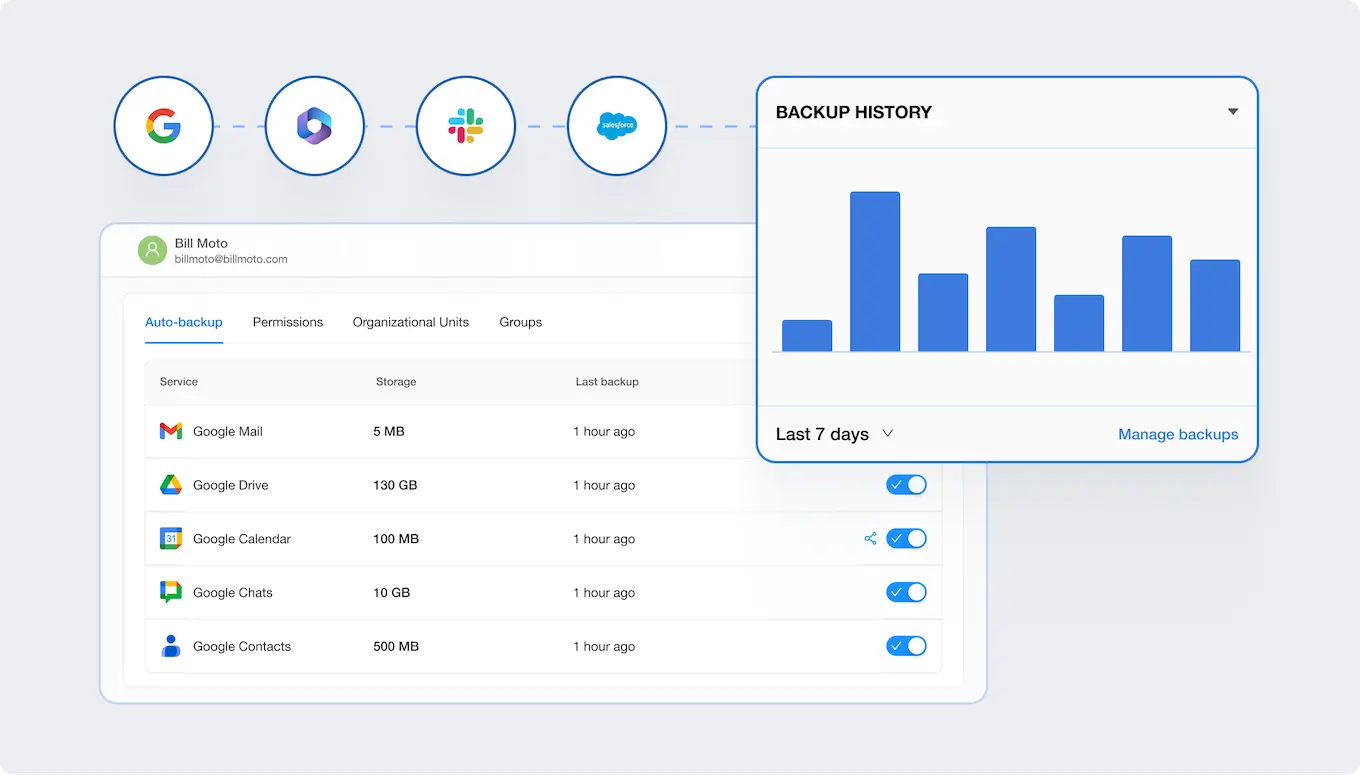
SpinBackup runs automated cloud-to-cloud snapshots three times a day, so your recovery point is measured in hours, not days. Data can be stored in AWS, Azure, GCP, or your own storage (BYOS), across 32 locations worldwide to meet data residency rules. Flexible retention policies and multi-domain support give IT full control from one dashboard, and restores happen in minutes rather than weeks.
Ransomware Detection and Response: Stop Attacks Before They Spread
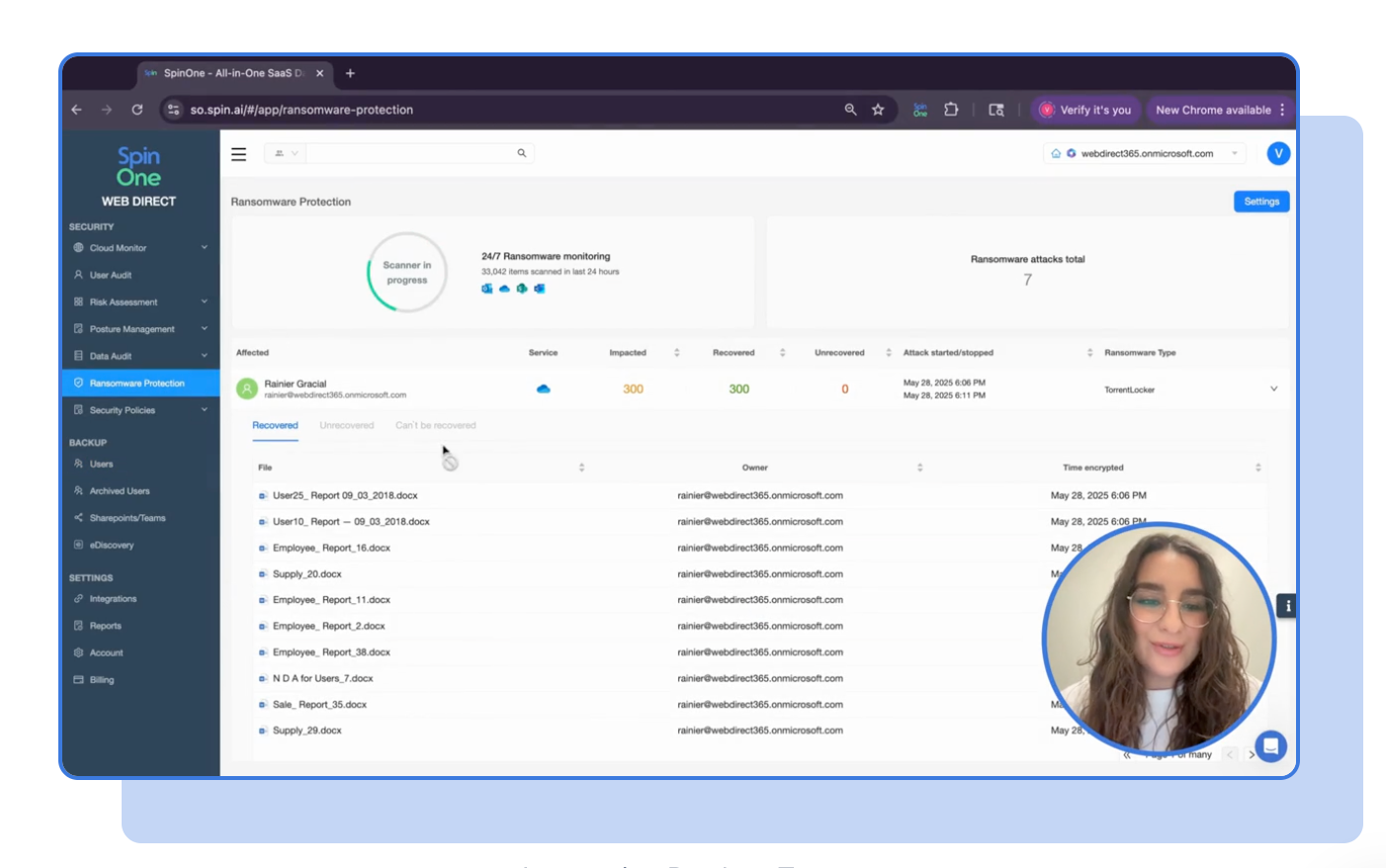
Syncing makes SaaS ransomware especially damaging because encrypted files replicate fast. Spin.AI’s AI-driven ransomware protection monitors Microsoft 365 and Google Workspace around the clock, detects in-progress attacks, and stops them automatically. Spin.AI backs it with a 2-hour incident response SLA, cutting downtime to under two hours and reducing recovery costs by up to 90%.
DLP and SSPM: See and Control Who Touches Your Data
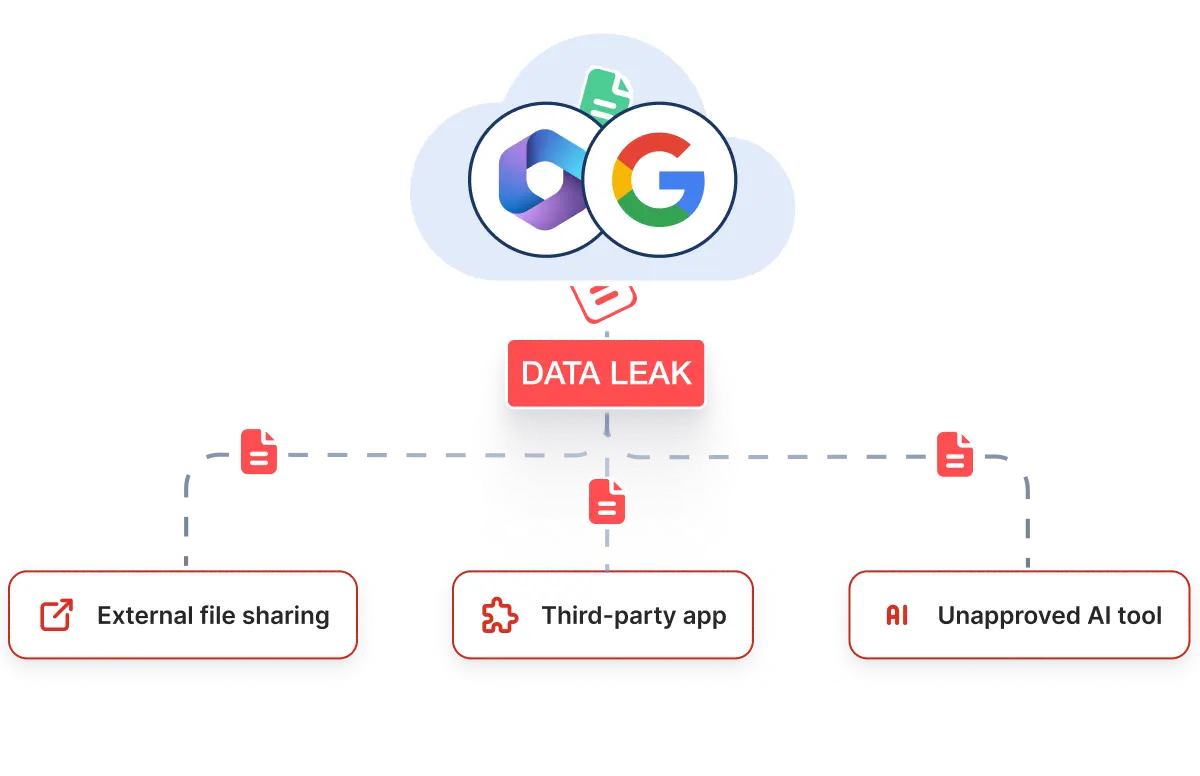
The human element was involved in 74% of breaches according to this Data Breach Investigations Report. SpinOne’s Data Leak Prevention monitors for abnormal sharing, downloads, deletions, brute force attacks, and unsanctioned OAuth access in real time. Its SaaS Security Posture Management continuously assesses misconfigurations, third-party apps, and browser extensions, bringing shadow IT into view. Alerts flow into the tools your team already uses, including Splunk, ServiceNow, Jira, Datadog, Teams, and Slack. For regulated organizations, this combination matters. Secure, independent backups and documented recovery capabilities support GDPR, HIPAA, PCI, and other requirements, and they give auditors the evidence they ask for.
Make SaaS Data Protection Part of Your Strategy with Spin.AI
Your SaaS provider is responsible for keeping the lights on, but you are responsible for everything you store inside. Closing that gap takes independent backups, continuous threat monitoring, and a recovery process you have actually tested. SpinOne delivers this.
As a Spin.AI partner, SPK and Associates can help engineering and IT organizations deploy, configure, and manage SpinOne as part of a broader data protection strategy. As a SOC 2 Type 2 compliant managed services provider with more than 20 years of experience, we understand what regulated industries like medical devices, aerospace, and automotive need from their recovery plans. That includes the audit trails and retention policies that FDA, ISO, and other frameworks expect. We also support the platforms SpinOne protects, from Google Workspace managed services and Microsoft solutions to Atlassian Jira and Confluence. If you are unsure if your SaaS data is truly recoverable, contact us for a no-obligation SaaS backup and security assessment.