

Key Takeaways
- AI ROI starts with a measurable business problem. Companies should define what they want AI to improve before investing in tools or launching pilots.
- AI value should be measured across speed, quality, cost, and capacity. These four areas help connect AI investments to real operational KPIs instead of vague productivity claims.
- Successful pilots need to become part of the workflow. Integrating AI with systems such as Jira, PLM, ALM, Git repositories, and other business platforms helps turn isolated experiments into usable value.
- Measure value before scaling AI. The SPK AI Value Ledger helps organizations identify which use cases are worth expanding based on measurable improvements and total cost.
AI has become extremely accessible to engineering teams. Companies like Microsoft, Atlassian, GitLab, and PTC are steadily adding AI assistants, agents, and automation features to the platforms engineering teams already use. That accessibility makes it increasingly easy to spend money on AI without knowing if the investment will improve organizational processes. Even when an AI pilot looks impressive in a demonstration, somebody eventually has to answer the question: What did we actually get for our money?
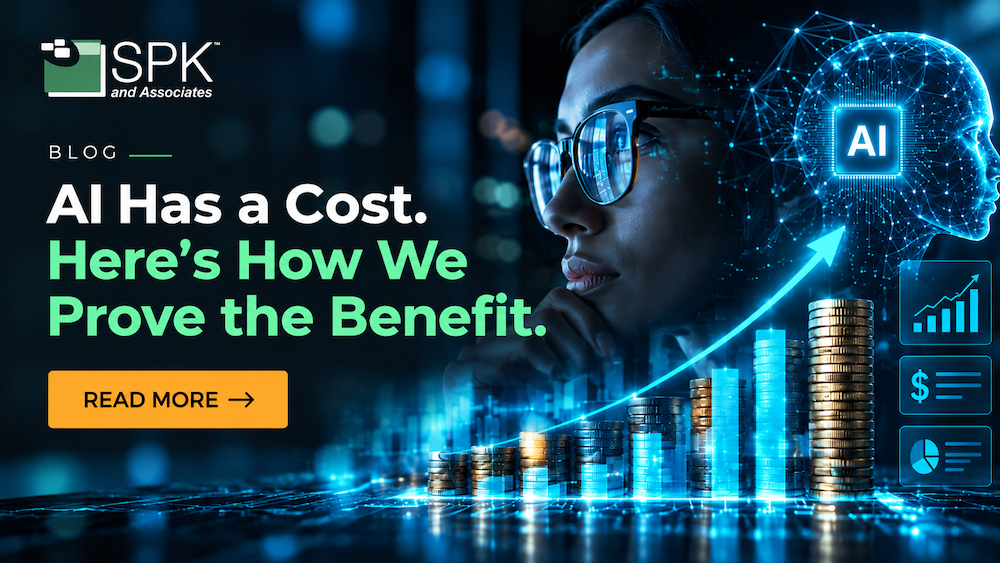
At SPK and Associates, we believe that question should be answered before an organization starts scaling AI. Our approach connects AI investments to measurable improvements in speed, quality, cost, and capacity. We call this framework the SPK AI Value Ledger. It gives engineering and technology leaders a practical way to separate interesting AI experiments from AI investments that actually create business value.
Why AI ROI Can Disappear Quickly
AI projects often fail because the organization never clearly defined what the technology was supposed to improve. We explored this problem in AI Pilots Everywhere, Value Nowhere. Organizations launch pilots, employees test new assistants, and vendors demonstrate impressive capabilities. Months later, leadership struggles to point to measurable operational improvements.

In addition to this, data creates another challenge. AI depends heavily on the quality, accessibility, structure, and governance of the information behind it. Our 15 data questions executives need to ask blog highlights why data readiness must be part of the conversation before teams expect AI to produce reliable business outcomes. Governance matters too. Organizations need clear policies covering approved tools, data access, security, human review, and acceptable use. An AI governance board can help establish those boundaries, particularly in regulated environments where traceability and confidentiality matter. The underlying issue is usually the same: the AI project started with the technology instead of the business outcome.
AI ROI Starts Before the Pilot
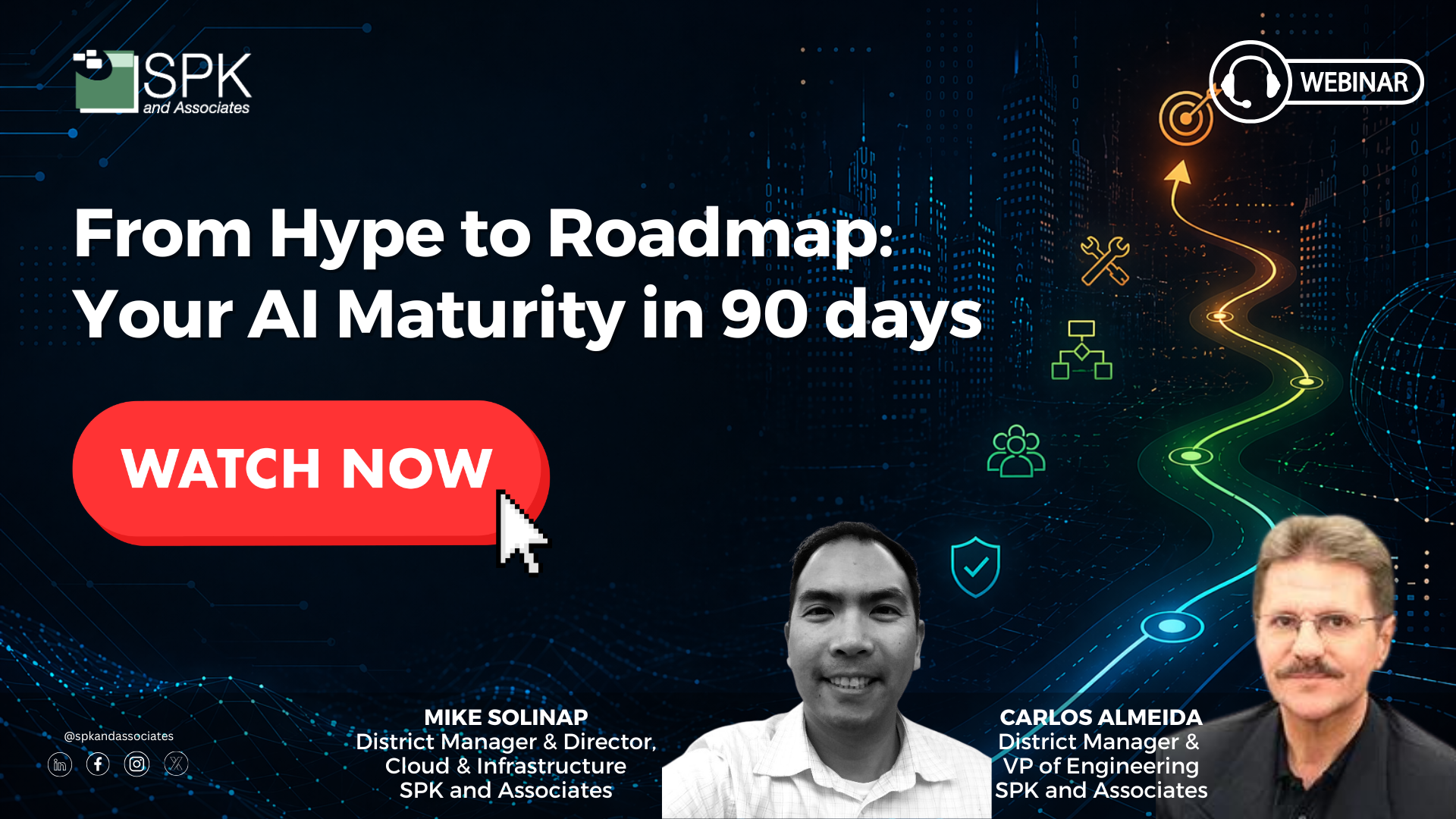
A useful AI business case should begin with a measurable problem you want the AI to solve. Maybe engineers spend too much time searching for requirements or software teams spend hours triaging defects. These problems have a cost. Once you understand that baseline, you can determine whether AI can change it. This is one reason we use an AI maturity framework when working with engineering organizations. We help teams progress from early alignment and experimentation through operationalization, scale, and optimization. The important part is that maturity is not measured by how many AI tools you are implementing, but by how well your organization can repeatedly turn AI capabilities into useful outcomes.
Stage 1: Establish Alignment
Before selecting additional AI tools, organizations need to understand what they already have, where their data lives, how workflows operate, and which business problems deserve attention. Leadership should also establish how success will be measured. For example, is the objective to shorten requirements reviews, accelerate incident resolution, or give engineers more productive hours each week? Without that baseline, ROI becomes guesswork.
Stage 2: Run Focused Experiments
Once the business objectives are clear, teams can evaluate specific AI use cases. This is where pilots are valuable. The difference is that the pilot now has a measurable target. Instead of simply asking whether an AI assistant works, the organization can ask whether it reduced a process from four hours to two or eliminated a recurring task. A demonstration proves that the technology is capable of doing something. A pilot should prove that it creates value.

Stage 3: Operationalize AI
A successful pilot still does not automatically create enterprise value. AI needs to become part of the workflow. That may require connecting AI to systems such as PLM, ALM, Jira, Git repositories, CRM platforms, and cloud infrastructure. Integration is critical because AI becomes much more useful when it has context.
Stage 4: Scale What Works
Once a use case produces measurable results, organizations can apply the pattern elsewhere. The key is to scale the successful operating model, not just deploy more AI. That includes the technical architecture, governance, data access, training, human review process, and measurement framework that made the original implementation successful.
Stage 5: Optimize Continuously
AI value should continue to be measured after deployment. Models, workflows, and software costs change. Teams discover new use cases, and some original use cases may become less valuable. Organizations therefore need to revisit their AI investments continuously and compare the operational benefit against the total cost of delivering that capability. That is where the SPK AI Value Ledger comes in.
The SPK AI Value Ledger: Measuring What AI Actually Changes
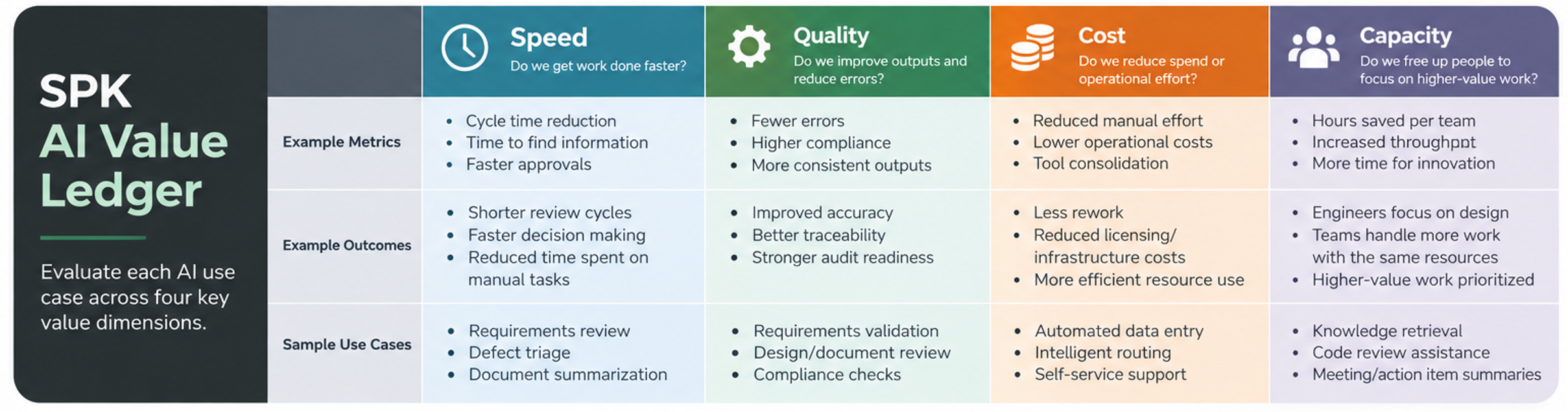
When SPK evaluates an AI opportunity, we look at value through four lenses: speed, quality, cost, and capacity. These categories give leaders a practical way to connect AI projects to business KPIs instead of relying on vague claims about productivity.
Speed: Does AI Make the Work Happen Faster?
Speed measures reductions in cycle time.
That could mean:
- Faster requirements analysis
- Quicker ticket resolution
- Shorter code review cycles
- Faster document generation
- Reduced time spent searching for information
- Shorter engineering change processes
For example, if an engineering team spends an average of two hours gathering information for a design review and an AI workflow reduces that to 30 minutes, the improvement can be measured directly. Organizations can track metrics such as time per task, engineering cycle time, mean time to resolution, review turnaround time, time spent searching for information, or product development lead time. The goal is to identify which processes became faster and by how much.
Quality: Does AI Improve the Result?
Speed means very little if the work needs to be corrected later. Quality measures whether AI helps reduce errors, improve consistency, catch problems earlier, or produce better decisions. For engineering teams, that might include better requirements coverage, more consistent documentation, improved defect detection, or stronger traceability. In regulated industries, this part of the ledger can be especially important. A process that saves ten minutes but creates additional review risk may have negative value.

Cost: Does AI Reduce the Cost of the Process?
AI has its own cost, so organizations need to compare that investment with the operational savings it produces. The cost side of the ledger can include AI licenses, cloud usage, implementation, integration, maintenance, governance, training, and consulting. The benefit side may include lower infrastructure costs, avoided rework, reduced outsourcing, fewer support escalations, or consolidation of redundant tools.
The equation does not have to be complicated. If an AI workflow costs $50,000 annually but eliminates $200,000 of repetitive work, the business case is easy to understand. If the organization spends $200,000 and cannot identify a measurable change in operations, it needs to reconsider the use case.
Capacity: Does AI Give People Time Back?
Capacity may be the most overlooked part of AI ROI. Engineering organizations often face constraints that cannot easily be solved by hiring more people. Experienced engineers, quality professionals, DevOps engineers, data experts, and system administrators are difficult to replace. If AI removes repetitive work from those employees, the organization gains usable capacity. That capacity might allow engineers to complete more designs, run more simulations, review additional requirements, or spend more time on higher-value engineering work.
One hour saved does not automatically equal one hour of business value, however. Organizations still need to determine what employees can accomplish with the recovered capacity. That is why capacity should be measured against operational output rather than simply reporting “hours saved.”
Turning the Value Ledger Into an AI Roadmap
The SPK AI Value Ledger is most useful when it is applied before implementation. That is one of the goals of our AI Launchpad. SPK’s AI Launchpad helps organizations understand where they stand today and where AI investments are most likely to create measurable value. We begin by assessing the organization across areas such as data readiness, infrastructure, business use cases, skills, governance, and existing AI capabilities. That assessment gives leadership a clearer picture of its current AI maturity.
We also review the software an organization already owns. This step matters because many companies are already paying for AI capabilities inside Microsoft, Atlassian, GitLab, cloud platforms, engineering applications, and other enterprise tools. Before purchasing another AI product, it makes sense to understand whether existing capabilities can solve the problem. Next, we examine data and risk. Where does the necessary information live? Can AI access it securely? Is the data structured well enough to be useful? Could the workflow expose intellectual property, controlled information, customer data, or regulated records?
Then we map potential AI opportunities to actual workflows. Instead of producing a long list of theoretical AI ideas, we prioritize use cases based on business value, technical feasibility, risk, and readiness. This is where the AI Value Ledger becomes part of the Launchpad deliverable. For each prioritized opportunity, organizations can define the expected effect on speed, quality, cost, or capacity and determine the KPIs that will prove whether the implementation worked. The result is a practical AI roadmap rather than a collection of experiments.
Proving AI Value Before You Scale It
AI investment is already a large part of many technology budgets, and it’s only growing. Organizations should be able to explain why they are investing in a particular AI capability, what business process it will improve, how they will measure the result, and what success needs to look like before they expand the investment. Without that discipline, companies can accumulate dozens of AI tools while struggling to prove that engineering performance actually improved. With it, AI becomes much easier to evaluate.
At SPK and Associates, our goal is to help companies go beyond deploying AI. Through our AI Launchpad, we help organizations identify where AI makes sense, build the foundation required to support it, and establish the measurements needed to prove its value. If you are interested in getting a return on your AI investment, contact us today.