

In IT Service Management, there is often tension between the drive for efficiency and the need for a high-quality customer experience. We are often told that AI and automation are the all-encompassing solutions, yet 95% of consumers still demand a human connection when their issue is complex, ambiguous, or emotional. For service providers using Jira Service Management (JSM), the challenge is clear: how do you scale your operations without losing the human touch that differentiates your brand? At SPK and Associates, we believe that technology should reduce friction for people, not create more administrative hurdles. To achieve a truly modern service desk, you must blend AI efficiency with a service model designed around human needs.
The JSM Friction Point: Wanting a Human, Getting a Bot
The most significant issue in many JSM implementations is the “automation wall.” Customers often feel that when they reach out for help, a rigid system that doesn’t understand their specific context greets them. This frustration often begins at the very first touchpoint: the request form. A blank text box on a portal is an invitation for incomplete data. When a customer is stressed, they might simply type “it’s broken” and hit submit. This triggers a frustrating back-and-forth where the agent manually asks for basic details, and the client must inform them of simple things like the operating system, browser version, or error logs. This isn’t just a waste of time; it makes the service feel robotic and disconnected. The customer wants a solution, but the system has given them a data-entry chore.

Guiding the Journey with Issue Templates Agent
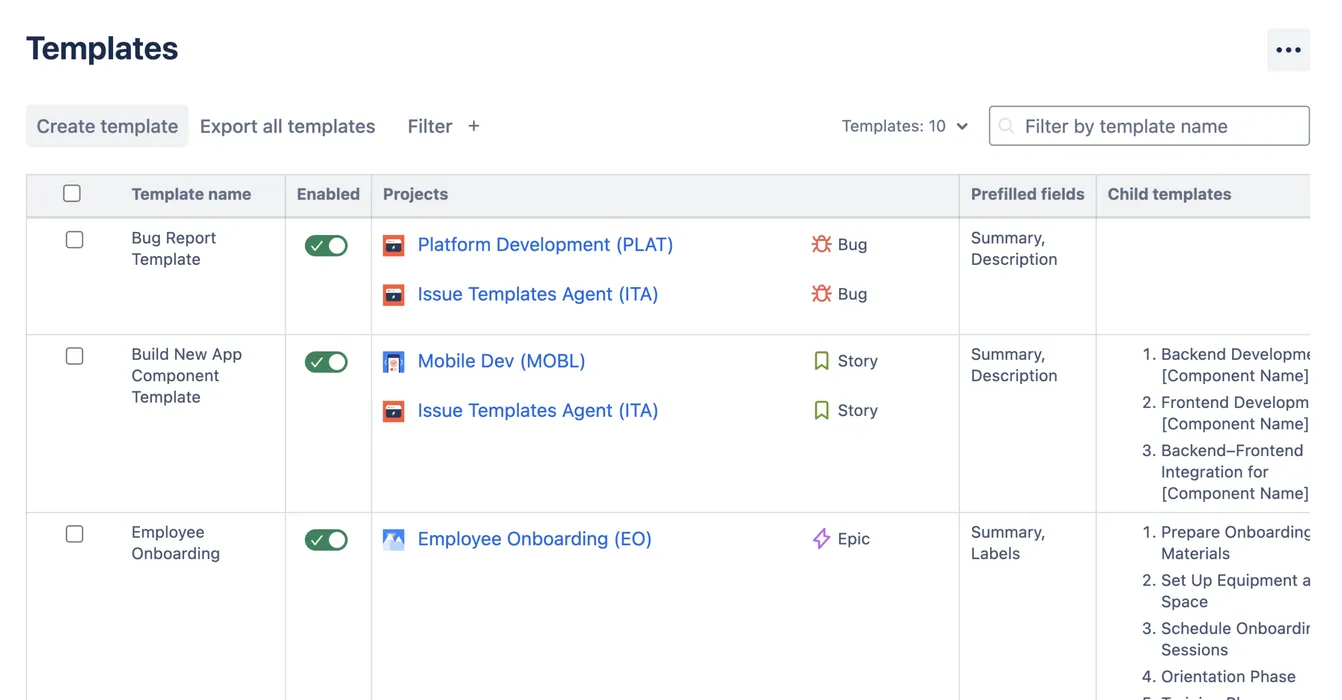
To provide a premium experience, you must guide the customer through the process so they feel supported from the start. This is where the Issue Templates Agent from Appsvio changes the game by eliminating the “blank box” problem. While this app works for Jira work items, we are highlighting how it aids in JSM requests through the customer portal. Instead of leaving the customer to guess what information you need, the Issue Templates Agent allows you to apply templates directly to the portal. When a user selects a specific request type, such as “Report a Bug,” the description field is automatically pre-filled with a checklist or a structured table. You are essentially guiding them by the hand, ensuring they provide the right information the first time.
The result is a perfect, standardized ticket for the agent on the very first try. By using automation to structure the input, you free up the agent to focus on the actual problem-solving (the human part of the job) rather than chasing down missing details. This small change transforms a cold, automated form into a helpful, guided interaction.
Breaking the “Black Box” with Feature Bundle
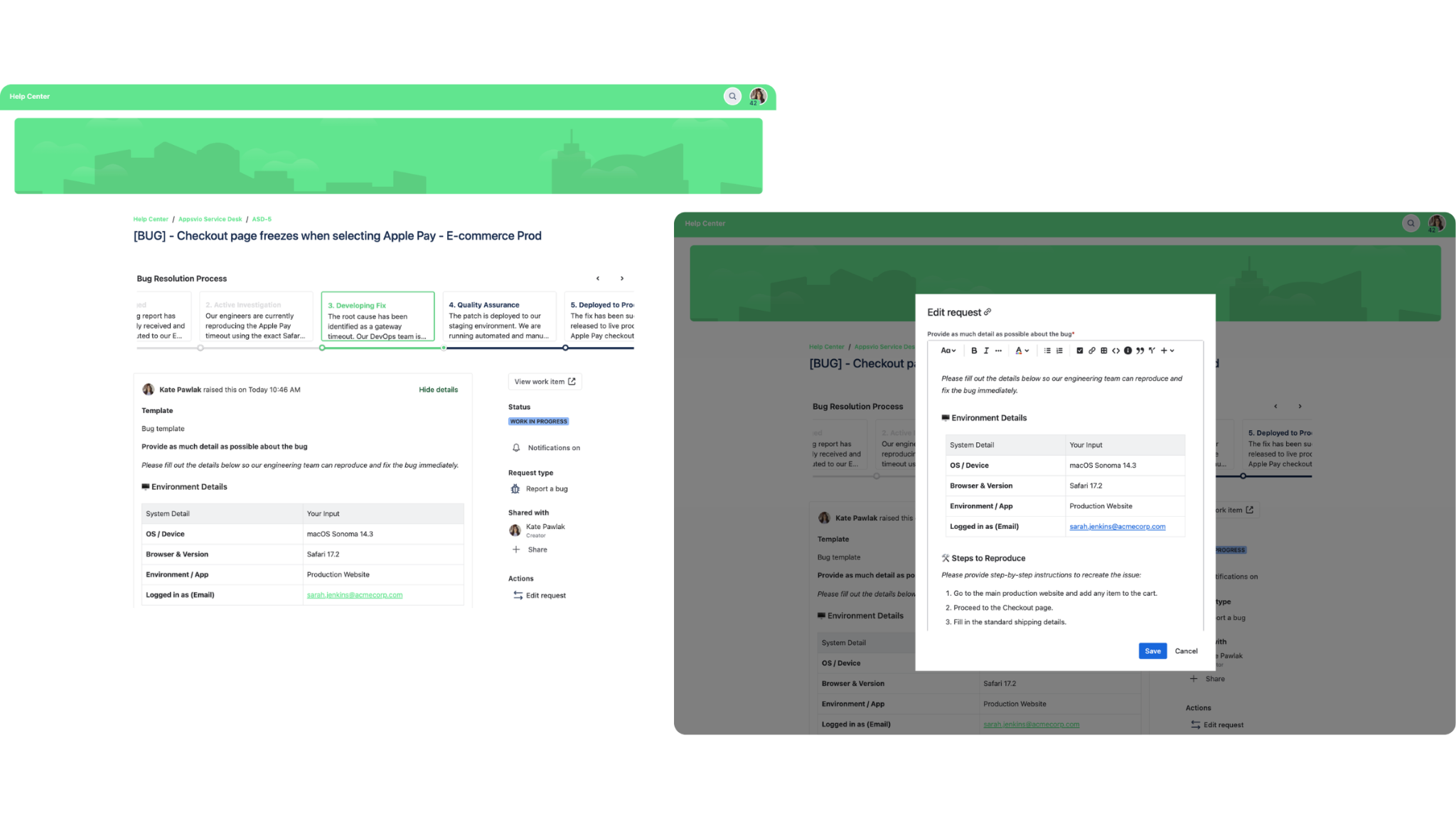
Once a ticket is submitted, it often enters what customers perceive as a “black box.” They see a status of “In Progress” for days with no further insight. In a world where we can track a food delivery in real-time, this lack of transparency in professional services is no longer acceptable. It leads to status-check comments that clutter the agent’s queue and increase frustration. Appsvio’s Feature Bundle allows service providers to practice “Radical Transparency” by displaying fields on the portal that are normally hidden in the backend. By showing the specific Assignee, the SLA, or Linked Issues, you build an immediate human connection. Suddenly, it isn’t the IT department working on the issue; it’s a named individual.
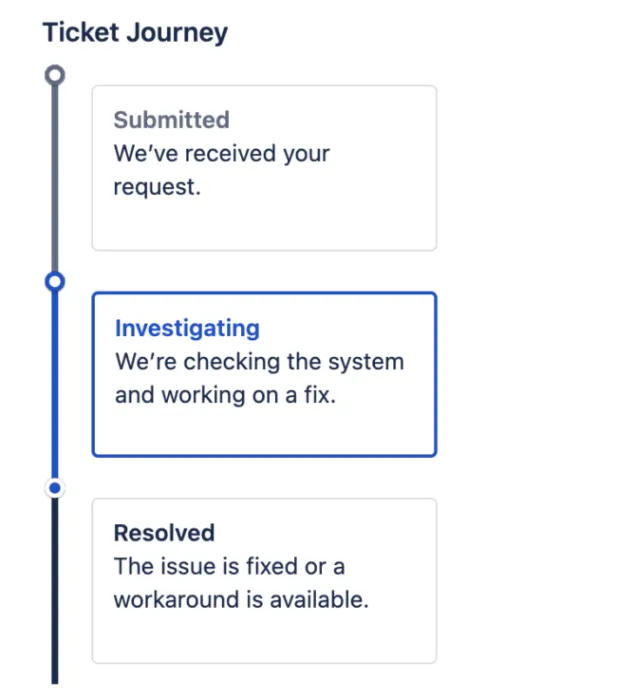
Furthermore, the Ticket Journey feature acts as a tracker for Jira. It visualizes the entire workflow with a progress bar: Waiting for Support -> Under Investigation -> Testing -> Resolved. When customers can see the process, they are more likely to trust it. Feature Bundle also introduces self-correction, allowing customers to edit their requests directly on the portal to fix typos or update assets. This transparency and empowerment reduce the need for manual updates and allow agents to work without constant interruptions.
Empowering the Team with Service Pack for Agents
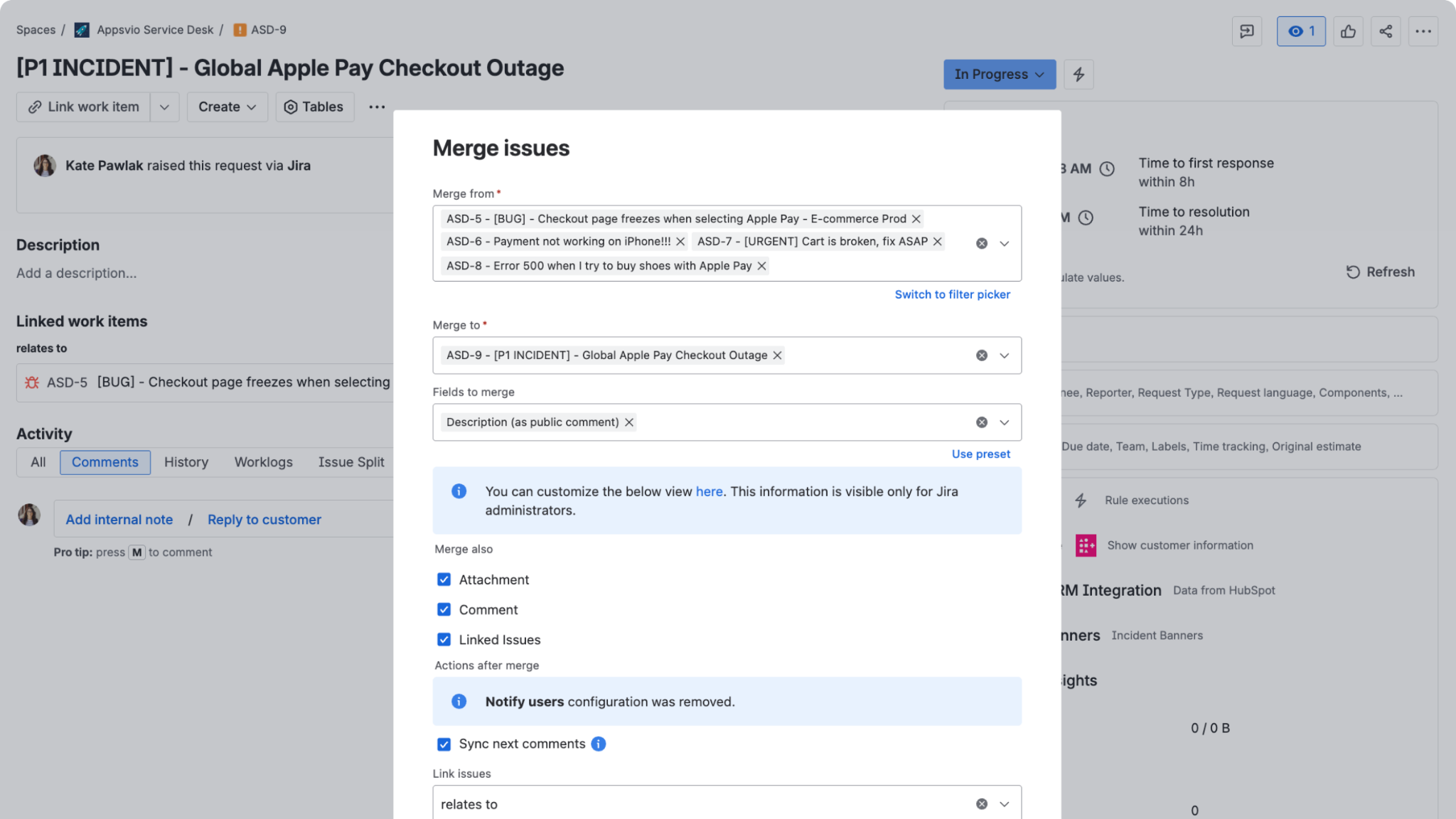
A premium human experience for the customer is important, but it is only possible if the agent is happy and efficient. Dealing with dozens of duplicate tickets for the same issue is the definition of boring work that leads to burnout and slows down response times for everyone. With Service Pack for Agents, your team can merge duplicate tickets with a single click. This combines all context into one source of truth, ensuring no information is lost across multiple threads. More importantly, agents can view all merged tickets in a single view and respond to all of them simultaneously.
By removing the repetitive manual labor of closing duplicates and jumping between tabs, you allow your agents to focus on high-value tasks that require their expertise and empathy. When agents are no longer acting like data-entry clerks, they have the mental bandwidth to provide the premium level of service that complex, regulated environments demand.
Scaling JSM with AI and Rovo
While Appsvio tools optimize the human-to-human interaction, Atlassian’s AI capabilities provide the necessary scale. To truly modernize, service providers should leverage AI-powered virtual agents to handle Tier 1 support. However, this only works if your knowledge base is strong. AI is a teammate that is only as good as the information you give it. This is where Atlassian Rovo becomes essential. Rovo introduces AI agents that assist your team by summarizing long tickets, suggesting next steps, and surfacing information from across your tools. It doesn’t replace the agent; it augments them. By reducing the cognitive load on your staff, Rovo ensures that when a human does step in, they are fully informed and ready to provide that “premium” level of service.
The SPK x Appsvio Partner Advantage
The ultimate goal of modern ITSM is a service experience that is both scalable and genuinely valuable. Achieving this requires an intentional design that balances AI efficiency with human-centered touchpoints. AI should handle the high-volume, repetitive tasks, while humans handle the complexity, emotion, and critical decision-making. As a partner of both Atlassian and Appsvio, SPK and Associates specializes in helping engineering and IT organizations design these hybrid service models. We understand the unique pressures of regulated environments. By combining the right tools with a human-first strategy, we help you deliver a service experience that your clients will value.
If you are ready to move beyond the black box and provide a premium service experience in Jira Service Management, contact our team today.